
From Kirby to Windsor-Smith…
By PETER STONE
In the mid-1970s, seven or eight years after the release of 2001: A Space Odyssey, Marvel Comics acquired the rights to the Stanley Kubrick epic. Jack Kirby adapted it in 1976 but didn’t want to follow the film exactly, so he was given free rein to frame the general story using the novel and an earlier version of the screenplay. HAL’s dialogue was more colloquial, and the main characters were more emotional.

Then, despite Kirby’s reluctance to keep working on the project, he continued with a regular series that he designed, wrote, and pencilled. The premise was to search for the origins of the Monolith. The story continues in the Kirby fashion until Issue #8, when a character named Mister Machine, or X-51, becomes a major part of it.
A doctor named Abel Stack saves X-51 from furious androids who have gained sentience and are attempting a revolt. Stack is later killed trying to remove an auto-destruct mechanism from X-51, and the android soon encounters the Monolith, allowing him to transcend his robot programming and begin to assimilate with humanity. He takes the name Aaron Stack and is known as Mister Machine until getting his own series, Machine Man, in 1978. (The name change was necessary because there was a toy called Mister Machine.)
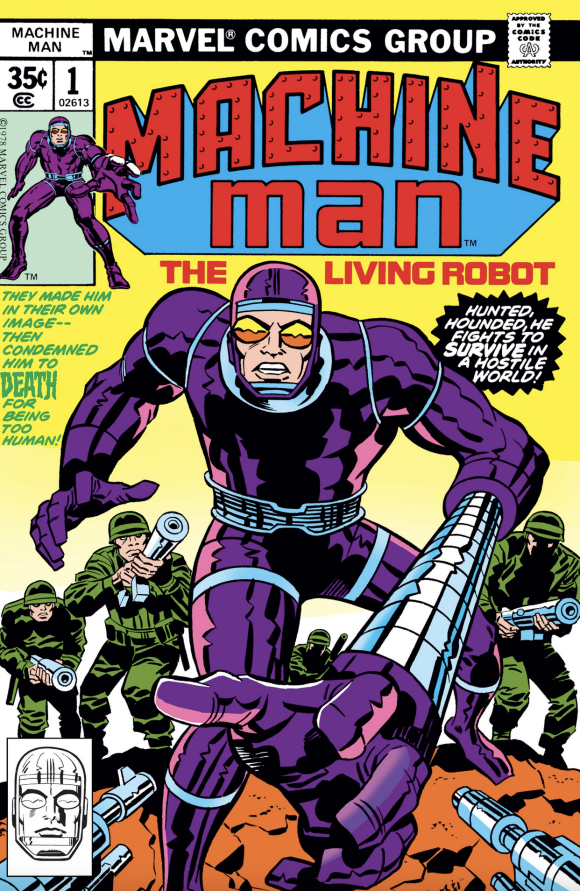
Kirby’s Machine Man series only lasted nine issues, but it was revived less than a year later by Marv Wolfman and Steve Ditko and ran for another 10 installments. The series has a cult following and served to integrate the character into the mainstream Marvel Universe, but Machine Man himself really bloomed several years later with a four-issue miniseries.
The 1984 Machine Man featured a story by Tom DeFalco, rough layouts Herb Trimpe, and spectacular finishes and coloring by Barry Windsor-Smith. DeFalco tells a simple (and, yes, perhaps cliched) story of a collection of scavengers fighting to survive in a brutal, future robotic landscape ruled by one of Machine Man’s old villains.
Trimpe was a workhorse whose best-known character was the Hulk. In the case of Machine Man, he seemed so busy with other titles and covers that he only provided the breakdowns for this four-issue series. Enter Windsor-Smith, best known for his epic run on Conan the Barbarian from 1970 to 1973 and one of the most admired artists in the game, with a distinct style beloved by fans and professionals alike. He finished and colored three issues of Machine Man and then did all the artwork for the fourth issue.
The series takes place in a dystopian 2020. Scavengers called the Midnight Wreckers find a deactivated Machine Man in a huge pile of detritus and repair him. He endures this strange new world but his old enemy, Sunset Bain, discovers he’s alive and sends her destructive robots after him. Battles ensue until Bain unleashes her secret weapon — the “Iron Man of 2020.” His name is Arno Stark, a distant relative of Tony Stark who bought the rights to the Iron Man armor and uses it as a high-priced mercenary.
Eventually, Madame Bain discovers the Wreckers’ “Sanctuary” — a floating hideout about half the size of an old SHIELD Helicarrier. Naturally, the final battle features Iron Man 2020 and his robot army against Machine Man and the Wreckers. Iron Man 2020 and Machine Man engage in brutal hand-to-hand combat, drawn by Windsor-Smith with visceral intensity: powerful punches and “Eye of the Tiger”-type combat, Machine Man emerging victorious.
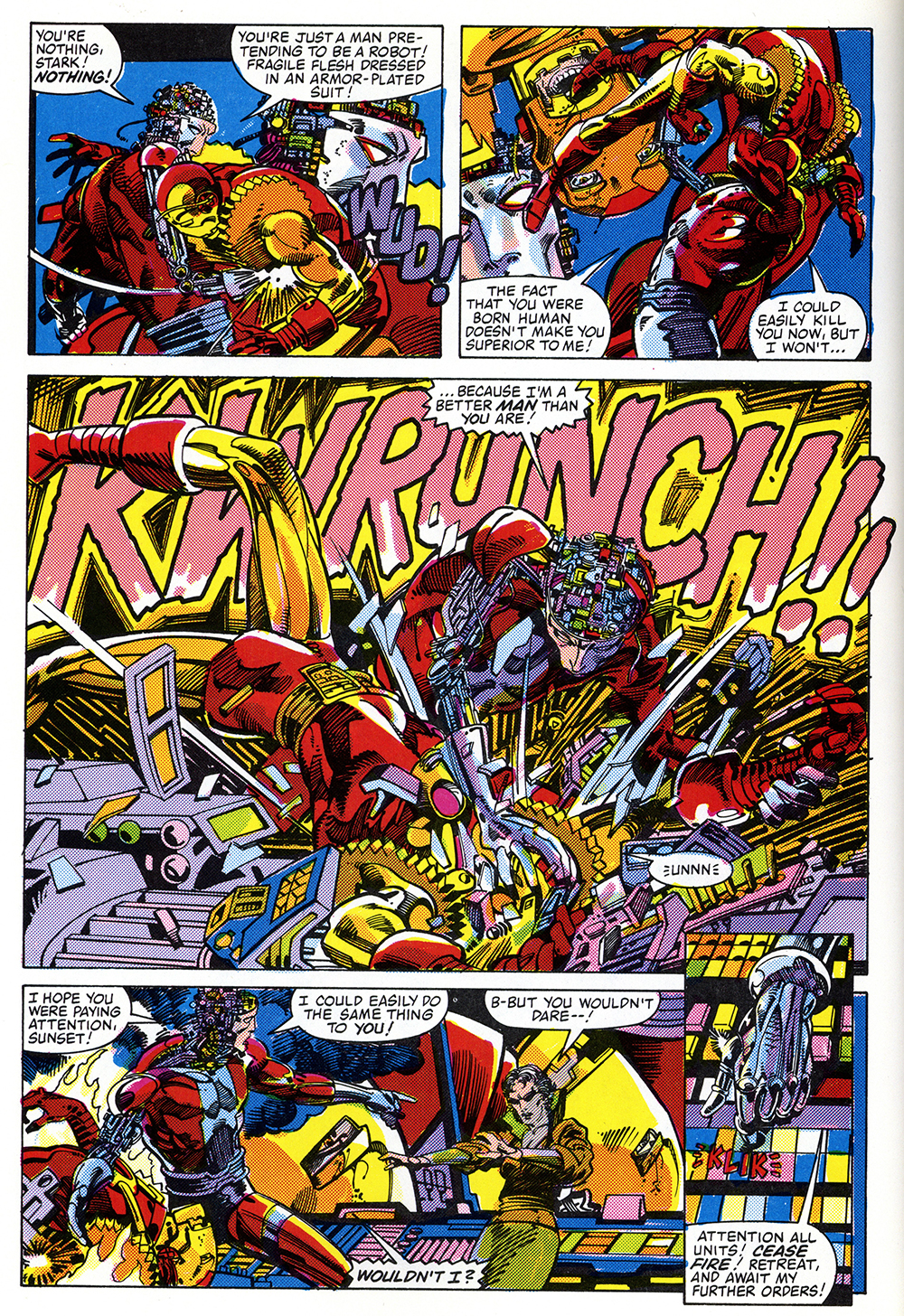
Machine Man could execute Sunset Bain, but he comes from the era where heroes don’t kill. Not like today, when there are dead bodies everywhere. It’s a couple of years before The Dark Knight Returns, so the story is not as dark and violent as it might have been after 1986.
There’s even a cybernetic love story, between Machine Man and Jocasta, the robot who’d originally been created as a companion for Avengers baddie Ultron but was imbued with the essence of the Wasp, Janet Van Dyne. Jocasta plays a crucial role in the story’s climax.
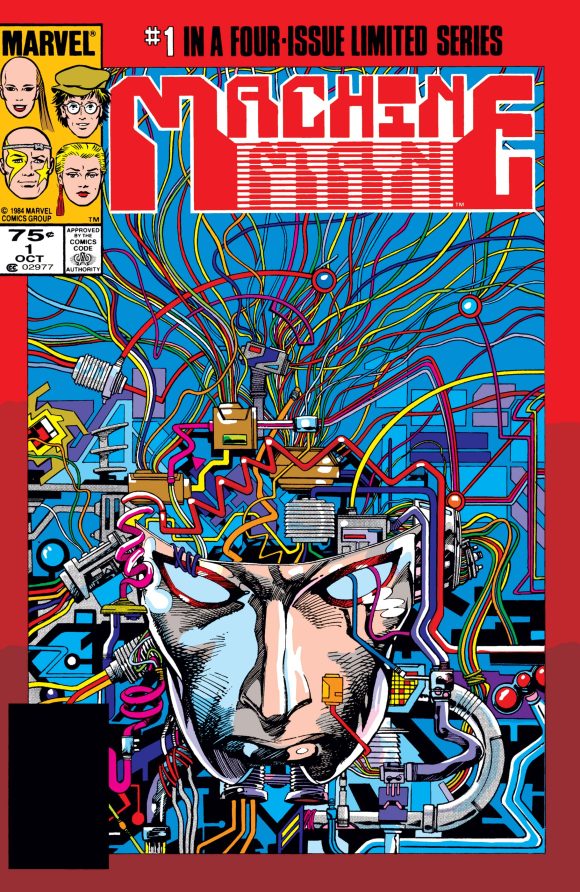
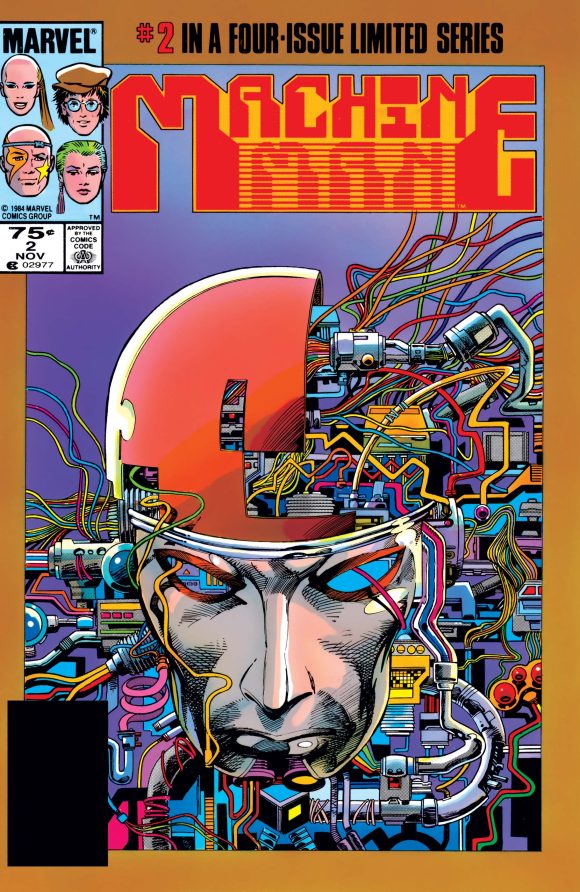
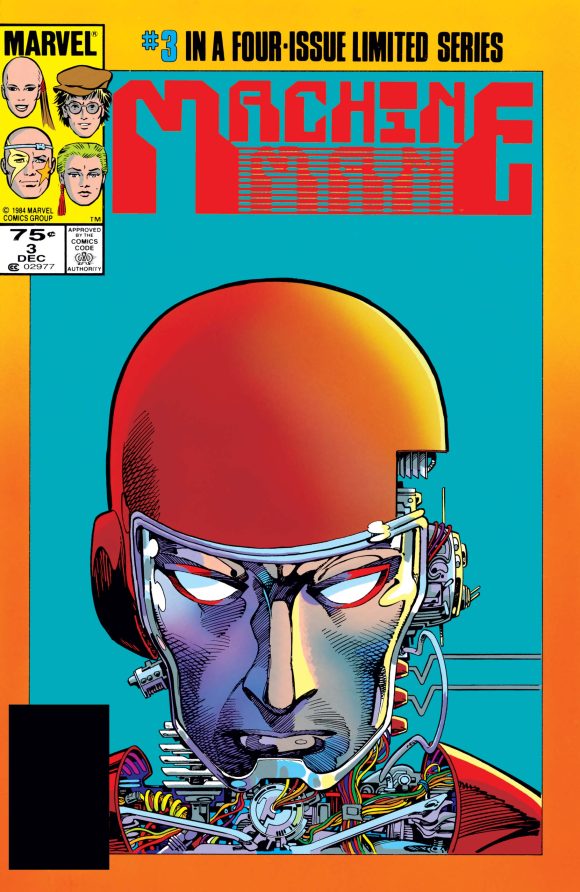
Finally, one of the best elements of the series is the four fascinating covers by Windsor-Smith that show Machine Man evolve from a scramble of realistic wires and cables, with Kirby tech mixed in, to more of a man. The cover alone was the reason I picked up the first issue.
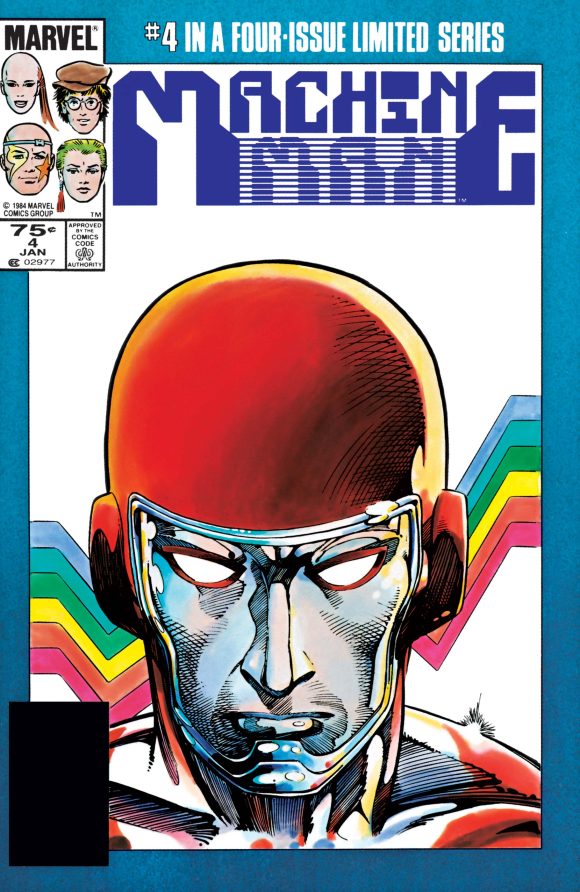
1984’s Machine Man is a beautiful series and a great example of Barry Windsor-Smith’s incredible style. It’s available in multiple formats, so track it down if you’ve never taken the time to read it.
—
MORE
— (Not Exactly) BURIED TREASURE: Waid and Hitch’s THE LAST DAYS OF LEX LUTHOR. Click here.
— BURIED TREASURE: Kieron Gillen and Dan Mora’s Arthurian ONCE & FUTURE. Click here.
—
Peter Stone is a writer and son-in-law of the late Neal Adams. Be sure to check out the family’s online Facebook auctions, as well as the NealAdamsStore.com.
