
A 50th ANNIVERSARY stage production worthy of Broadway!
By JIM BEARD
Detective Comics #457, by Denny O’Neil and Dick Giordano, came out 50 (!) years ago, on Dec. 30, 1975.
Some would say it has everything a Batman story should have: action, pathos, dark humor, character, a bit of embroidering to the Dark Knight’s legend…
For my money, it only lacks one thing—singing!
My mind often goes to strange places, part of being a writer of strange things, I guess. When I cracked open my copy of the issue to set my mind to writing this anniversary article, it dawned on me that the story would make a great stage musical.
Don’t ask, just go with me here, ‘kay?
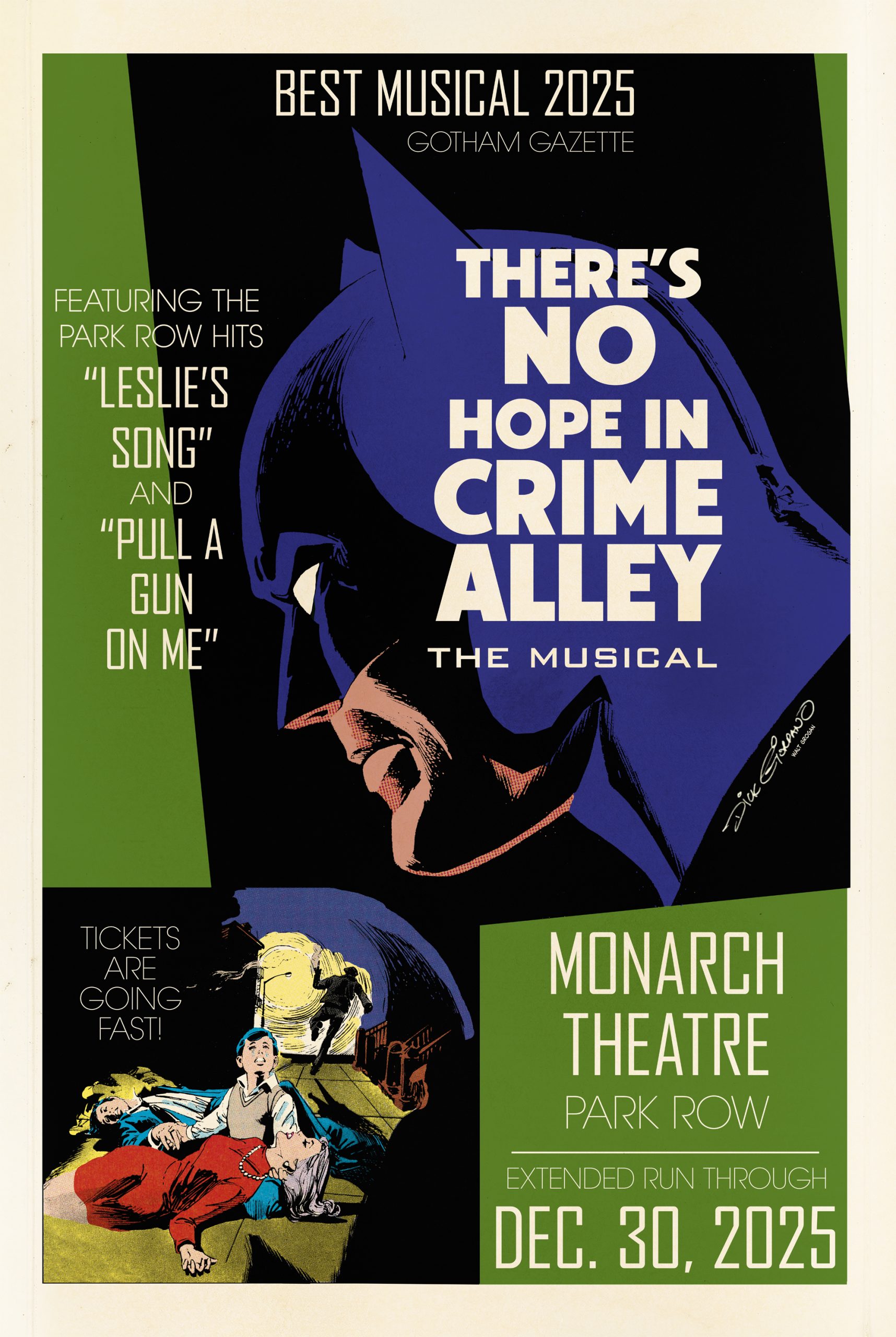
So, without further ado, imagine the curtain rises on a stage and the story begins as the orchestra starts up the first song…
Funny thing: This musical just happens to have 13 of ’em. Imagine that.
—
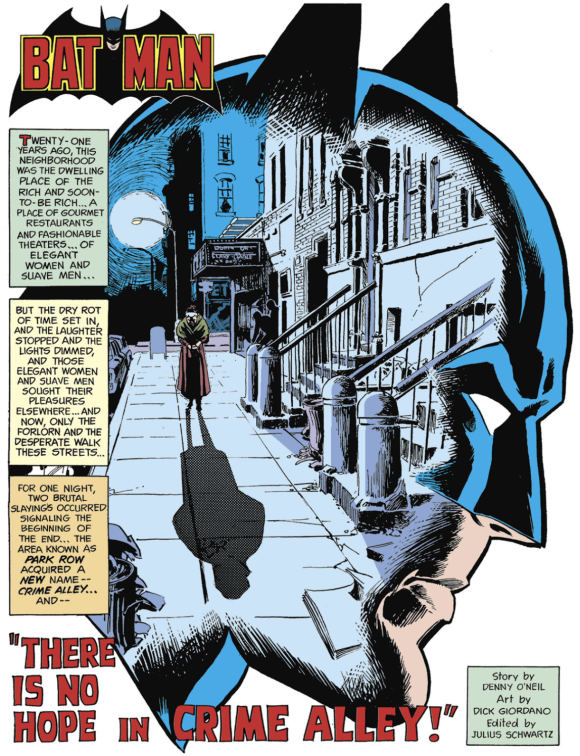
“Crime Alley.” It begins with a moody set piece to place us in Gotham City. It’s presented by a chorus, all dressed like Gotham citizens of varying social levels, and tells us what to expect as the story rolls out, of mean streets and its protector… and the victims of Crime Alley.
—
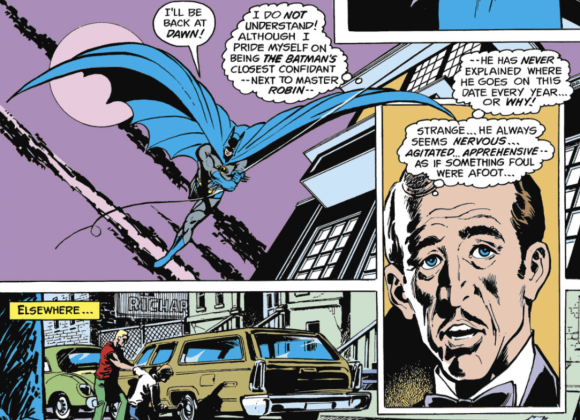
“He Has Never Explained.” Alfred gets the first solo, a song as internal monologue to explain how the faithful butler does his job, but wonders about his master’s annual agitation and apprehension over one particular day on the calendar…
—
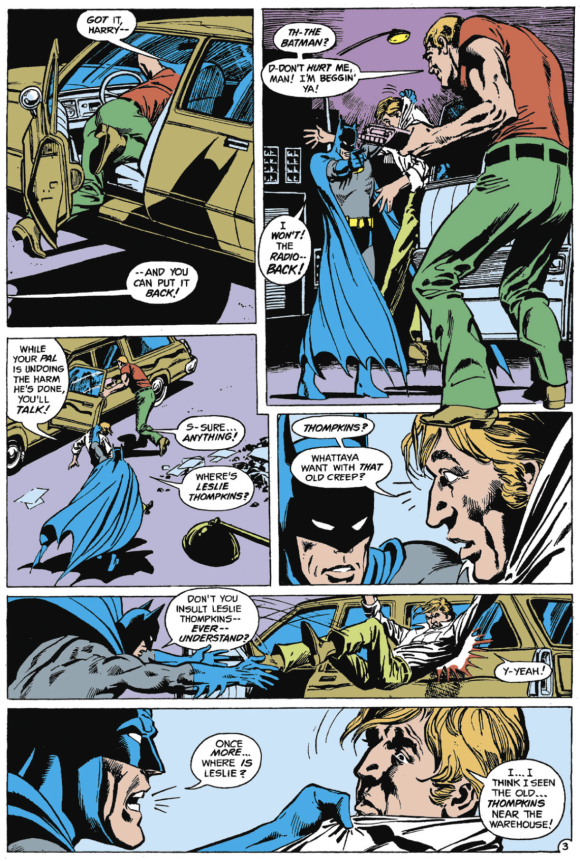
“The Mean Streets.” Batman swings into action against a group of thieves stripping a car of valuables, and the men react through song to the hero’s interrogation concerning an old woman and her whereabouts…
—
“Just a Common Mugging.” A two-part tune, first taken up by the victim of a mugging saved by the Batman, and then after by a wino who’s able to impart valuable information to the Caped Crusader. Both of them express their confusion over why the masked man does what he does.

—
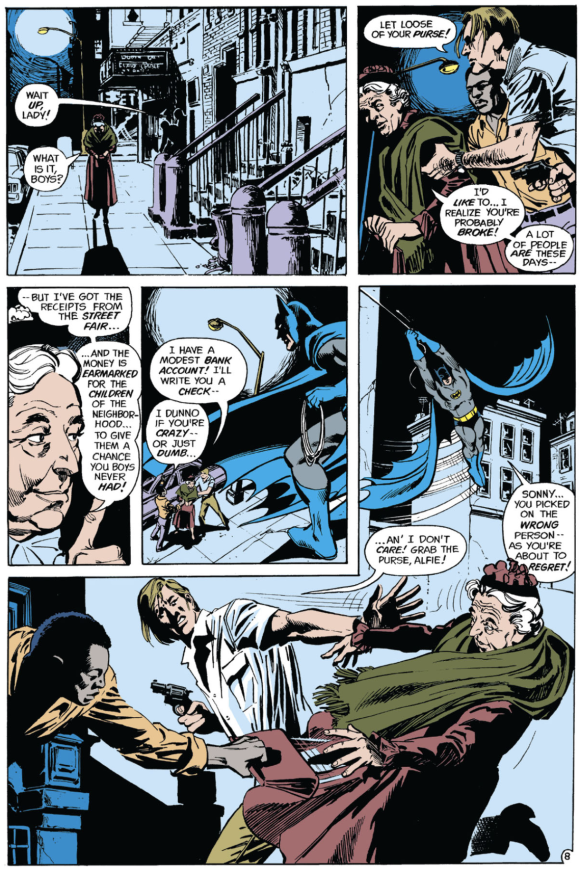
“Leslie’s Song.” Leslie Thompkins takes up the tune, musing on her life in Gotham and her history with its citizens. It’s a song with some joy and pride, but also sadness, and then menace, as the next bit of darkness approaches her…
—
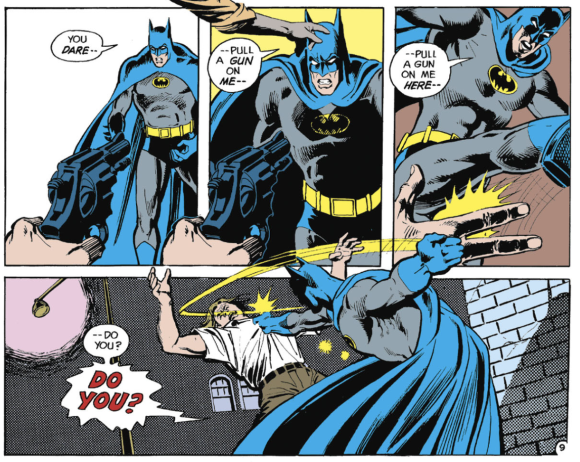
“Pull a Gun on Me.” Finally, Batman himself limbers up his vocal chords and lets loose on Leslie’s attackers with a deep, rich baritone and some righteous indignation over the gun that’s pulled on him during the melee: “You dare/Pull a gun on me/Pull a gun on me/Here?”
—
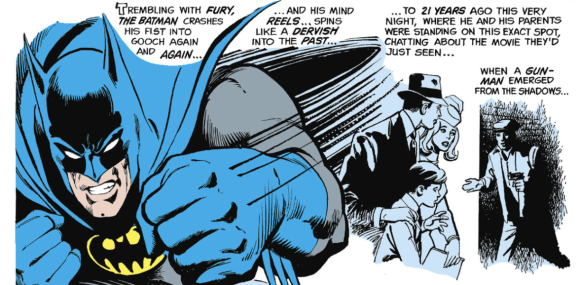
“The Waynes.” The street chorus of citizens returns for the first part of Batman’s flashback to the fateful night of his parents’ murders. The words illustrate Thomas and Martha Wayne’s importance to the community, but also foreshadows their coming demise.
—
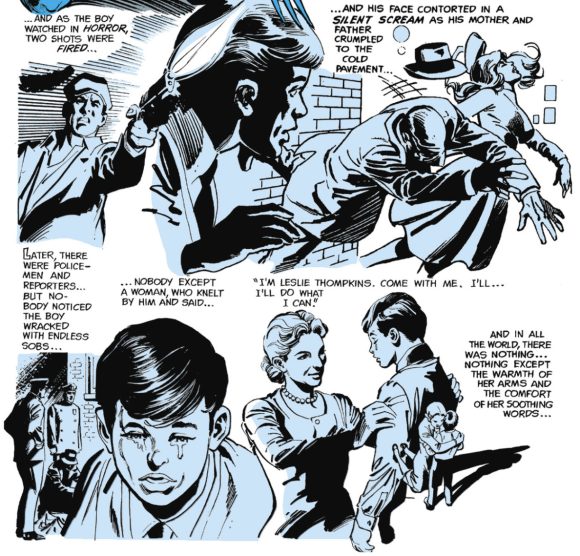
“Silent Scream.” The chorus continues, segueing into the show’s darkest moment, the death of the Waynes and young Bruce’s reaction to it. Leslie reappears, albeit a younger version of herself, and finishes up the number solo as she embraces the dumbstruck boy.
—
“Shots Fired.” A very brief piece, sung by the officers who are alerted to the scene of the crime and putting a capper on the flashback. In a way, it expresses how such things can happen in Gotham, despite police presence on the streets.
—
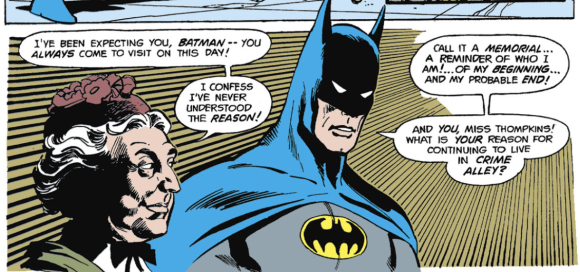
“I’ve Never Understood.” Leslie continues to take the spotlight as we return to the present and she wrestles with both Batman’s anger with her attackers and his annual visit with her. The song is a troubled one, but ends with tenderness as the hero assures her everything will be fine as long as she brings hope to Crime Alley.
—
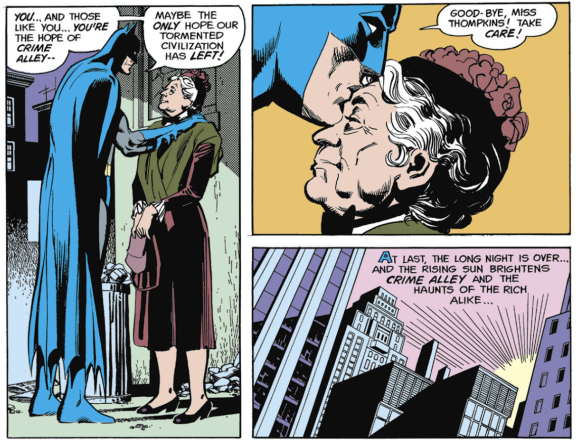
“Leslie’s Song (Reprise).” The chorus is back with a more hopeful, upbeat version of the song, watching as Batman swings away and the old woman looks on with pride, giving the audience the idea that she knows more than she lets on to him.
—
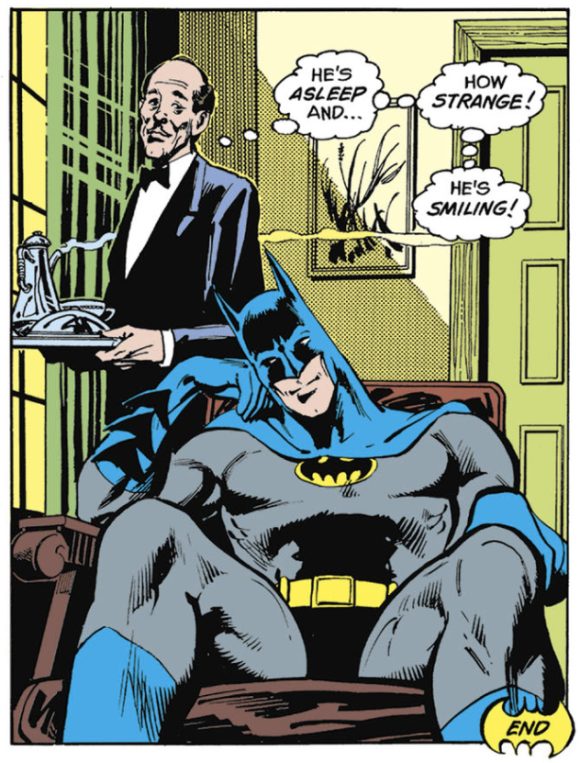
“Asleep and Smiling.” Alfred takes on the show’s final solo as he ponders his master’s return, exhaustion, and curious smile as he falls asleep in his penthouse, still in full costume. As the last strains of the song are played, the morning light breaks through a window and falls upon the faithful retainer…
—
“Crime Alley (Reprise).” A new version of the song, with the same lyrics and melody, yet with a very different tone. It serves as the perfect bookend to the show, telling the audience that despite Gotham’s darkness, there will always be pockets of hope that may grow if nurtured by those who believe the city can be saved.
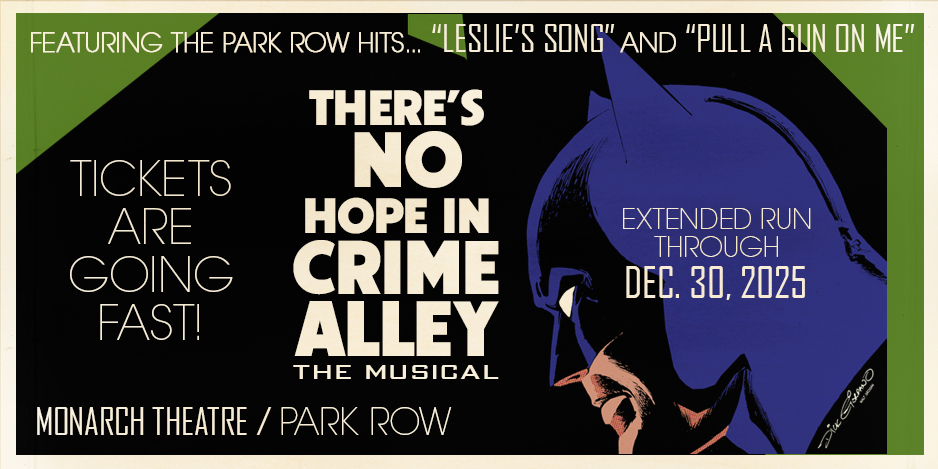
Posters by Walt Grogan
—
MORE
— A BATMAN LANDMARK AT 50: DENNY O’NEIL’s Real-Life Inspiration for LESLIE THOMPKINS. Click here.
— PAUL KUPPERBERG: My 13 Favorite Works by DENNY O’NEIL. Click here.
—
When JIM BEARD’s not editing and publishing through his two houses, Flinch Books and Becky Books, he’s pounding out adventure fiction with both original and licensed characters. In fact, he’s put words in the mouths of Luke Skywalker, Superman, Fox Mulder, Carl Kolchak, Peter Venkman and the Green Hornet… and lived to tell about it.
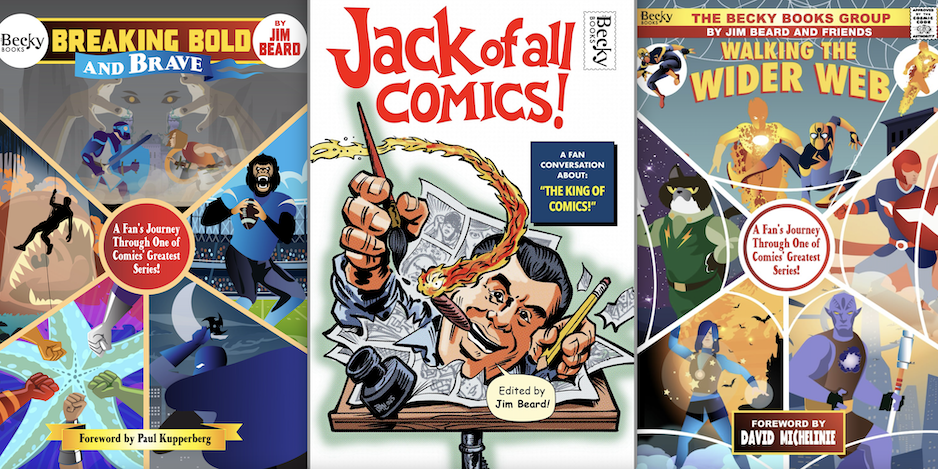
Right now, for the holiday season, he’s got a “Comic Book Culture” book bundle up for sale on Amazon — Jack of All Comics! about Jack Kirby; The Old Origin Changeth, about how superhero back stories evolve and expand; Breaking Bold and Brave, an issue-by-issue guide to the classic Brave and the Bold comics series; and, Walking the Wider Web, a guide to Marvel Team-Up. Check it out here.

December 30, 2025
I’ll find a moment today to re-read this classic tale. I admit I’m more fond of this version of Leslie Thompkins than the post-Crisis iterations, mainly because the Bronze Age Batman is MY Batman.
December 30, 2025
Jim, I think you have something here. As I read your words, I could see the light dim around BATMAN and an old Leslie to one side of the stage as the spotlight turned on to a much younger Leslie and a young Bruce Wayne. Pure poetry.
How is it this hasn’t been made into a facsimile yet? DC still at a lost I guess.
Happy New Year!
December 30, 2025
I hear Broadway calling me…
December 30, 2025
Time for a facsimile edition …(I have the original issue but the cover was in bad shape)
December 31, 2025
So…does the Batman musical on that one episode of Batman Beyond count?