
Swan, Adams, Colan — and MORE!
By PETER BOSCH
On Wednesday, I listed 13 artists who helped make movie comic books great. Here are 13 more who are also covered in my new book, American Movie Comic Books – 1930s-1970s: From the Silver Screen to the Printed Page (available now to order from TwoMorrows or at your local comics shop).
—
Bob Lubbers. Bob Lubbers is an artist whose name is not often recalled today; yet, in his time (the 1940s) he was one of the preeminent illustrators of “good girl art” in comic books while he was at Fiction House. He was also the artist of Movie Comics, a four-issue 1946-47 series from that same publisher. (Yes, there had been a 1939 DC Comics series with the same name, but its adaptations were photo-illustrated.)
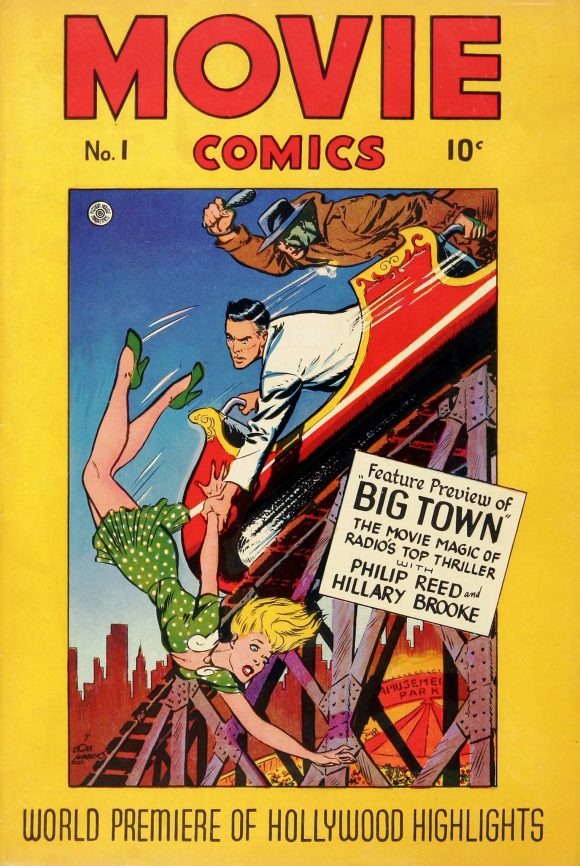
Bob Lubbers’ cover for Movie Comics #1 (Dec. 1946), Fiction House
Each issue of the Fiction House series had a film adaptation written by Claude Lepham that was superbly rendered by Lubbers. Regrettably, that title did come to an end after the fourth issue and Lubbers never drew any other movie tie-ins. However, he did go on to draw the Tarzan newspaper strip and several others, as well as freelance in the comic book industry for publishers like DC, ACG, Warren, Gold Key and Marvel.
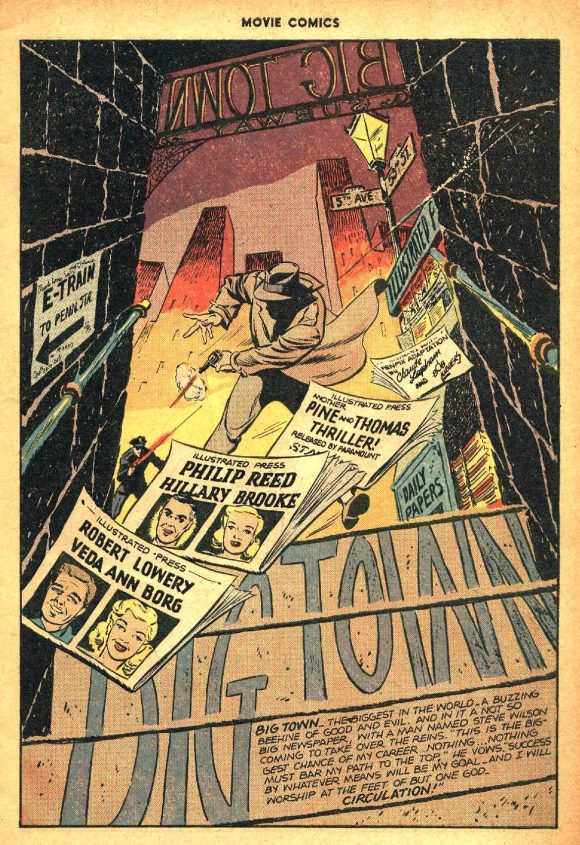
A very Eisner-like splash page by Lubbers for the adaptation of the 1946 thriller Big Town in Movie Comics #1. Script: Claude Lepham.
—
Jesse Marsh. When you think of Jesse Marsh, you inevitably remember all those years he drew the Tarzan comic book (17 years to be exact, from 1948 to 1965). During that time, however, he did more than just draw the adventures of the vine-swinger. Marsh also illustrated a number of film adaptations for Dell and Gold Key comics, including The True Story of Jesse James (1957), Tom Thumb (1958), The Big Circus (1959), Greyfriar’s Bobby (1961), and The Wonderful World of the Brothers Grimm (1962). And, for many years, he adapted a great number of Disney live-action films for the Sunday newspaper strip feature, Walt Disney’s Treasury of Classic Tales.
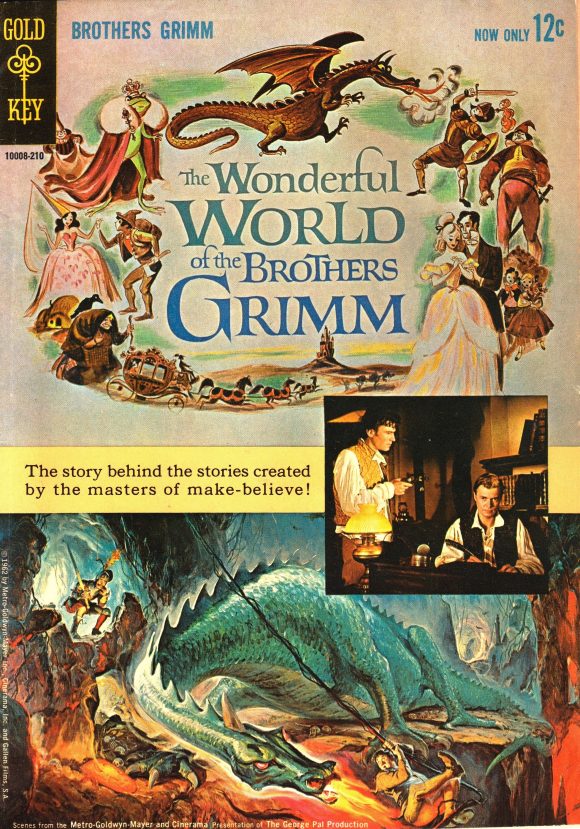
The Wonderful World of the Brothers Grimm (1962, Gold Key). Cover by MGM studio art staff.
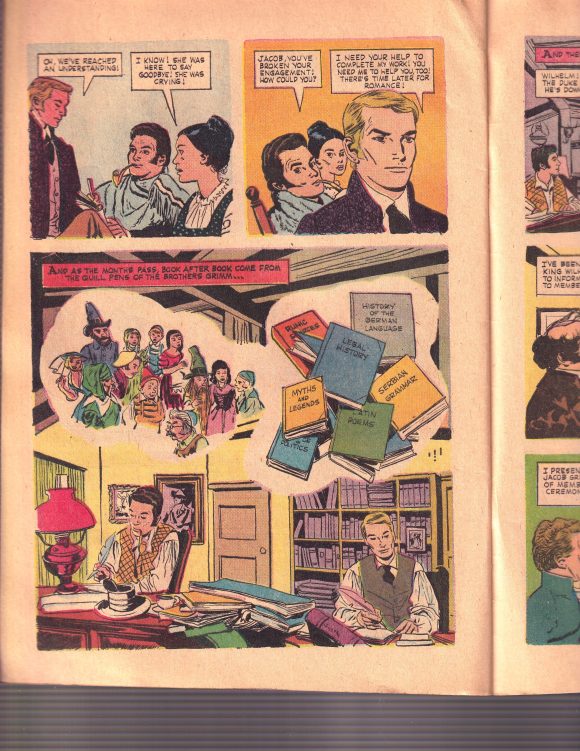
Story page by Marsh for The Wonderful World of the Brothers Grimm. Unknown scripter.
—
Curt Swan. In all, Curt Swan drew only three film adaptations during his many decades at DC. Two of them were quite short: Beyond Glory (1948) in The Adventures of Alan Ladd #4 (Apr.-May 1950) was only four pages long, and Destination Moon (1950) in Strange Adventures #1 (Aug.-Sept. 1950) was only eight. (Quick side note: Destination Moon was a film that got to have two separate comics adaptations. One was the DC version in Strange Adventures #1. The other was a full, 32-page comic published by Fawcett, with art by Dick Rockwell and a script by Otto Binder.)
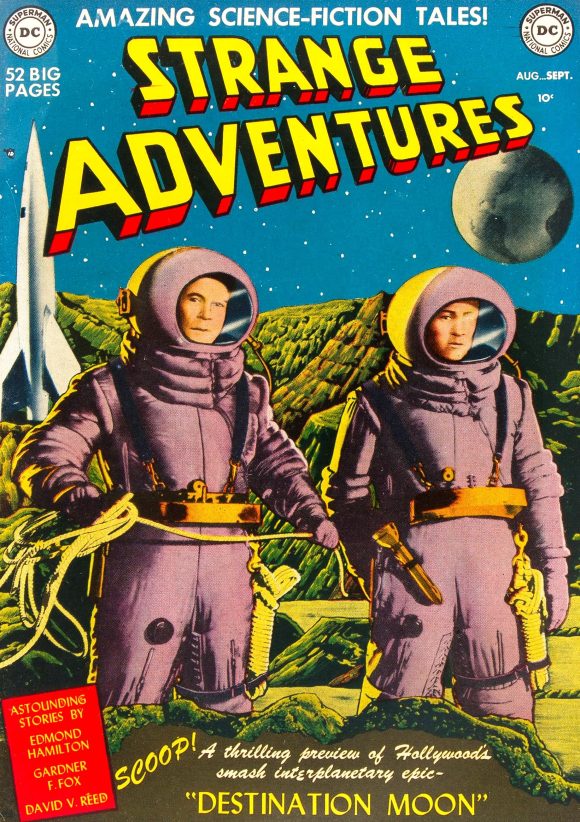
The first issue of Strange Adventures (Aug.-Sept. 1950, DC) had a photo cover from Destination Moon (1950).
Following those two movies, it would be 37 years before he would do another — but it was the one he was meant to do.
While the first two Superman movies never had comic book adaptations (because of onerous contractual issues), the third did, with Curt Swan – Superman’s greatest artist – doing the pencils… but not handled well because he needed the right inker for his work. However, DC’s Superman IV Movie Special (1987) finally got it right. The movie itself wasn’t good, but the adaptation was filled with glorious Swan pencil work (except for about a dozen pages in the 64-page issue by Don Heck) of Superman and the rest of the cast, looking as they appeared in the regular comic-book series. The inks on the issue were handled by Frank McLaughlin, Al Vey, John Beatty, and Dick Giordano.
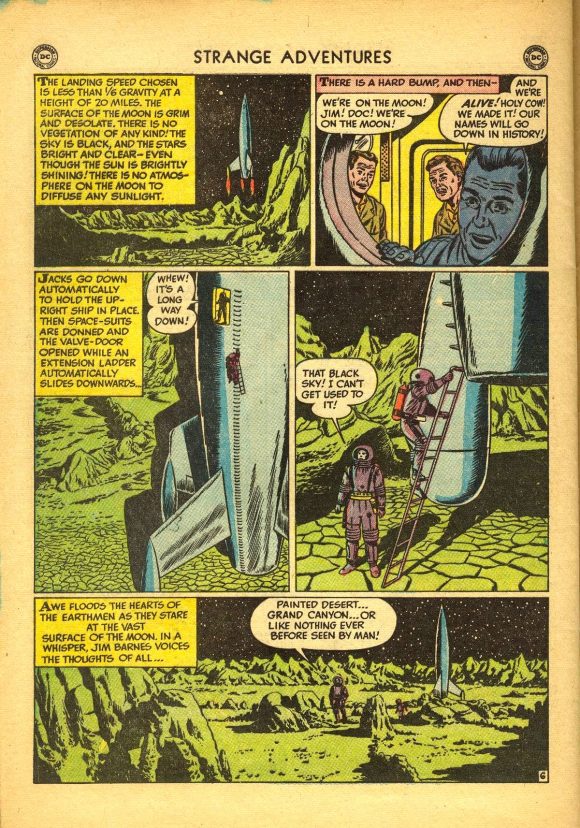
Curt Swan drew an eight-page adaptation of Destination Moon, with writing by Gardner Fox, for Strange Adventures #1.
—
Everett Raymond Kinstler. Even in his time when he was rendering actors for movie adaptations, Everett Raymond Kinstler showed an exactness and incredible richness seldom seen in any other comic artist of the day. Eventually, he would go on to have nine U.S. presidents sit for him as he painted their portraits. However, Kinstler started out like many others, drawing superheroes in the 1940s, including the Black Hood for MLJ, the Golden Age Hawkman for DC, and the Fighting Yank for Pines. He even drew a number of romance-comic stories when that market took off in the late ’40s.
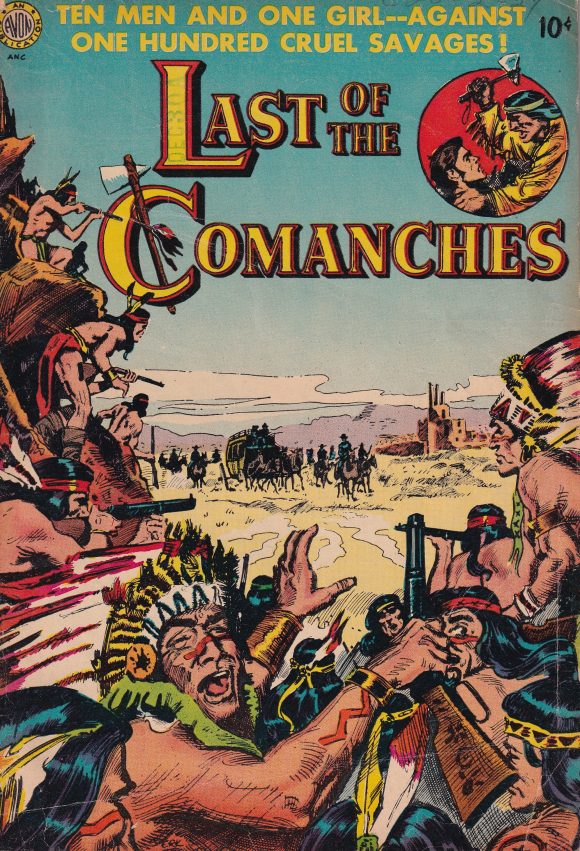
The Last of the Comanches (1953, Avon) with a cover by Everett Raymond Kinstler.
In the 1950s, he drew covers for movie adaptations of The Unknown Man (1951) and Red Mountain (1951), as well as the inside stories for The Last of the Comanches (1953), The Conqueror (1956), and Santiago (1956).
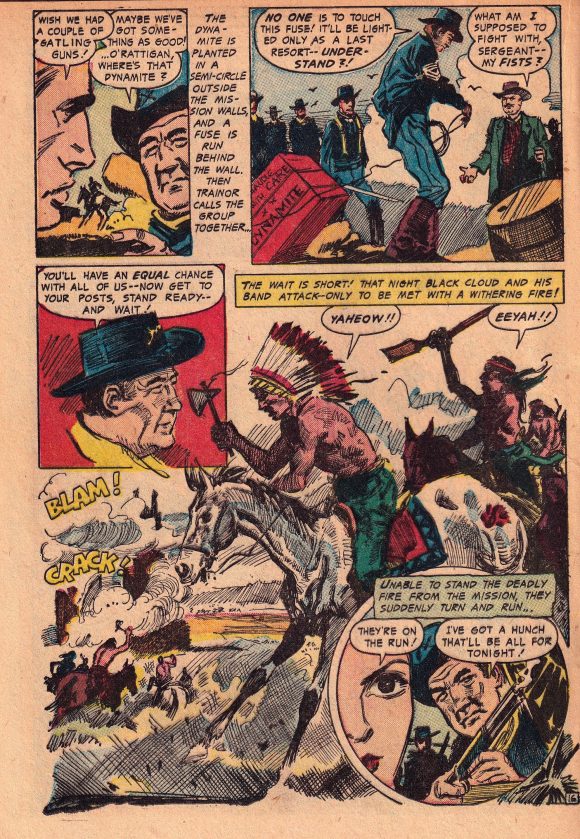
A sample of the incredible Kinstler art for The Last of the Comanches. Scripter unknown.
—
Warren Tufts. Warren Tufts was another supreme comic artist of the 20th century. Do not be surprised if you haven’t heard of him (though he did work on the Jonny Quest TV series and turned to drawing humor comics, including dozens of Pink Panther issues). Tufts was most notable for his achievements with Western comics, particularly newspaper strips such as the amazing Casey Ruggles and Lance. It’s no wonder then that his first film-to-comic rendering was the 1962 epic How the West Was Won.
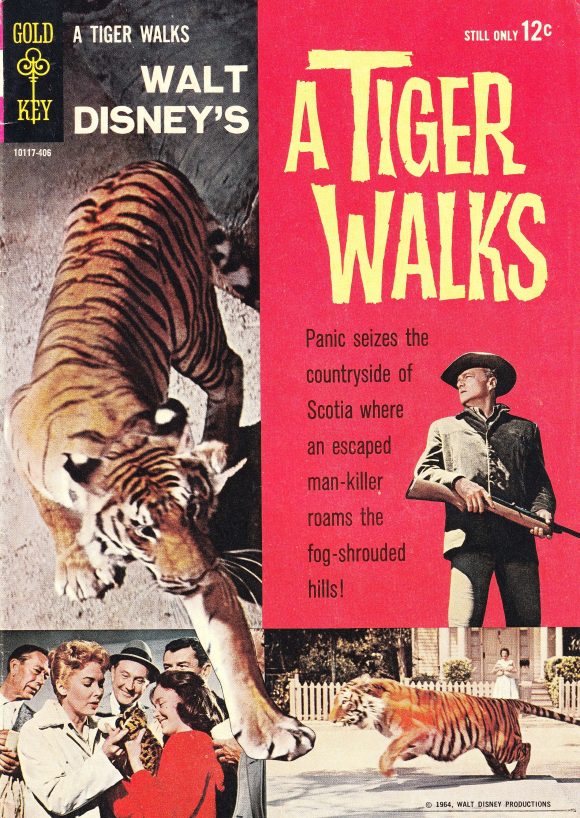
Walt Disney’s A Tiger Walks (June 1964, Gold Key).
Tufts drew only one other movie adaptation and that was for Walt Disney’s A Tiger Walks (1964), about a hunt in a small town and nearby foggy hills for an escaped circus tiger, with a sheriff caught between his daughter on one side who wanted the animal to be captured alive, and a slimy self-serving politician who wanted it killed.
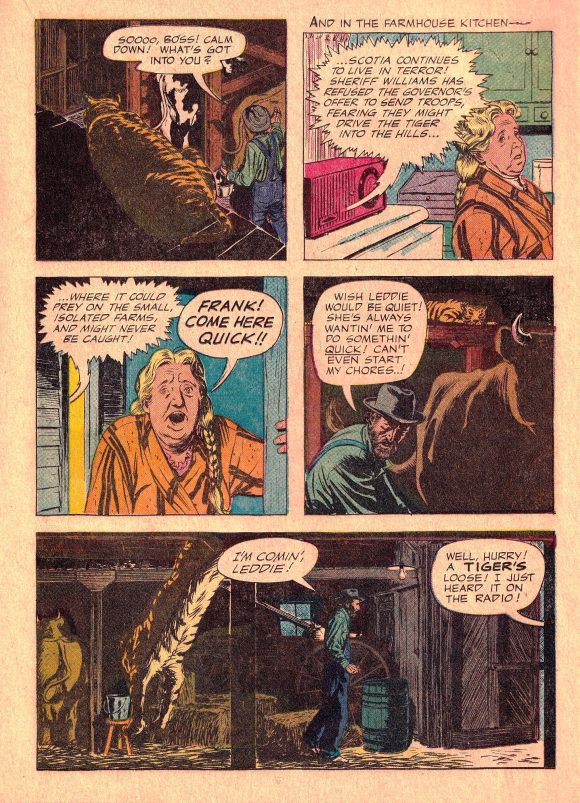
Warren Tufts’ use of light and shadow was exceptional in the adaptation of A Tiger Walks. Scripter unknown.
—
Alberto Giolitti. Giolitti got his start as an illustrator in his native Italy, but wanted to come to America where more opportunities existed drawing comics. In 1949, he moved to New York on a visa and showed up at the East Coast office of Western Publishing with his portfolio. He was hired and over the next few decades drew TV comics based on the shows The Cisco Kid, Gunsmoke, Have Gun – Will Travel, and others.
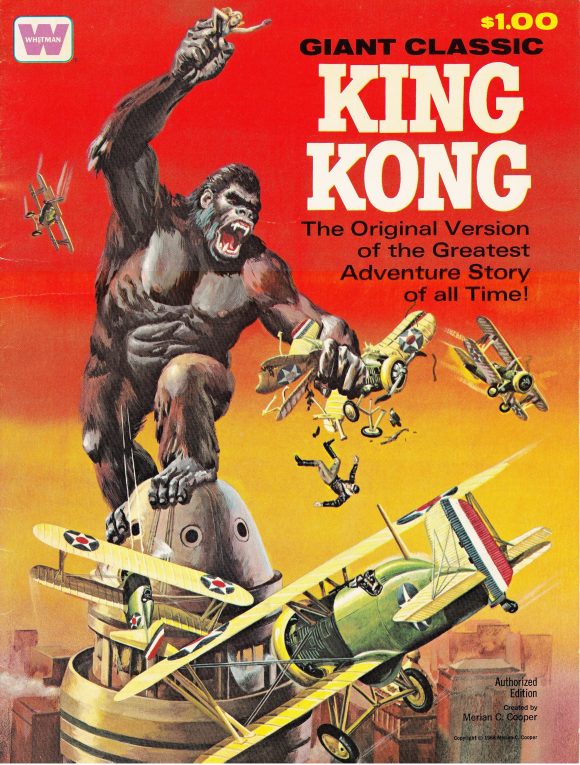
George Wilson’s magnificent painted cover was perfect for King Kong. The comic was first published in 1968 by Gold Key and re-released as a $1 treasury in 1976, under the Whitman name.
In addition, he also drew film adaptations of Alexander the Great (1956), Lord Jim (1965), King Kong (based on the novelization of the 1933 story by the film’s co-producer and co-writer Merian C. Cooper), and Beneath the Planet of the Apes (1970). (Lord Jim and King Kong had Giolitti working with artist Giovanni Tucci.)
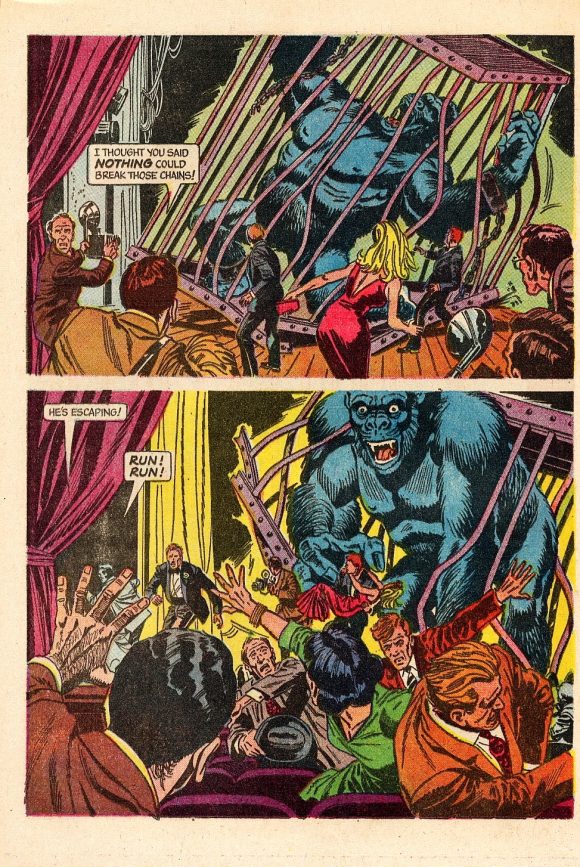
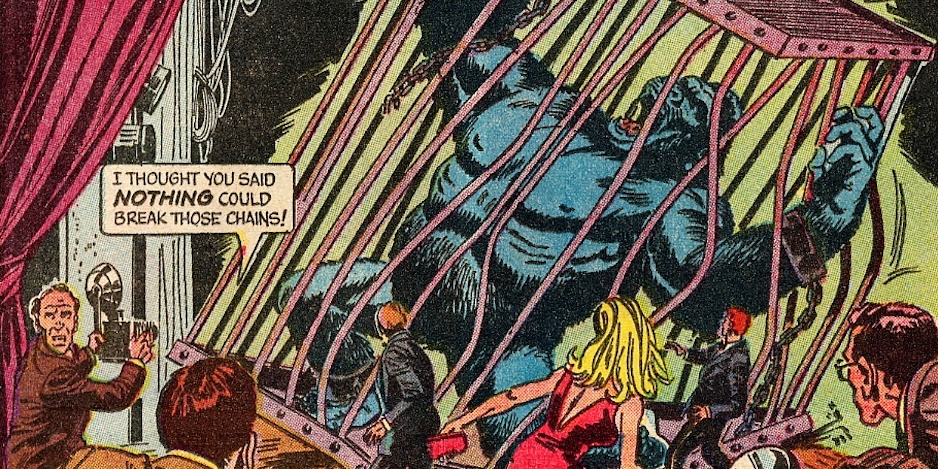
Yeah, let’s take a gigantic, super-strong ape to New York City. What could possibly go wrong? King Kong by Giovanni Ticci and Alberto Giolitti. Writer: Gary Poole.
—
Sam Glanzman. Sam Glanzman was particularly respected for his art across many genres, including mythology, prehistoric times, and modern warfare. That continued with movie adaptations, including the original adventure of the submarine Seaview in the film version of Voyage to the Bottom of the Sea (1961), a tender story of a handicapped girl’s love for Lad: A Dog (1962), and across the wild lands of Africa in Hatari! (1962) and India in Maya (1966). Not to mention, Glanzman’s exceptional drawings for Marco Polo (1962).
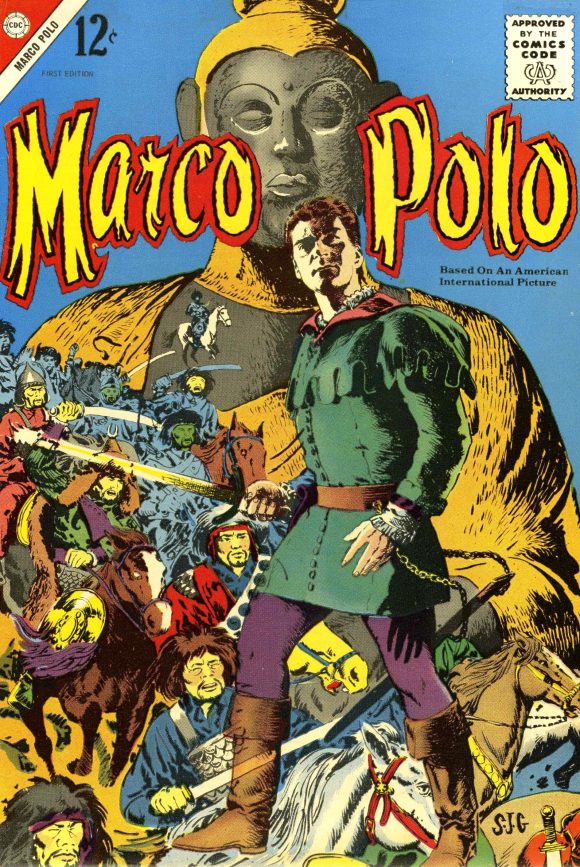
Gorgeous cover by Sam Glanzman for the Marco Polo adaptation from Charlton.
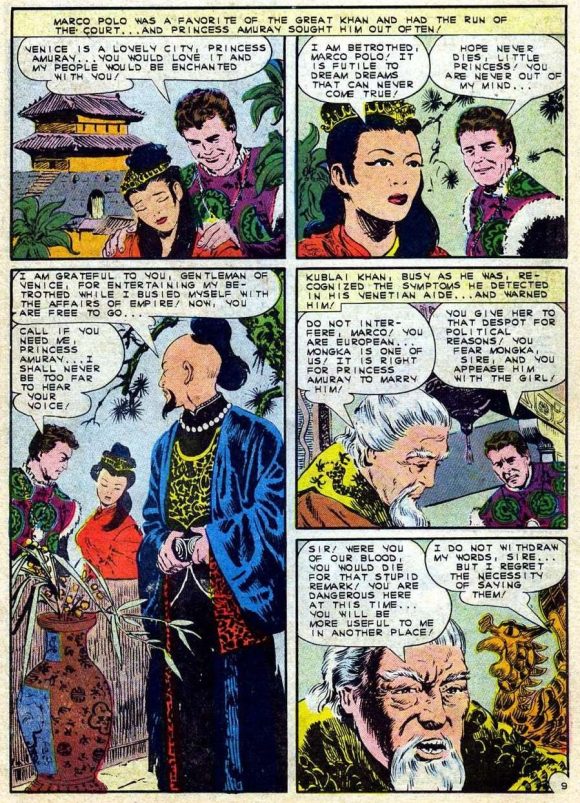
Glanzman proved he could draw more than war scenes with the Marco Polo adaptation. Writer: Joe Gill.
—
Dick Giordano. While Dick Giordano was best known for his time at DC, especially in his position as an editor (and, for many fans, as Neal Adams’ best inker at the company), there was a time prior to that when he was doing a vast amount of work as an artist at Charlton and Dell. Among his screen adaptations were 1954’s Southwest Passage (when published within Charlton’s Six-Gun Heroes #26, it was titled “Camels West”), and for Dell, The Castilian (1963), The Great Race (1965), Battle of the Bulge (1965), The Naked Prey (1966), and Dr. Who and the Daleks (1966).
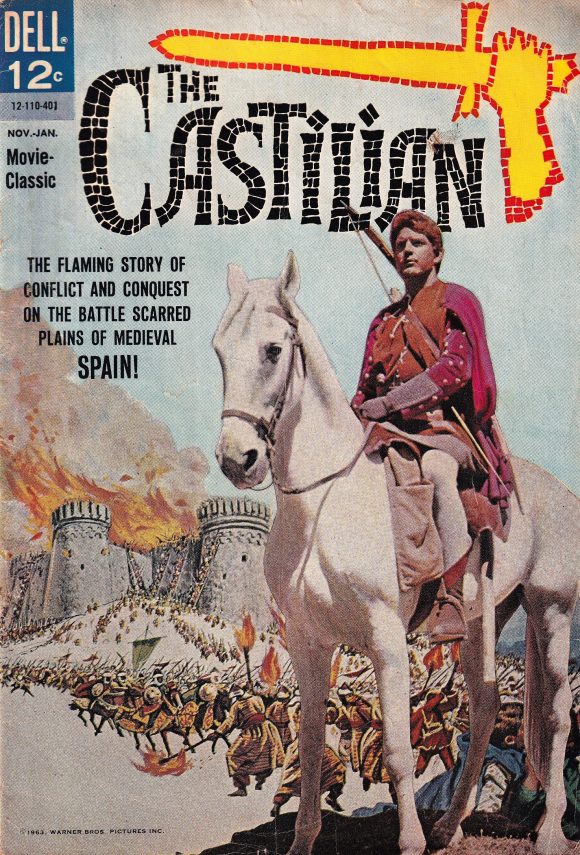
The cover of Dell adaptation (Nov. 1963–Jan. 1964), of The Castilian (1963), with background art (by an unknown illustrator) taken from the movie poster.
He also provided a dynamic cover for Charlton’s Konga (1961) and inked John Tartaglione’s pencils on Dell’s adaptations of Jason and the Argonauts (1963), Beach Blanket Bingo (1965), and War-Gods of the Deep (1965).
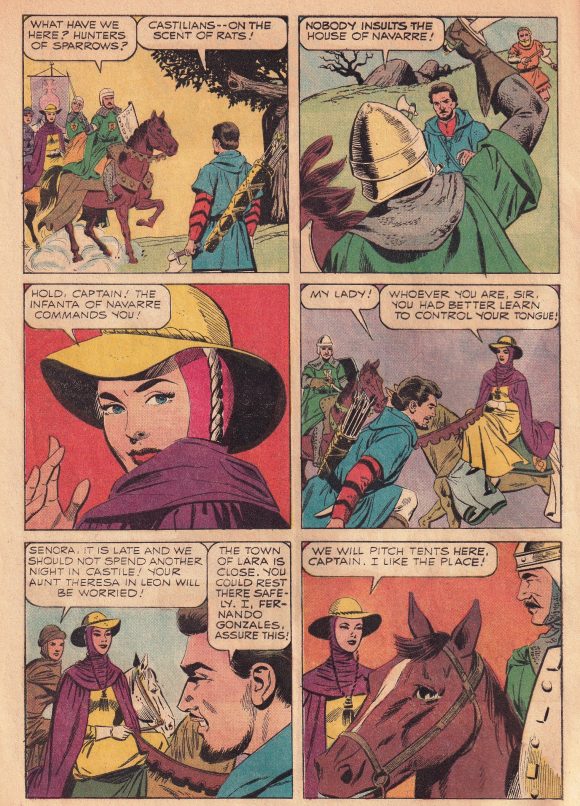
Dick Giordano drew a simple but cleanly rendered adaptation of The Castilian movie. Scripter unknown.
—
Frank Springer. Frank Springer truly made his mark outside the mainstream comics field with his incredible art on the serialized, very adult story The Adventures of Phoebe Zeit-Geist in 1965, in the magazine Evergreen Review. Prior to that, though, his work could be seen in much more established comics with the Dell adaptations of Twice Told Tales (1963), The Masque of the Red Death (1964), Cheyenne Autumn (1964), and later with The War Wagon (1967). But his best movie-to-comic tie-in was, in my opinion, The Raven for Dell in 1963.
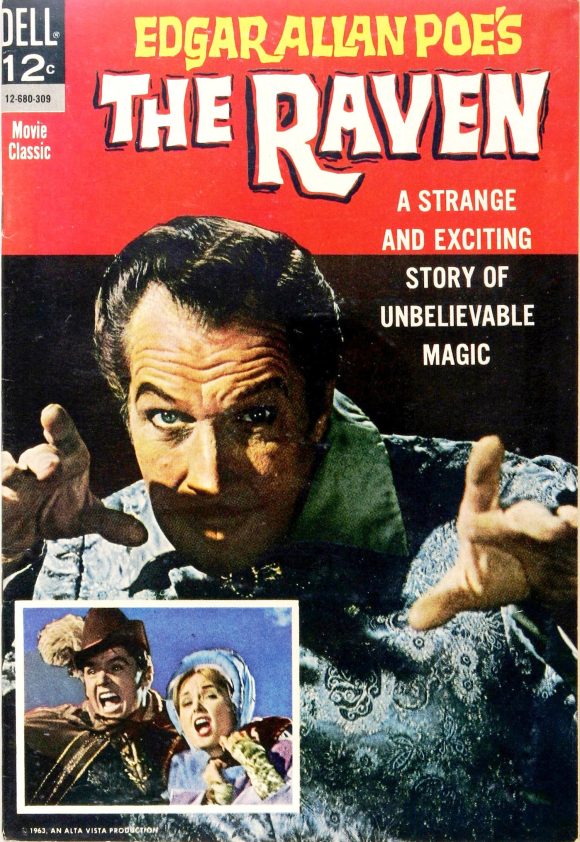
Vincent Price was the predominant actor on the front cover of the comedy-horror movie The Raven (1963). In the smaller photo are Olive Sturgess and Jack Nicholson. (1963, Dell).
The Raven was a movie for fans of horror movies that needed a break from all the serious films from American International Pictures and other studios in the early ’60s. The Raven was loosely based upon the poem by Edgar Allan Poe, and though the movie had mysterious castles, frightening madmen, sorcerers and the like, it was all played for laughs. And the talent in front of the camera included Vincent Price, Boris Karloff, Peter Lorre, and a young new actor as Lorre’s son, Jack Nicholson. Springer’s art perfectly captured the actors and the screen’s wild environs.
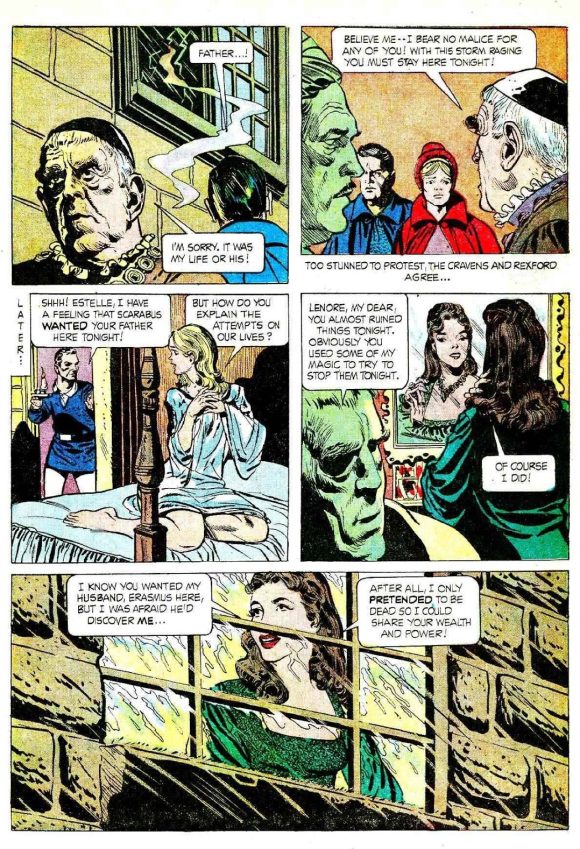
The Raven adaptation (1963) was one of Frank Springer’s best works for Dell. Scripter: Don Segall.
—
John Bolton. While the focus of my book is on American-published movie comics, I knew I would be negligent if I ignored what was going on across the pond. During the ’70s, a UK magazine called The House of Hammer had done an incredible job of illustrating over a dozen movies from the Hammer film studio. John Bolton, who soon thereafter was acclaimed for his work at Marvel and DC, drew three amazing adaptations — Dracula: Prince of Darkness (1966), The Curse of the Werewolf (1961), and the most recognized movie of the three, One Million Years B.C. (released in the U.S. in 1967), which became famous due to Raquel Welch in her prehistoric fur bikini.
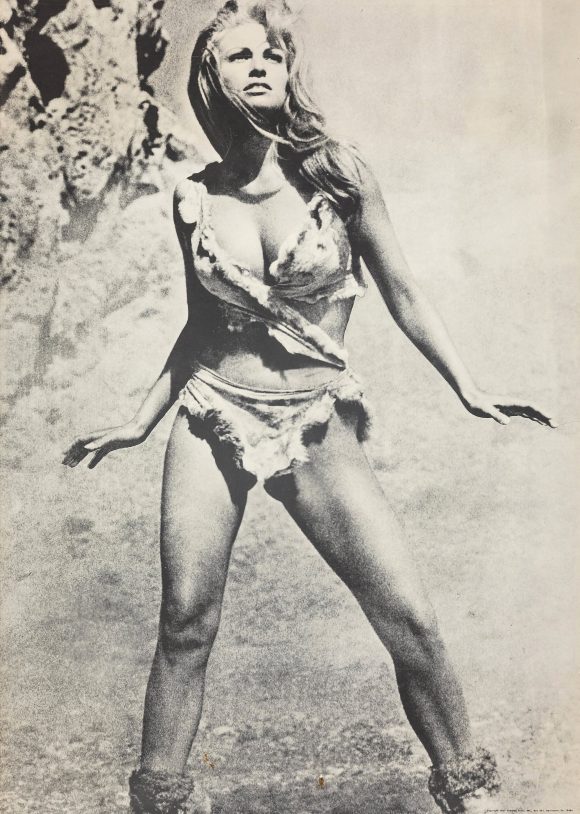
The poster that elevated Raquel Welch to international stardom.

Cover painting by Brian Lewis. The House of Hammer #14 (Nov. 1977, Top Sellers Ltd.).
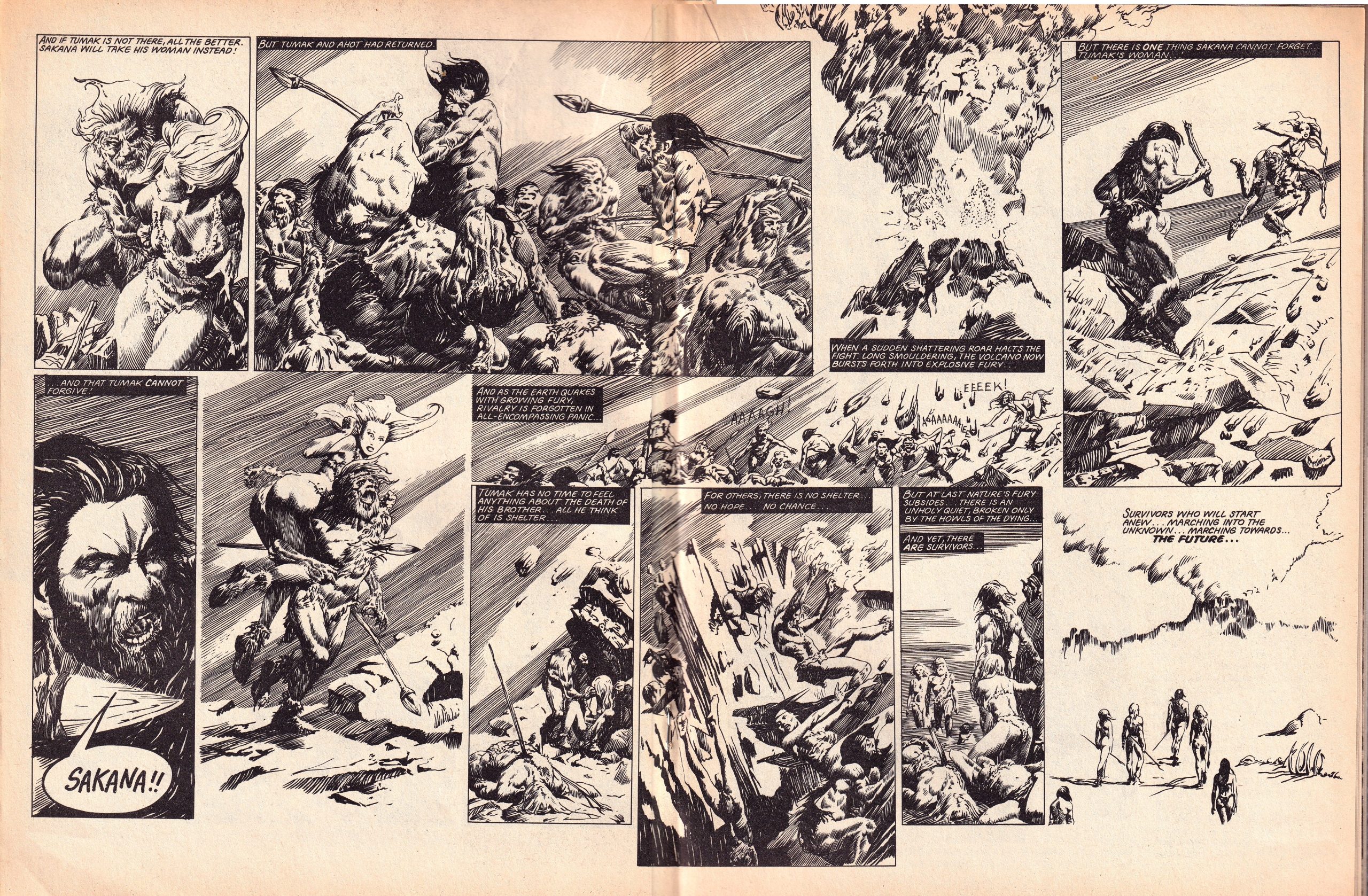
Marvelous John Bolton double-page spread for the One Million Years B.C. adaptation in The House of Hammer #14. Script: Steve Moore.
In 1992, Bolton would draw a three-issue comic book adaptation of Army of Darkness for Dark Horse, and a number of covers for comic-book spinoffs of the Aliens movie.
—
Gene Colan. Despite decades of drawing comics, Gene Colan had not even one film adaptation under his belt until the late 1970s when he did the dynamic pencil art for Marvel Super Special: Jaws 2 (MSS #6, 1978) and Meteor (MSS #10, Fall/Oct. 1979). Both adaptations featured his famously cinematic layouts, and he was blessed by having his inker from Marvel series Tomb of Dracula, Daredevil, and Doctor Strange: the great Tom Palmer! Colan would also draw the DC comics’ film adaptation of Little Shop of Horrors (1986).
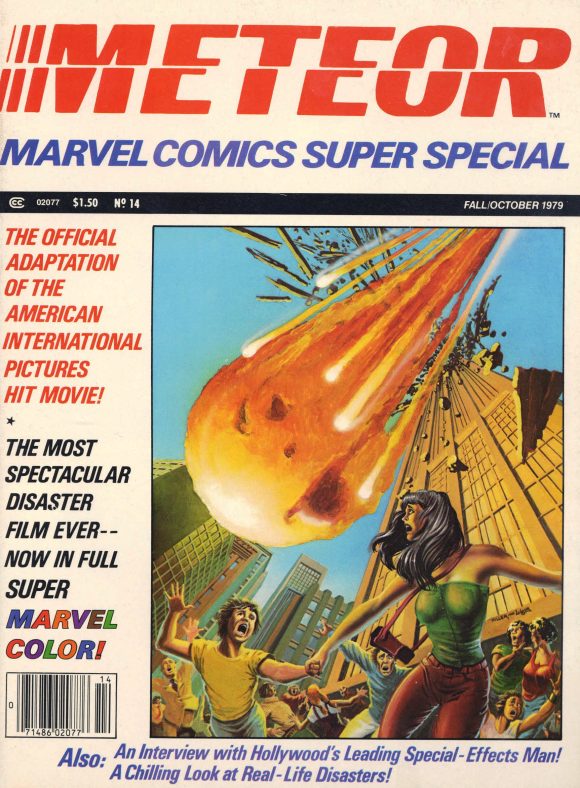
Cover painting by Earl Norem. Marvel Super Special #14 (Fall/Oct. 1979).
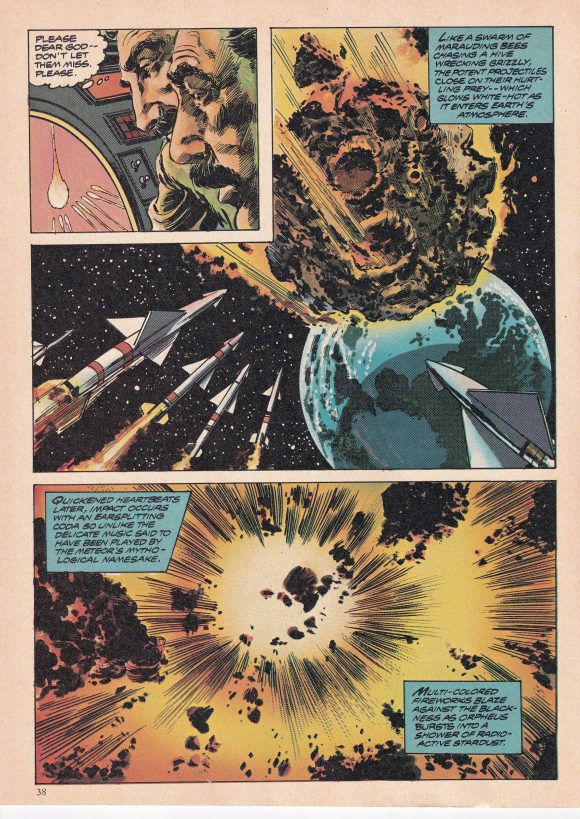
Story page of the Meteor film adaptation, with Gene Colan pencilling and Tom Palmer inking/painting. Scripted by Ralph Macchio. Marvel Super Special #14.
—
Carmine Infantino. While Carmine Infantino produced an incredible amount of comic book art during his lifetime, his Hollywood tie-in work was basically limited to a few run-of-the-mill, non-movie stories in the DC Comics series Jimmy Wakely (a Western cinema cowboy star and singer) and The Adventures of Alan Ladd.
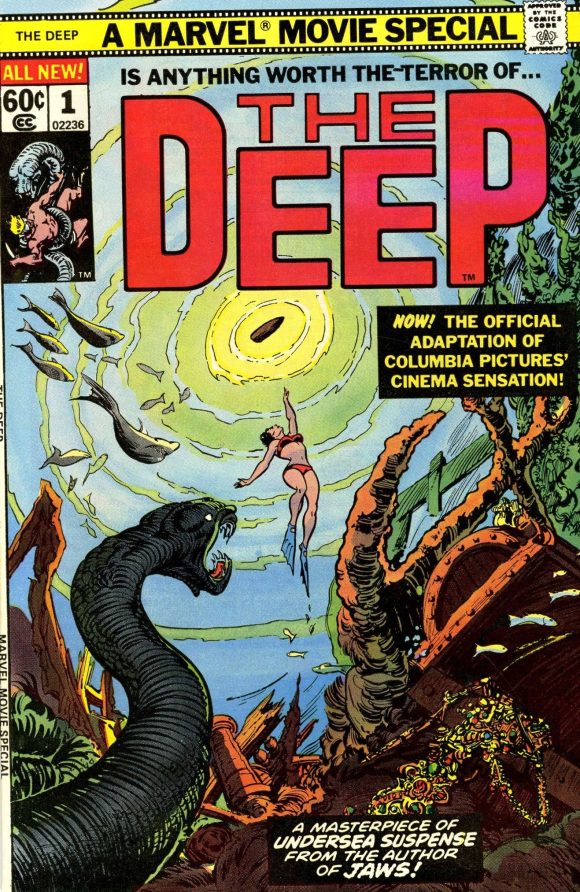
The Deep (1977, Marvel). Cover possibly penciled by Carmine Infantino, with Tom Palmer inks.
It wasn’t until Infantino left DC and went over to Marvel that he got to draw his first film adaptation, The Deep (1977), a movie that the studio hoped would duplicate the success of Jaws (1975). It didn’t, but the adaptation does have some good artwork penciled by Infantino and inked by Sonny Trinidad. Infantino would also draw many issues of Marvel’s Star Wars comic-book series.
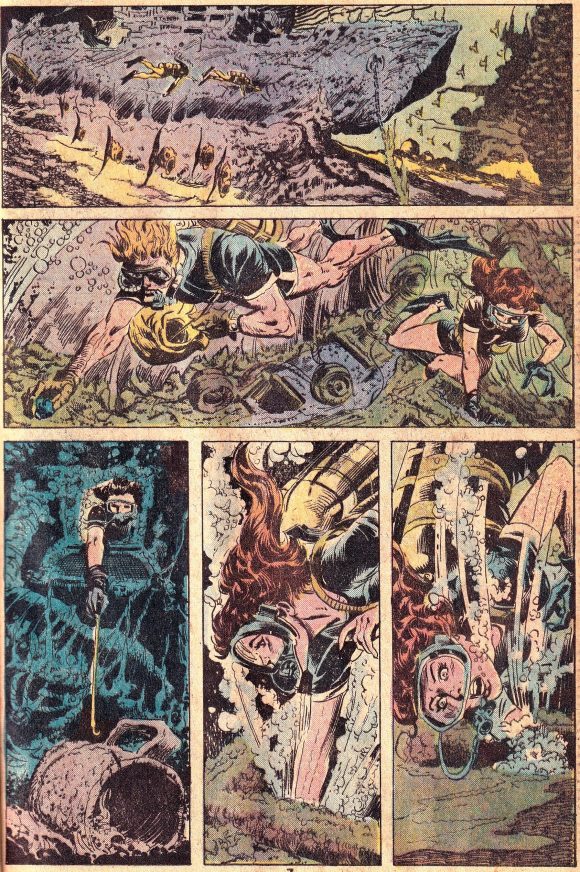
Interior story page penciled by Infantino, with inks by Sonny Trinidad. Script: Doug Moench.
—
Neal Adams. Though the 1991 Disney film The Rocketeer falls outside the focus of the book (1930s through 1970s), I inserted a final chapter listing 10 film adaptations from 1980-onwards that I consider exceptional works. The Superman IV: The Quest for Peace adaptation was one. The Rocketeer is another one… well, actually two.
The Rocketeer had two separate adaptations published by Disney. The regular graphic novel had a cover by The Rocketeer creator Dave Stevens (with inside story art by Russ Heath). The other had a different cover and interior story art by Neal Adams and his Continuity Associates crew, in 3-D.
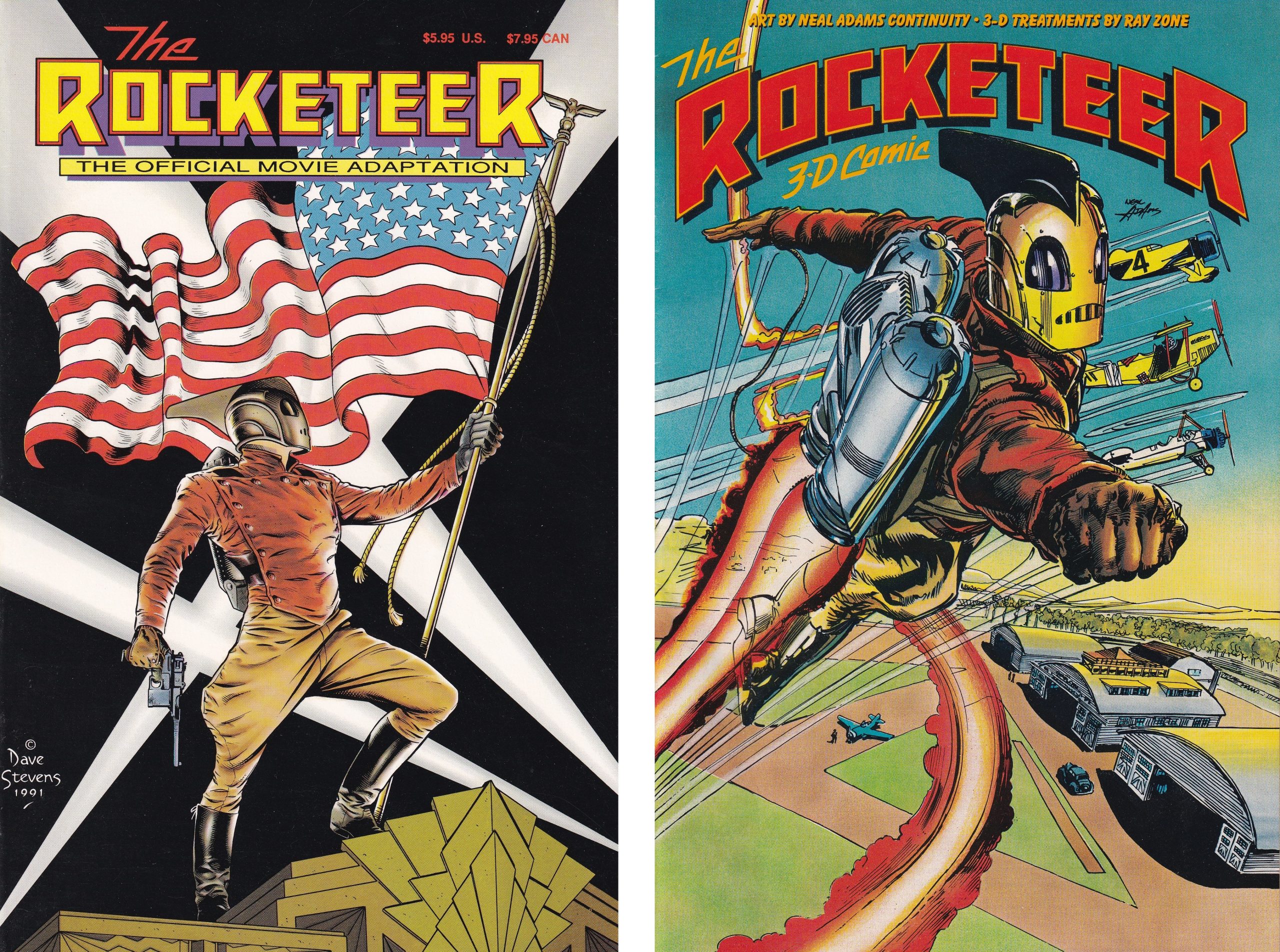
The regular graphic novel is on the left. The one on the right included a 3-D adaptation of the story, drawn by Neal Adams and his Continuity Associates.
And there you have it, 13 more comic book industry giants who helped make movie adaptations great, bringing the total for two days to 26. And — WAIT, what’s that you ask? “What about Lee Elias, Tom Gill, Marie Severin, Irv Novick, Matt Baker, Frank Thorne, August Lenox, Alden McWilliams, Gil Kane, Bob Oksner, Joe Sinnott, Joe Orlando, Fred Fredericks, Jim Aparo, and José Delbo? I happen to know they and others also drew movie comic books. What about them?”
Well… I had to leave some things in the book for you to read.
—
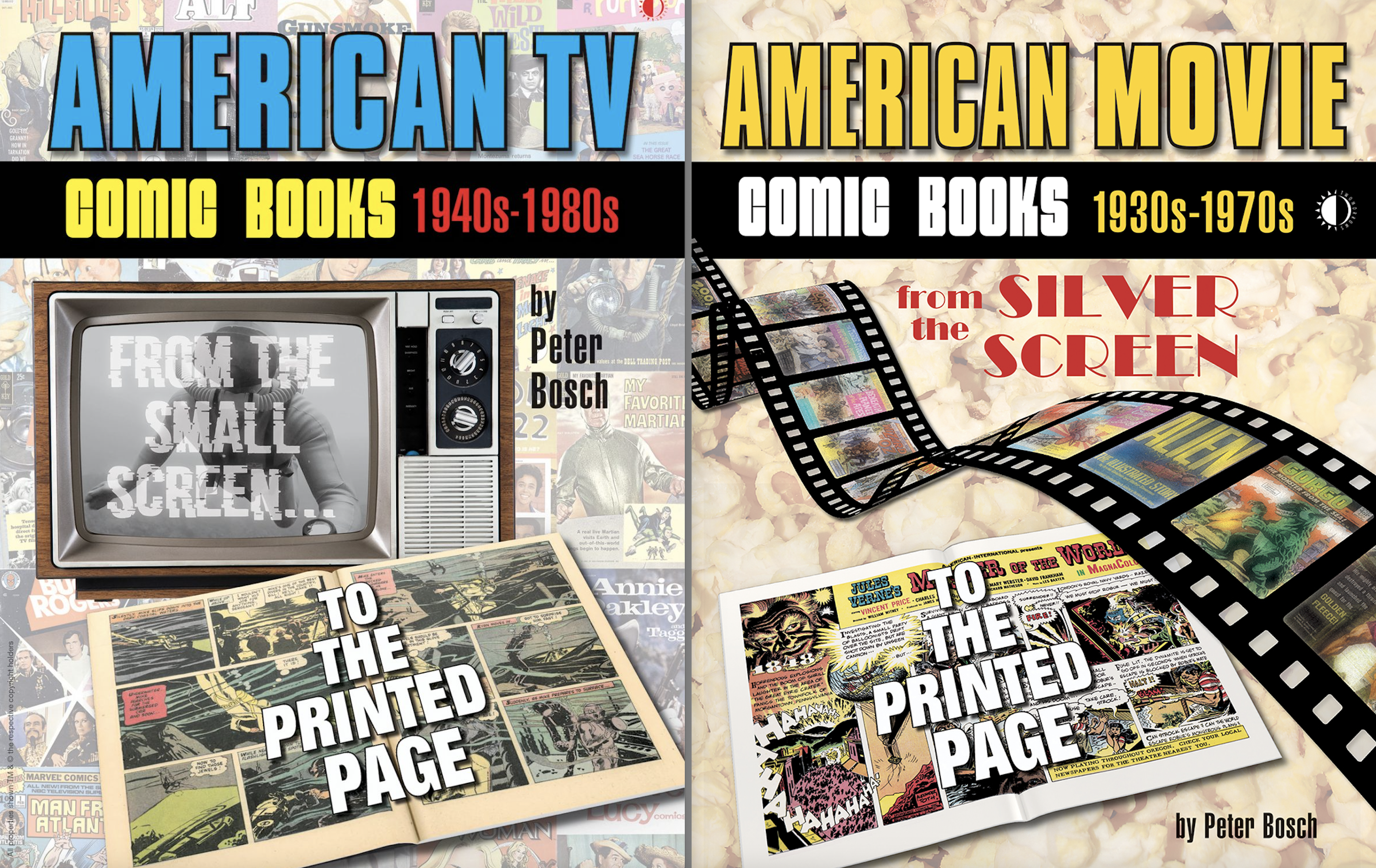
American Movie Comic Books (1930s-1970s) is a 192-page, full-color, oversize paperback. It lists for $34.95 and is due in comics shops Aug. 20. You can also order it directly from TwoMorrows. Click here.
American TV Comic Books (1940s-1980s) is a 192-page, full-color, oversize paperback. It lists for $29.95 and is available now from TwoMorrows. Click here.
—
MORE
— EXCLUSIVE PREVIEW: Peter Bosch’s Fab AMERICAN MOVIE COMIC BOOKS. Click here.
— AMERICAN MOVIE COMIC BOOKS: 13 Artists Who Helped Make Them Great. Click here.
—
13th Dimension contributor-at-large PETER BOSCH’s first book, American TV Comic Books: 1940s-1980s – From the Small Screen to the Printed Page, was published by TwoMorrows. (You can buy it here.) A sequel, American Movie Comic Books: 1930s-1970s — From the Silver Screen to the Printed Page, is out now. (Buy it here.) Peter has written articles and conducted celebrity interviews for various magazines and newspapers. He lives in Hollywood.

August 22, 2025
The Neal Adams Rocketeer comic was almost entirely redrawn from the storyboards by prolific storyboard artist Dave Lowery, with no mention of his name or work….