
Kubert’s birthday was this week — and the controversial comic strip debuted, as well…
By PETER BOSCH
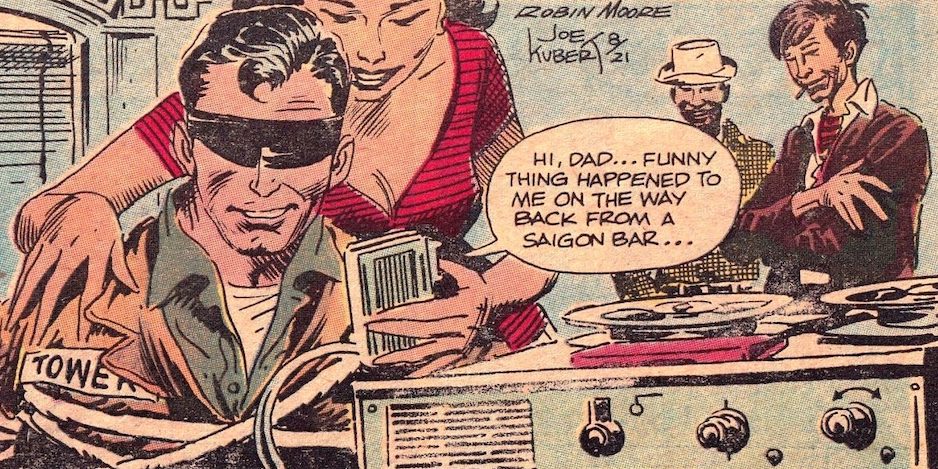
This week, we’re marking two interlinked milestones: Joe Kubert’s birthday — he was born 99 years ago, on Sept. 18, 1926 — and the 60th anniversary of the renowned artist’s newspaper strip Tales of the Green Beret, which first appeared Sept. 20, 1965.
Tales of the Green Beret debuted with an initial limited run of 72 daily strips after a short introduction. It returned April 4, 1966, for full-on syndication across the country and ran until July 21, 1968. The strip was credited as being written by Robin Moore, who authored the best-selling novel, The Green Berets, and co-wrote the lyrics of the unlikely hit song The Ballad of the Green Berets with Barry Sadler.
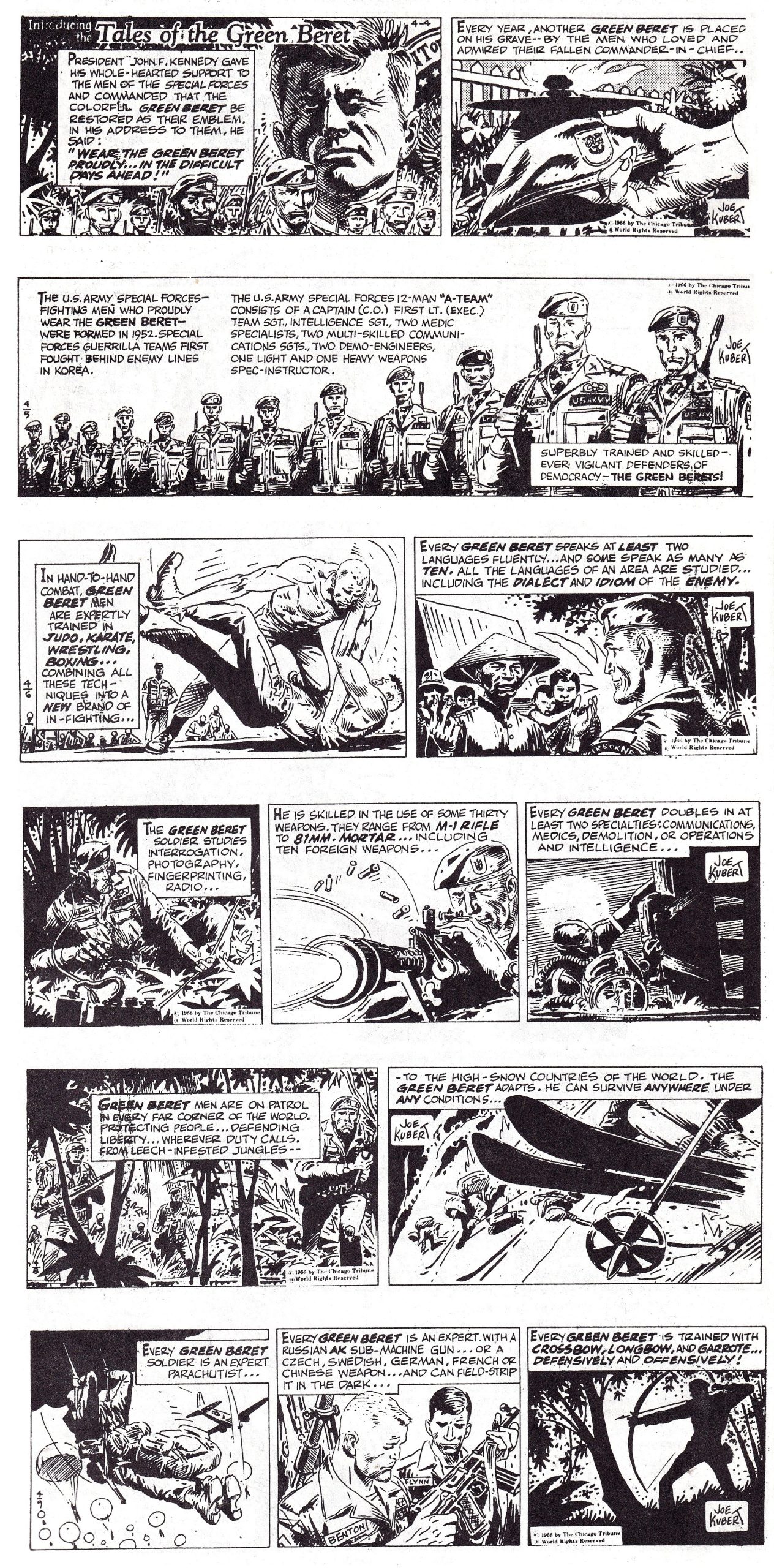
The first six 1966 dailies (April 4-9, 1966)
There have been, however, conflicting stories about who wrote the strip. In the introduction to a 1986 Blackthorne Publishing volume reprinting the first several months of the 1966 run, Moore noted: “Jerry (Capp), along with veteran comic strip writer Howard Liss and artist Joe Kubert and myself put together a year’s worth of continuity, stories both from my book and others I created from my experiences in Vietnam.” Kubert, in an interview with writer Matt Tauber that appeared in 2008, said the strip was written by Capp and, as to Moore, “he did not actually write it.” Replying to that statement, Moore’s widow, Helen, wrote, “Robin was involved in the writing and approved all the story lines.”
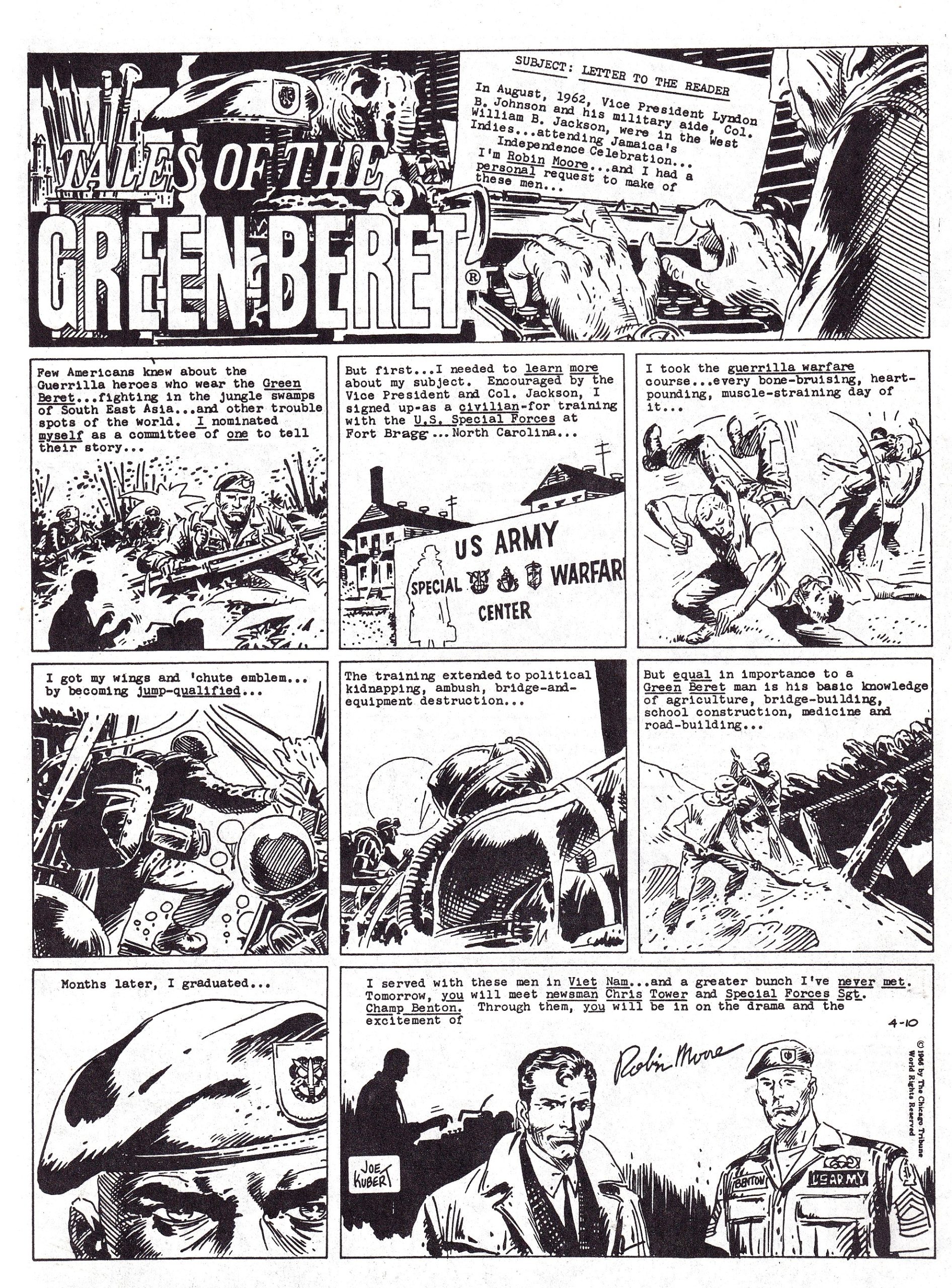
The first Sunday, in black and white
There is also a disagreement about who it was that recommended Kubert as artist. In the same interview with Tauber, Kubert said the initial person they approached to draw the strip was Neal Adams, but Adams had to turn them down because he was busy with drawing the Ben Casey newspaper strip and he suggested Kubert. Helen Moore, in her response statement, wrote her husband had talked with Capp and it was he who suggested Kubert. It was probably a combination of both. Capp was writing the Ben Casey strip and would likely have recommended Adams, who then suggested Kubert.
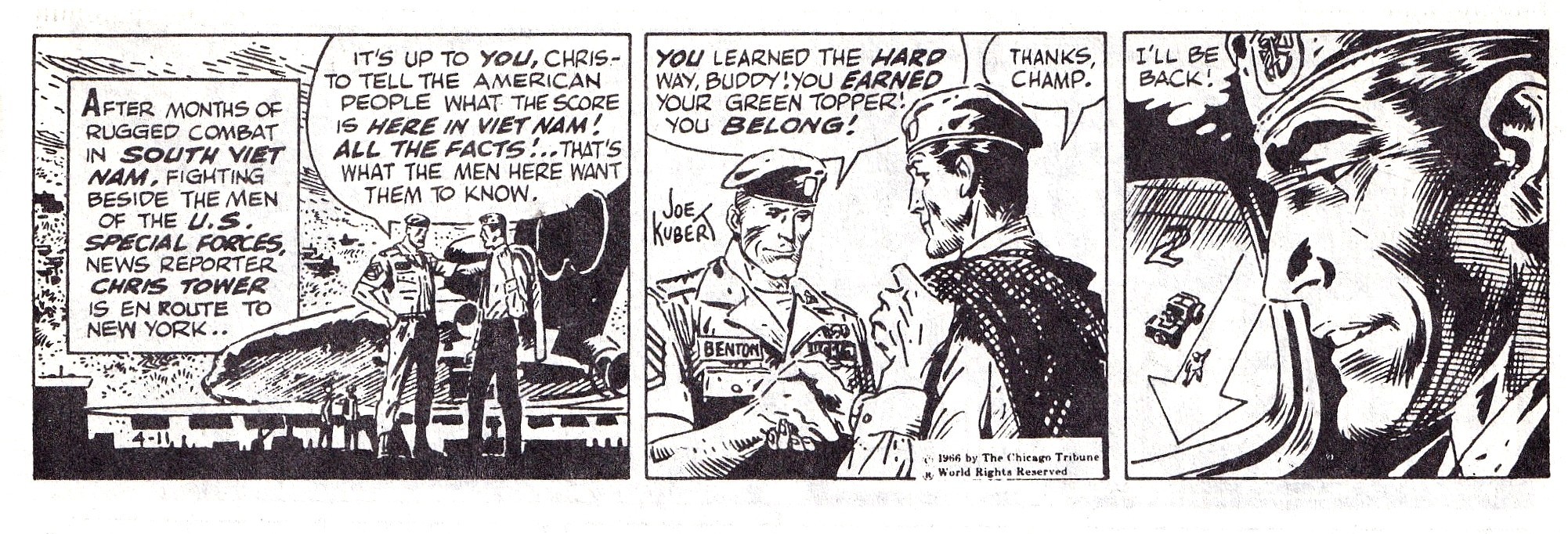
(NOTE from Dan: Adams told me he’d recommended Kubert, saying he didn’t feel he was right for the job, but that Joe would be perfect. He was right.)
Kubert joined with the understanding that it would be an adventure strip and not a political one, and that’s how it began. As time went on, however, the writing reflected a favorable attitude about the conflict, as the nation’s sentiment grew more negative. (The strip did also tell stories from other parts of the world, it’s worth noting.) Kubert became unhappy and left.
“It was awful to do something with which I was in such total disagreement with,” he told Tauber. “As I say again, it wasn’t the politics of it. It was just the fact that I felt if you’re going to do a political strip let it appear on the editorial page, not on the comic-strip page.”
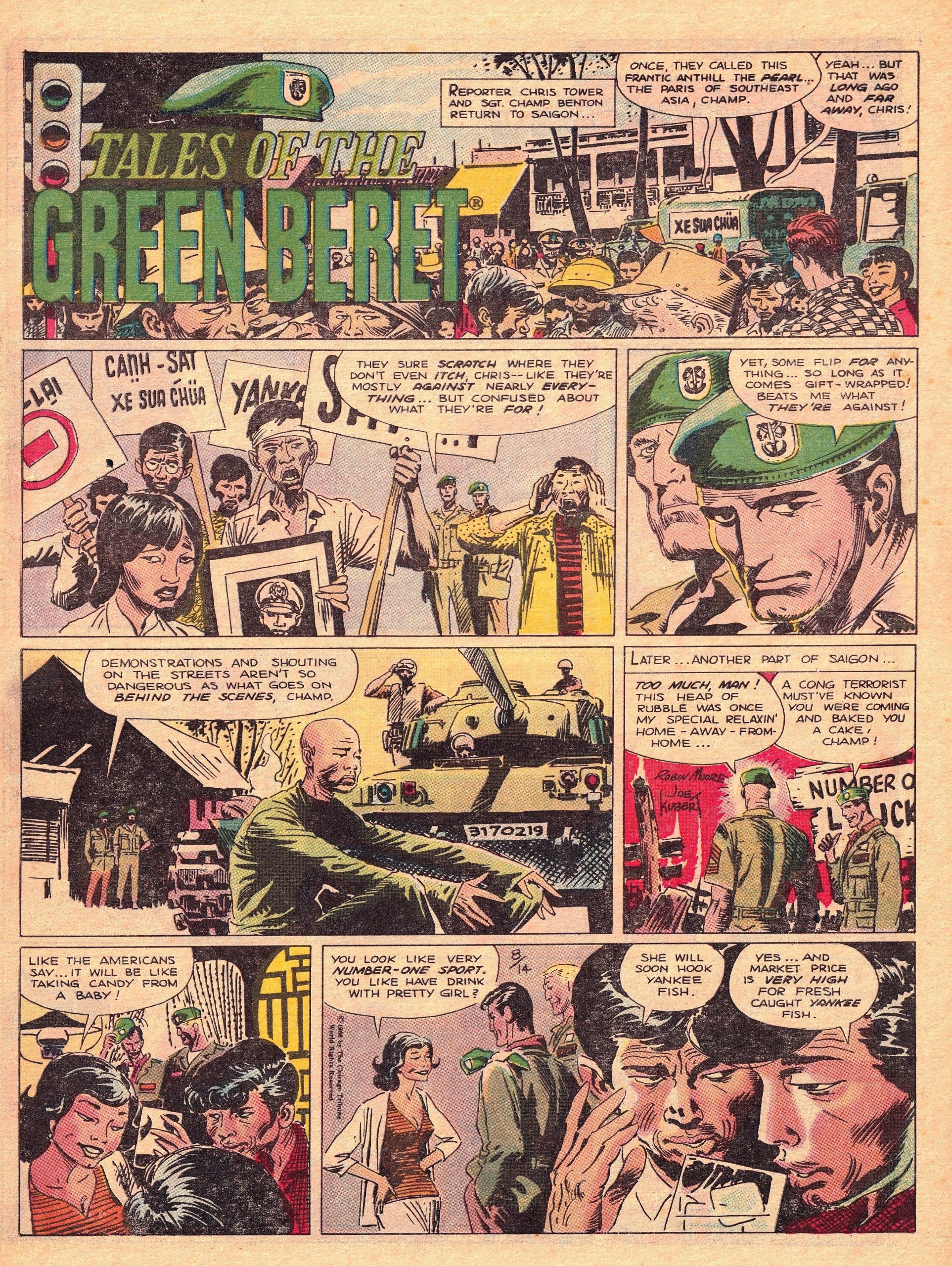
August 14, 1966
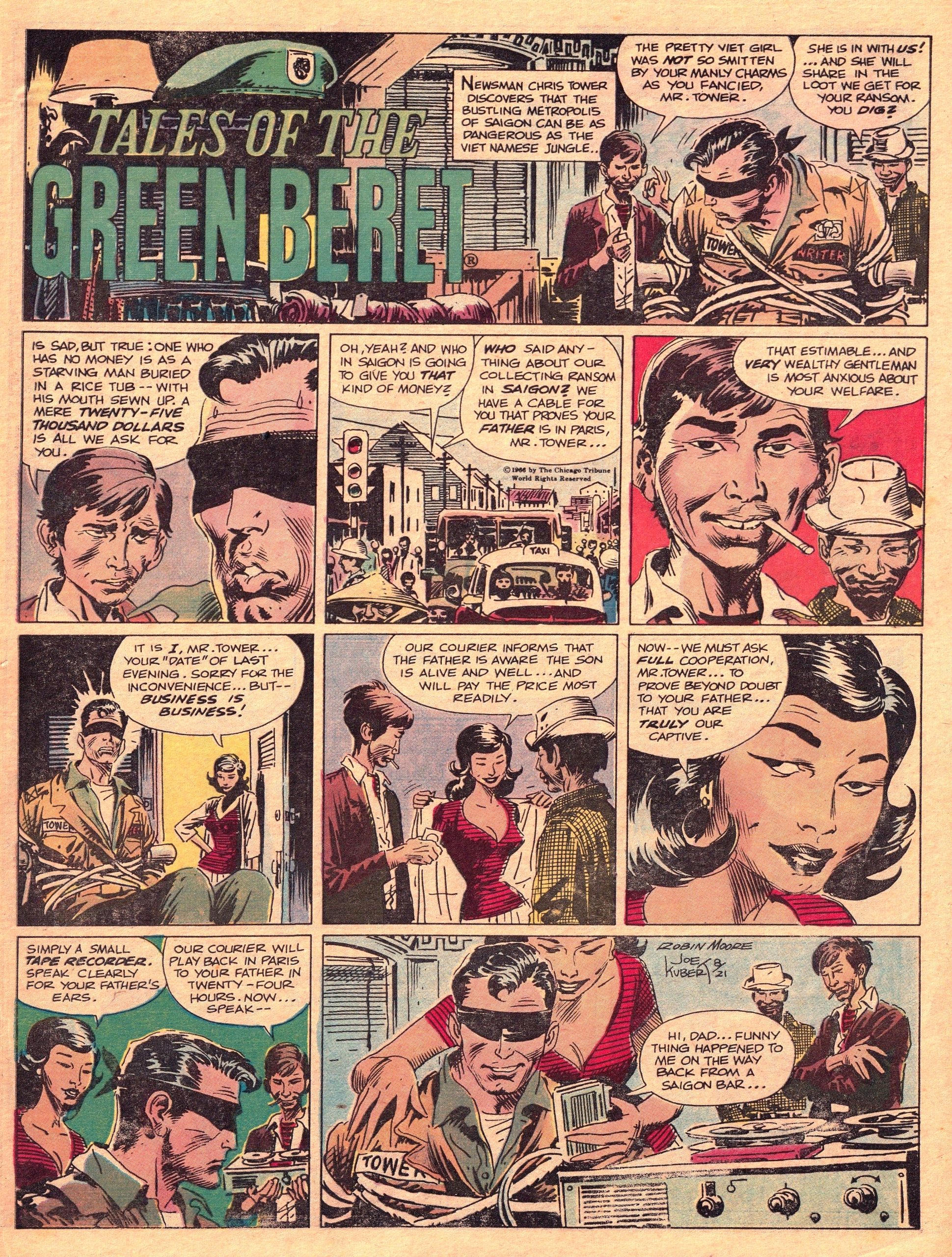
August 21, 1966
The artist’s last daily was dated January 10, 1968. John Celardo, former illustrator of the Tarzan newspaper strip, took over the drawing until the series’ end on July 21, 1968.
Kubert’s work on the strip is really quite amazing and, while there were the three Blackthorne volumes and a few reprints from others, an ambitious publisher really should gather all of the installments in one book.
—
MORE
— 13 COVERS: A JOE KUBERT Birthday Celebration. Click here.
— IRWIN HASEN, NEAL ADAMS and JOE KUBERT Walk Into a Bar… Click here.

September 20, 2025
TBH, I’d normally be inclined to take Kubert’s claims of having any issue with the content of the strip with a grain of salt.
And yet, around the same time that he was starting on the strip, he was co-creating Enemy Ace so… maybe he was telling it straight?