
13 HIGHLIGHTS: An ANNIVERSARY SPOTLIGHT as the calendar turns to 2026…
By JASON CZERNICH
1986 was probably the most important year in comics for any fan who was alive and actively reading comics at the time.
For me, it was the year I walked into my first actual comic shop—Moondance Comics at the Hampshire Mall in Hadley, Massachusetts, in the spring of 1986. Before that, I had been collecting Batman and Detective Comics for well over a year through my local corner store.
The moment I first set eyes on rows and rows of wooden shelves filled with comics, I realized I had found my new candy store. Even at that young age, I knew there was an electricity in the air shared between the creators, publishers, and the fans. It was an exciting time when comics grew, creatively speaking, substantially almost overnight.
Or, really, across a year. Here are 13 HIGHLIGHTS from the one that changed everything:
—
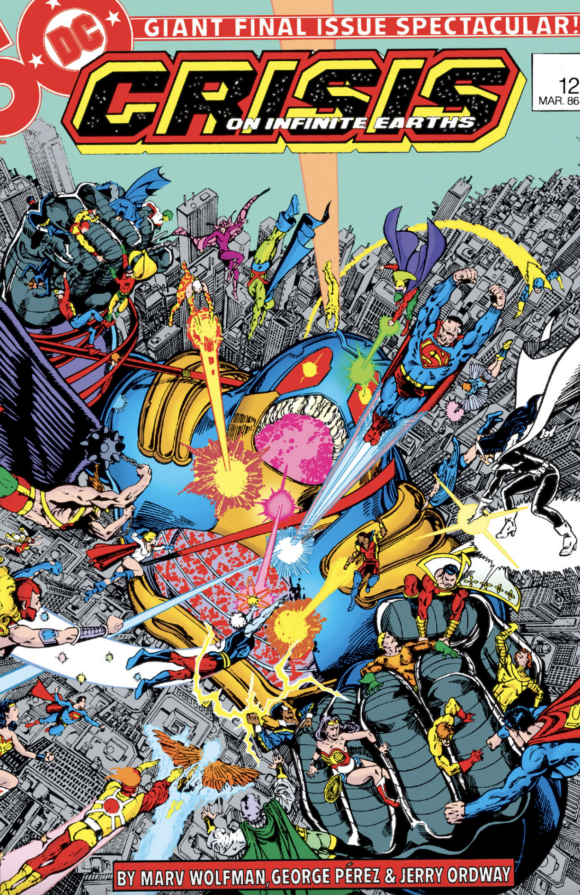
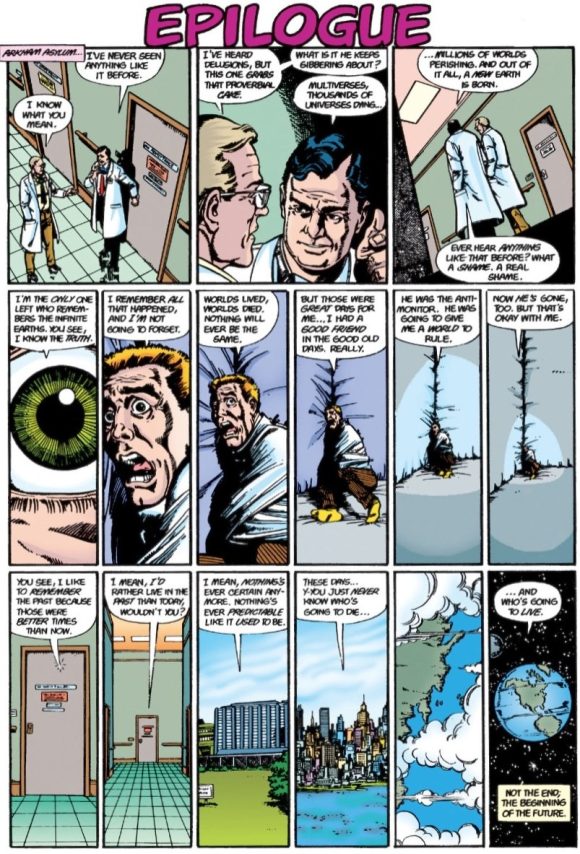
Crisis on Infinite Earths Had Ended… and So Had the Bronze Age of Comics. In late 1985, DC’s continuity-altering Crisis on Infinite Earths had wrapped. With the sweeping changes and high-profile deaths this pivotal maxi-series by Marv Wolfman, George Perez and co. brought about, nobody was quite sure what further changes lay ahead.
Adding to the uncertainty was the fact that DC Comics titles existed in a pre-Crisis/post-Crisis limbo during the first half of 1986. How were the cosmic effects of Crisis going to reshape the DC Universe? More importantly, many consider Crisis on Infinite Earths #12 to mark the end of the Bronze Age of comics. So how did the next age begin?
Some say it began with the release of The Dark Knight Returns. Fans refer to the next era as the Dark Age or the Copper Age. The Iron Age is also a name for the period of comics from 1985 (or 1986) to 2000, a designation that has been growing in popularity in recent years. For more information on the start of the Iron Age, I recommend The Iron Age of Comics podcast, which focuses specifically on that era. (NOTE From Dan: At 13th Dimension we typically use the catch-all Modern Age, since no term has been universally adopted.)
—
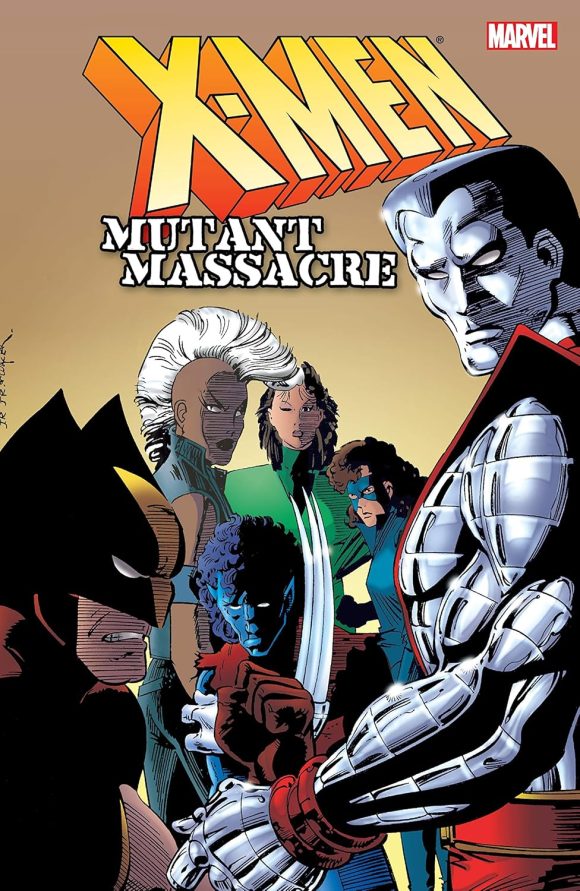
Mutant Massacre. Crisis and Secret Wars showed that linewide crossovers were possible. But what about crossovers that encompassed just a single franchise within a company? The X-Men’s Mutant Massacre showed it was possible—and that such stories could, much like Crisis and Secret Wars, lead to big changes on a smaller scale. The Death of Superman, Batman: Knightfall, Maximum Carnage—all stemmed from this early model.
—
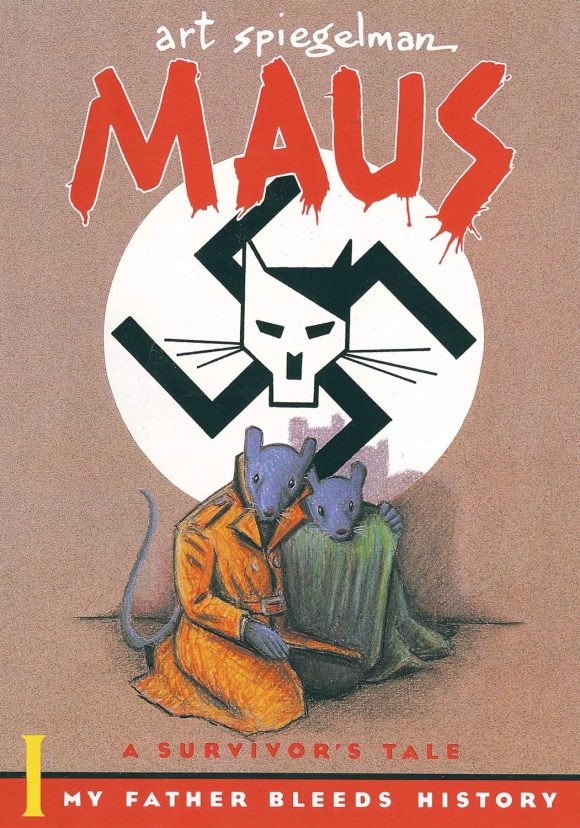
Maus. Not all big developments in the sequential art world spun out of its mainstream publishers. The first collected volume of Art Spiegelman’s masterpiece was not initially released to comic shops, but to mainstream bookstores instead. Over the years, I have seen this Pulitzer Prize-winning work shelved in Holocaust, Sociology, Biography, and, of course, Graphic Novel sections of bookshops. It is a high-water mark of the comic book medium — and one of its most human stories.
—
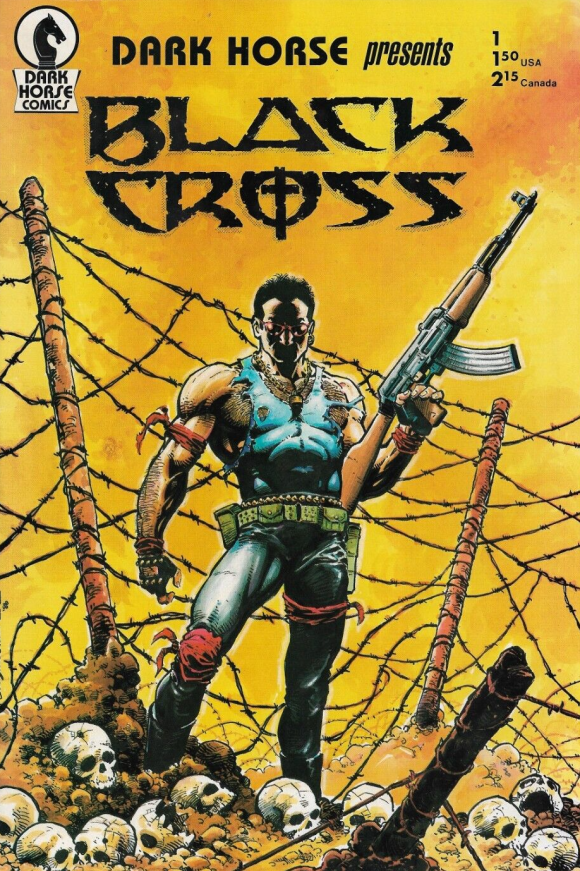
Dark Horse Comics. The ’80s had no shortage of new comic-book publishing houses, but how many can you name that are still around today? Dark Horse Comics has not only survived since 1986—it has thrived. It has served as a home for acclaimed works such as Sin City, Concrete, and Hellboy, while also acting as a custodian of movie property licenses like Star Wars, Aliens, and Predator. By the early 1990s, the company was held in such high regard that DC Comics would often collaborate with them to publish numerous crossover stories.
—
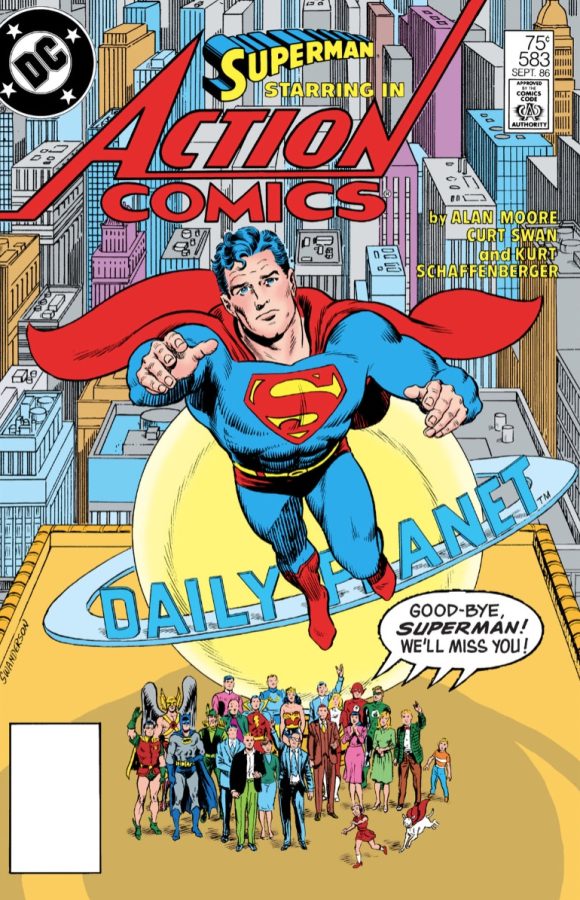
Whatever Happened to the Man of Tomorrow? The effects of Crisis would finally catch up with Superman mid-year. To make way for the post-Crisis version of the character, Alan Moore, Curt Swan, George Pérez, and Kurt Schaffenberger teamed up for a two-part tale that brought the Earth-One Superman’s adventures to a satisfying conclusion in the pages of Superman #423 and Action Comics #583.
Many people, myself included, consider this the greatest Superman story ever told. I often tell others that it is the last Superman story you will ever have to read.
—
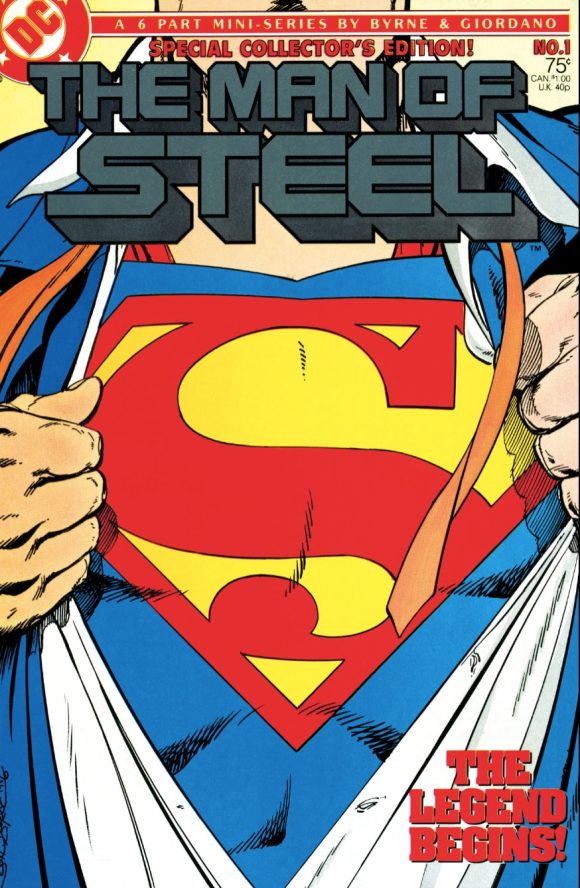
The Man of Steel. After Moore and company closed out Superman’s pre-Crisis history, John Byrne delivered this six-issue miniseries that rebooted the character for a new generation. It was so influential that elements of the revamp — such as Lex Luthor being the head of a multibillion-dollar corporation and Superman’s adoptive parents being alive for his superhero debut — have survived to the present day.
This miniseries, along with Byrne’s ensuing run on the Superman titles, became the yardstick against which all superhero reboots have been measured.
—
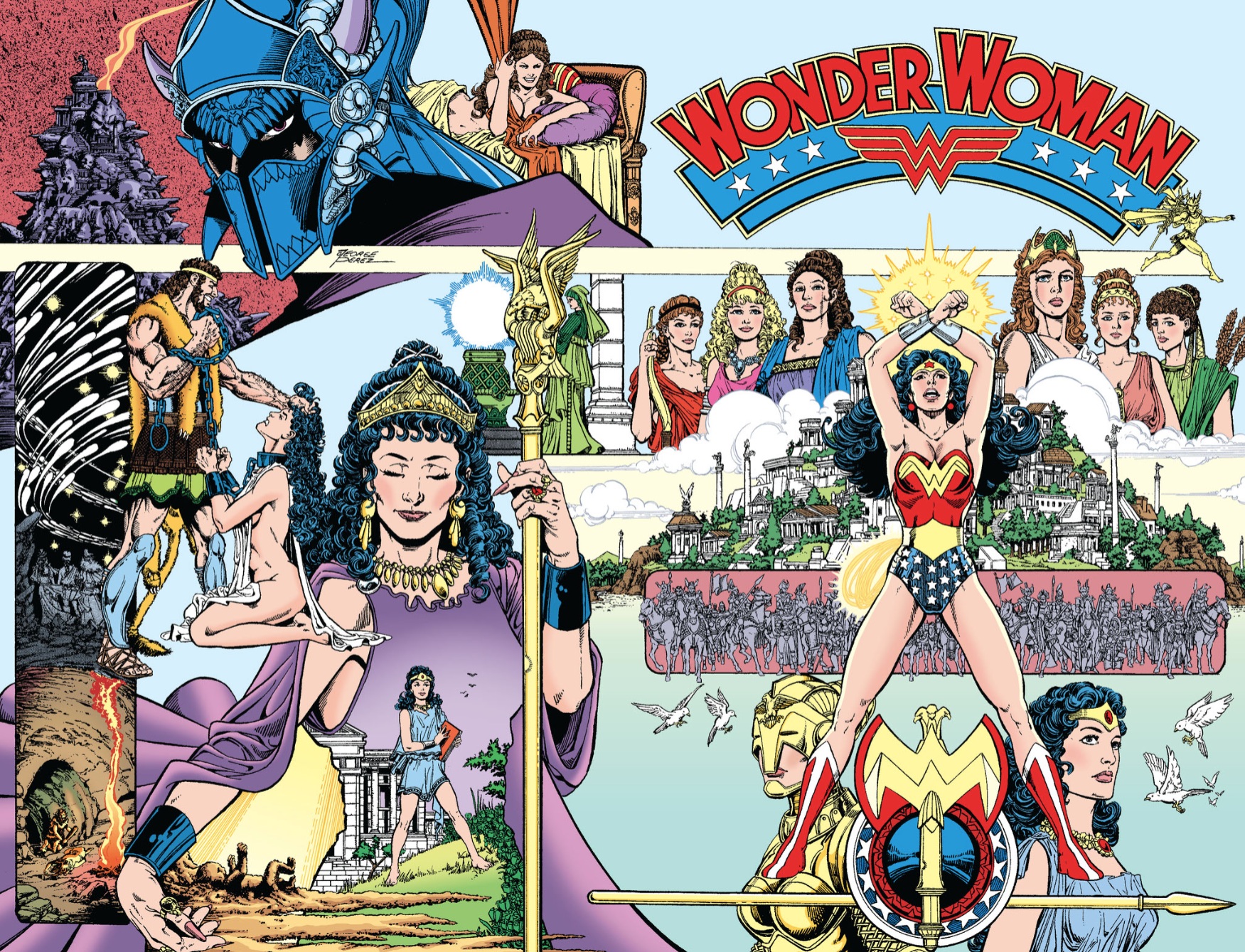
George Pérez’s Wonder Woman. If Byrne’s Superman was a master class in reintroducing a popular character, element by element, then George Pérez’s late-1986 reboot of the Amazon Princess took things even further, radically changing elements such as setting, and introducing entirely new supporting characters.
To many readers, Wonder Woman’s post-Crisis debut was an even riskier experiment than Superman’s — and like that one, it paid off.
—
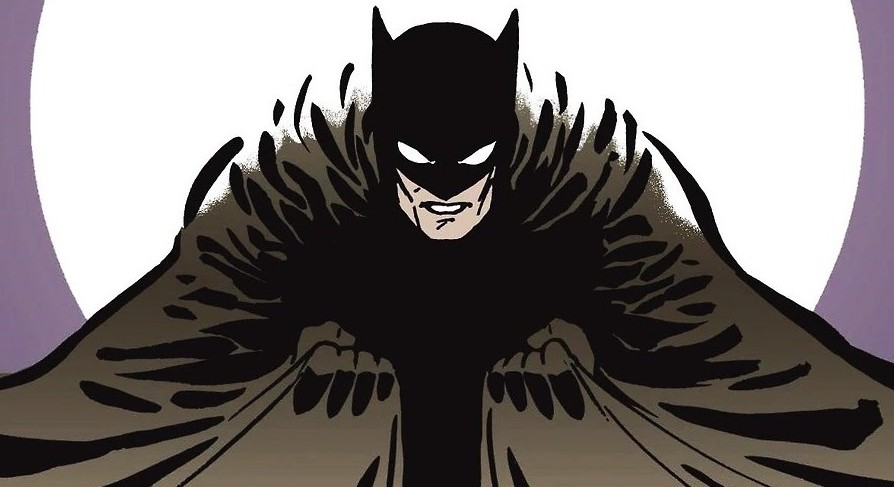
Batman: Year One. Batman’s post-Crisis version was not a full reboot, but rather a retelling with added detail. The writing, art, and coloring were radically different from the previous two entries on this list and earned even greater critical acclaim. Frank Miller, David Mazzucchelli, Richmond Lewis, and Todd Klein didn’t just deliver one of the most lauded Batman stories of all time, they created a tale that no other Batman story has quite felt like since… much like the next entry on this list.
—
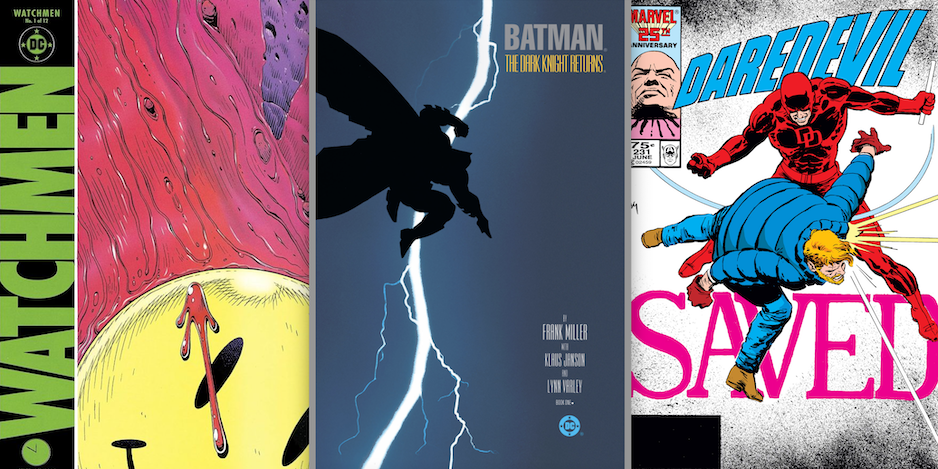
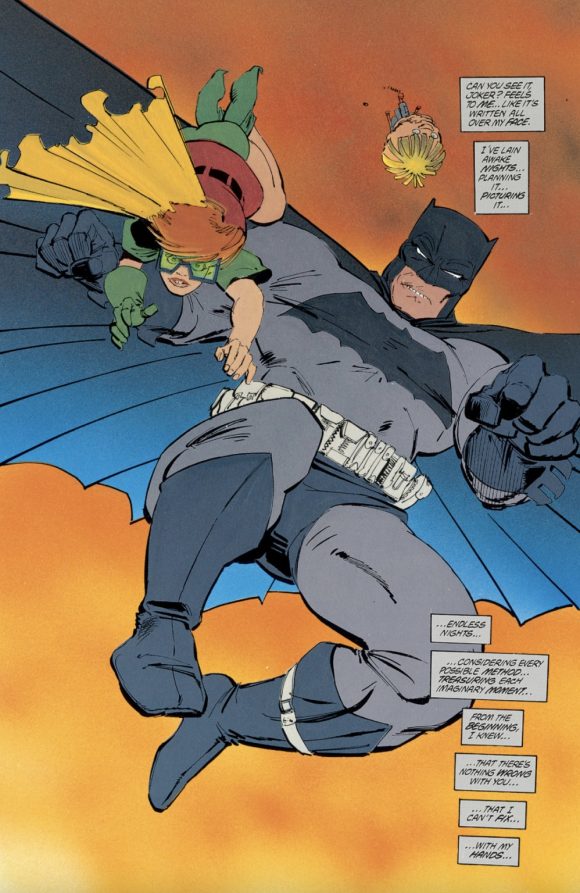
The Dark Knight Returns. This was one of the two shots heard around the comic book world in 1986. Frank Miller’s deconstruction of Batman and his environs shocked and delighted readers when it launched. Its influence on mainstream comics — and Batman in particular — cannot be overstated.
My first exposure to the series came when I picked up the third chapter, Hunt the Dark Knight, at the Liberty Tree Mall in Danvers, Massachusetts. I had never seen a comic book where characters actually swore! I was afraid to show it to my parents then, but am proud to have discovered it the year it came out!
—
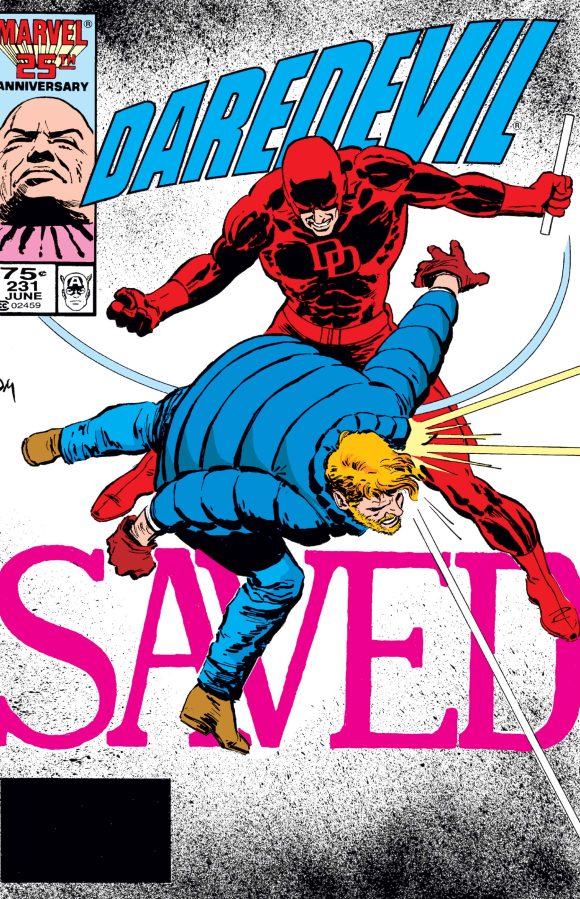
Frank Miller Returned to Daredevil… and in a Big Way! Miller’s return to the character that gave him his big break produced what most consider the greatest Man Without Fear story of all time: Daredevil: Born Again, created with his eventual Batman: Year One collaborator David Mazzucchelli.
Elektra: Assassin and Daredevil: Love and War, both with Bill Sienkiewicz — an artist who brought a more expressive style to mainstream comics — were also well received and expanded upon what was possible on the comics page.
—
A New Format Was Introduced. Speaking of the comics page itself, The Dark Knight Returns introduced the prestige format to comics. With its square-bound, cardboard cover, lack of ads, better paper stock, and richer coloring, my copy of Hunt the Dark Knight simply felt better to hold and look at than all other comics I had encountered up until that point.
According to then-DC Comics Production Manager Bob Rozakis, I wasn’t the only fan who noticed the improvements: “When they looked at things like Ronin and Dark Knight, I’m sure they could see there were substantial differences in how the art was done and the books were printed,” he told me in a text exchange.
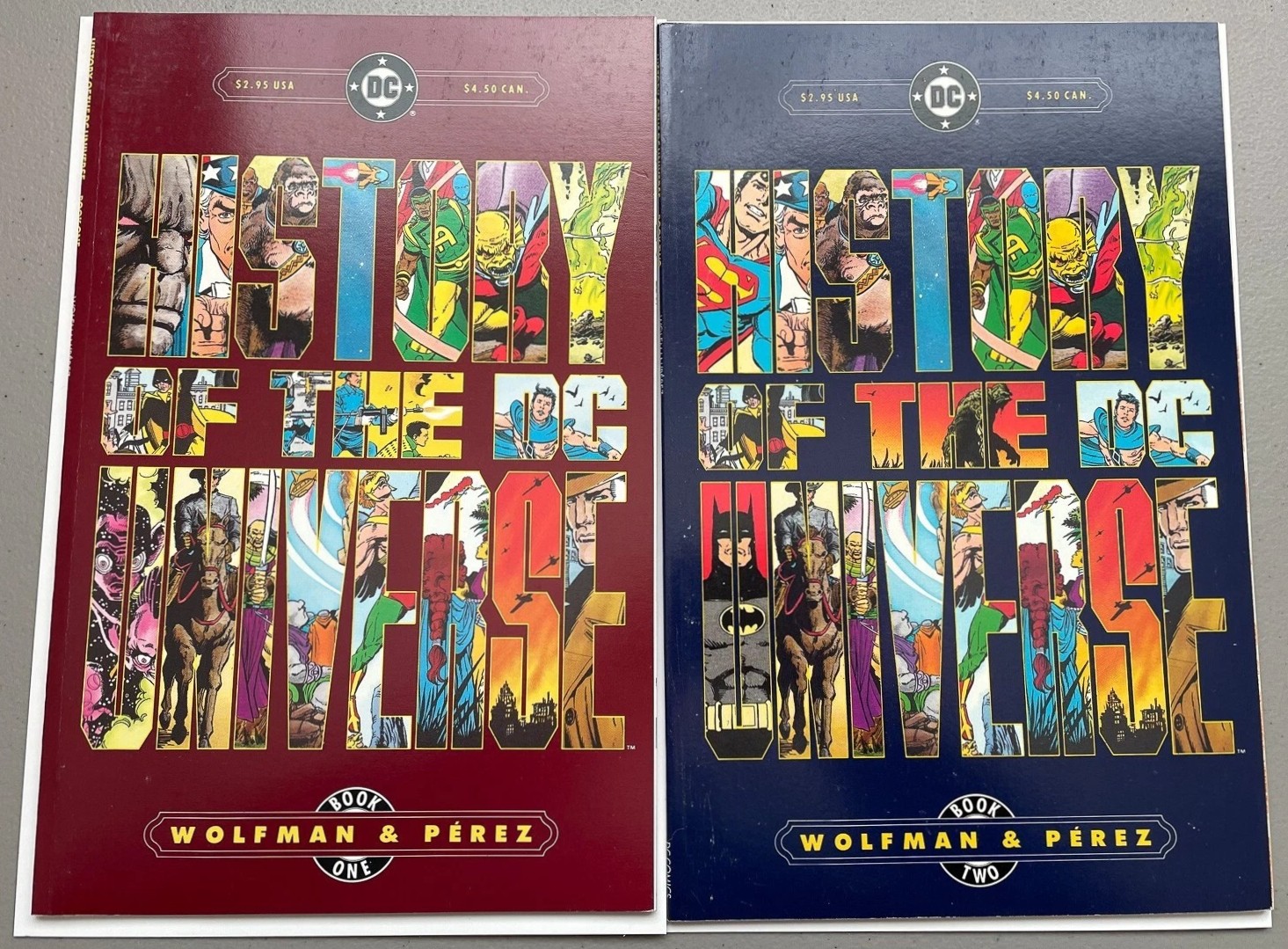
Rozakis and others at DC were making conscious efforts to provide more sophisticated production values. “We were pushing the boundaries of production and printing. Computer coloring, which I was the biggest proponent of, was just around the corner.”
—
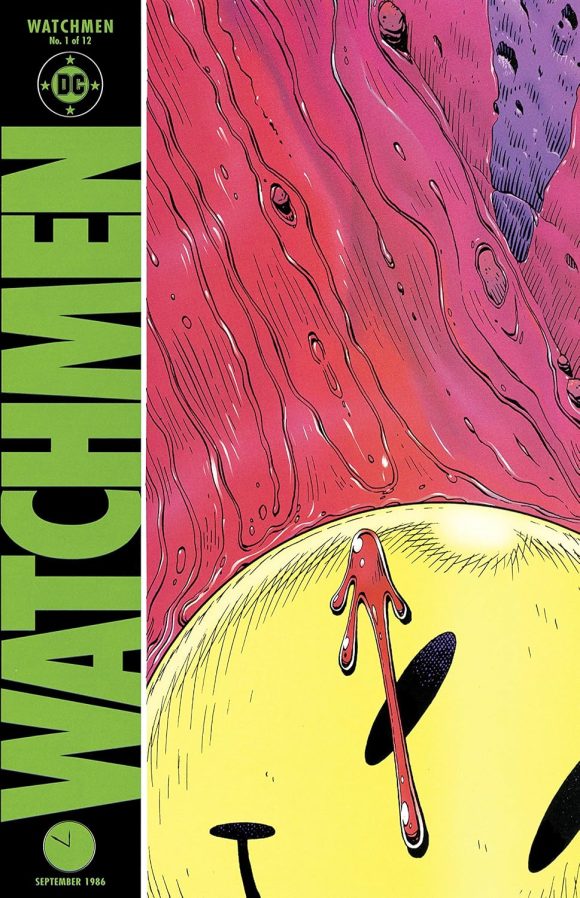
Watchmen. The other shot heard around the comics world in 1986. While The Dark Knight Returns deconstructed an icon and his supporting cast, Watchmen deconstructed the superhero genre itself. What more can be said about this Alan Moore and Dave Gibbons collaboration that hasn’t already been said — more eloquently and at greater length?
—
Comic Shops Were at the Height of Their Power. “The number of comic shops was growing substantially, giving us wider access to new readers.” —Bob Rozakis
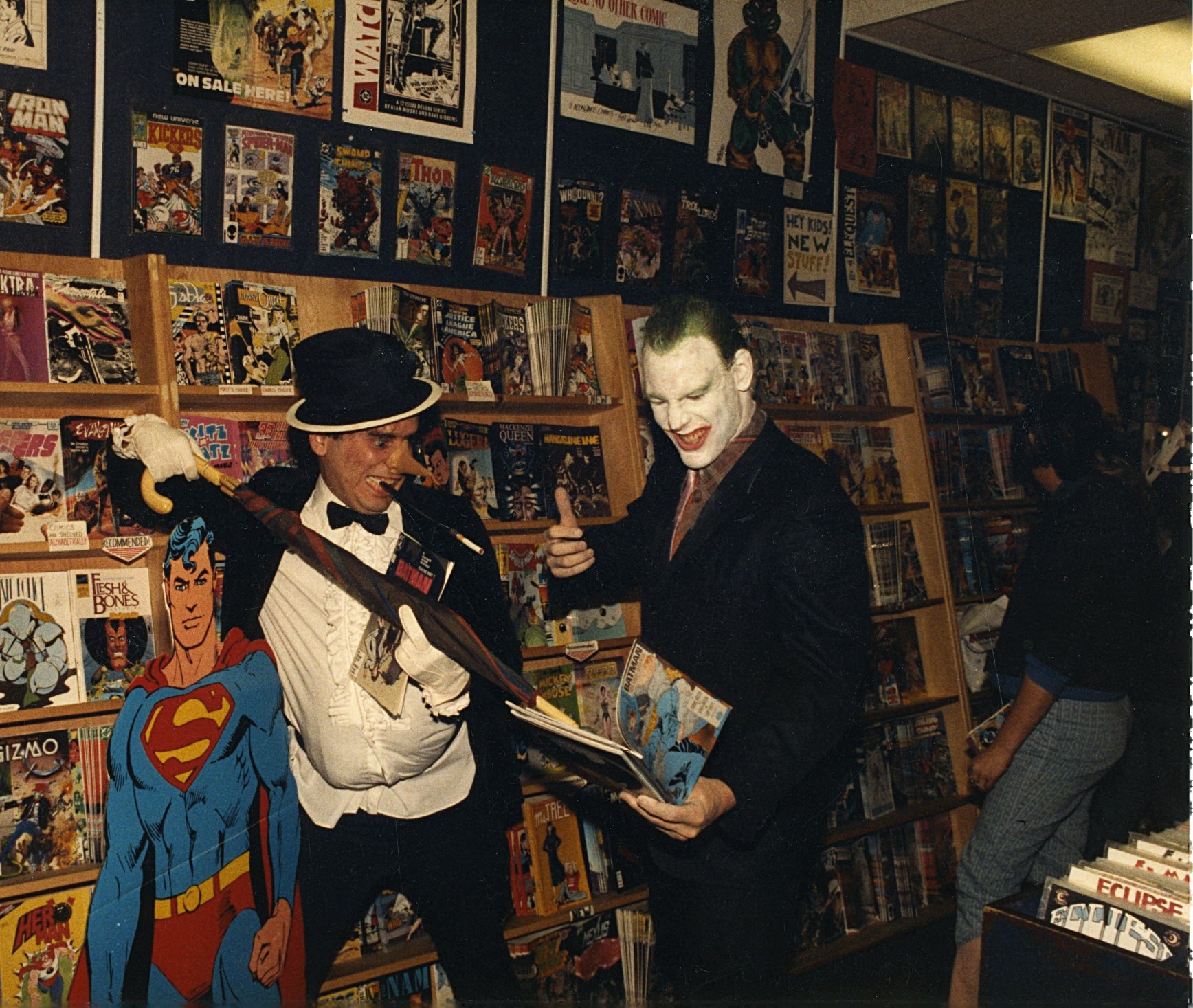
1986 was a time when comics shops were still on the rise and newsstand distribution continued to shrink. Best-selling projects in new formats, such as The Dark Knight Returns, were aimed squarely at direct-market consumers. Titles were even shipped to comics shops earlier than they were to newsstands or corner stores.
Fan culture also began to recognize comics shops as gathering places, such as the Halloween party pictured above at Moondance Comics in 1986. (If you want to see more of this beloved store, you can check out a Facebook page dedicated to it.)
1986 changed the way comics were created, published, sold, and even read. There has never been another time like it and there likely never will be again.
—
MORE
— 13 REASONS That 1990’s WORLD’S FINEST Is the Ultimate BATMAN/SUPERMAN Team-Up. Click here.
— 13 Reasons 1987’s MORTAL CLAY Might Actually Be ALAN MOORE’s Best BATMAN Story. Click here.
—
JASON CZERNICH was born smack dab in the middle of the Bronze Age of Comics. Early memories of Power Records and other Batman merchandise, as well as watching reruns of the 1966 Batman series on TV38 in Boston, imprinted on him heavily. Today, he lives and works as a clinical social worker in central Massachusetts with his wife, child, cat, and beloved French Bulldog.

January 1, 2026
For me things were seen in the complete opposite direction. With the end of the Bronze Age came the slow ending of my devotion to the hobby. The darkness, the revamps really turned me off. The final nail would be the gimmick covers of the ‘90s and endless company wide “crisis” stories. I went from buying everything to almost nothing. It is what it is.
Luckily we have facsimile editions and omnibus. I can still shared my love for comic books with my grandsons.
January 1, 2026
The darkness of this era caused me to stop buying new comics almost entirely, and I pivoted instead to seeking out older, back issues to fill out my collection instead. Even today, the only titles I own post-1986 are runs of Dr. Strange and Silver Surfer.
January 1, 2026
I think the powers to be don’t view our demographic as being very profitable and haven’t for some years. I don’t have the sale numbers to argue my point. But it is how it feels to me. Sad thing is when our generation is gone who will care about those truly great eras?
January 1, 2026
I tend to agree. Comics were less enjoyable, more nihilistic. I stopped collecting in the late 1990s. Picked up in the mid-2000s again but only sporadically. Silver and Bronze Age for me.
January 1, 2026
Excellent article! I for one wish the Iron Age concept would catch on and become accepted by Comicdon. The writing style (among other attributes) of comics between 1986-2000 does lend itself to the idea that this era was indeed a separate age in the medium.
January 1, 2026
It’s curious that this entire era is viewed as “dark.” It’s more something of an era of deconstruction and reconstruction: finding out what was working, what could be removed, what could be added back.
1986 may have torn out a lot of stuff, but by 1994 it was getting restored. The Post-Crisis Superman eventually led to the Death of Superman, but man, then we got the Reign and the Zero Hour to Millennium period was some of my happiest reading.
January 1, 2026
I remember Moondance! I was visiting friends in the Hadley area every weekend and would go and buy the latest comics there. It was at the Moondance at Holyoke that I met Steve Bissette, who was doing a signing, and was able to purchase a page of original Swamp Thing art from the early part of Alan Moore’s run. Still have that page, framed and on my wall.
January 1, 2026
I think part of the darkness that invaded comics in general of this time was the darkness of their creators. I won’t say who, but it is known that some creators were supporting their habit and being praised and encouraged for each sales milestone…despite what it was doing to the industry and the medium. No new kids coming in, but larger amounts being spent by young adults and middle aged men with disposable income to “speculate with”.
January 1, 2026
I’m in my 50s and I love the changes 1986 brought to comics. While some of them were darker, the main thing I see is that comics grew up with the Gen X cohort. I was mostly out of comics in my mid teens but stuff like Swamp Thing and the Vertigo lineup pulled me back in and kept me there (along with an awareness of indies). Comics really did “grow up” in the 80s and 90s. We can all ridicule things like the Image line as they were only superficially “mature” but the 90s Vertigo line was amazing. And the Big 2 superheroes also delivered greatness. Lots of great runs amidst the bad stuff.
January 1, 2026
Like everything else, the effects of 1986 were both good and bad. As I’ve grown older, I’ve developed an appreciation for different interpretations of characters. Each generation of writers and artists puts their zeitgeist into their work.
I grew up on the Adam West Batman, and I still love that interpretation. But by 1986 I had grown bored with superheroes – until I picked up The Dark Knight Returns, and was mesmerized by the biting political and social satire, the desperation of an older Batman trying to save his city once more, etc. To me, it made comics relevant as social commentary while being entertaining.
And yes, I have very few 1990s comics in my collection – but that’s a whole other commentary…
January 1, 2026
Sometimes when I say this I feel like a Baby Boomer talking about how great the music was in 1967, but you really had to be there in 1986 to fully understand how great comics were that year (and, for me, all the way up to about 1990). I’m a Gen-Xer and I started reading comics regularly in 1984 (the tail end of the Bronze Age). There really was a palpable seismic shift in the medium in 1986. People at the time really felt like things were changing in real time.
January 1, 2026
DC’s killing of women, during the CRISIS, and after was just sick. Still is. I haven’t bought a comic book in years.
January 1, 2026
Daredevil Born Again is a story of light and redemption, although it starts in great darkness. Despite its rushed ending it may be the greatest story ever told in comics. For those who think this era is too dark, this story may be a good one to check out.
January 1, 2026
The Bronze Age ended just as I was graduating from high school. As I started college I also began collecting many of the DC reboots: Superman,Wonder Woman, Batman, Flash, Hawkman . . . the list goes on. It was exciting to get on board with a new age of DC Comics from its beginning. Little did I know at the time that this was just the first of many reboots.
January 1, 2026
By 1986, I “grew out” of comics, spending all my money on records and music magazines. Hey, as a not-working (lazy) teen, I only had so much money.
A former fellow collector heard, and bought, The Dark Knight Returns when the digest came out, which he shared with me. Wow! I never have read The Watchmen, although I loved the movie. Here’s hoping for facsimiles soon. It did get me into Batman for a short time, when I picked up Batman: Year One, part four, and The Killing Joke.
I started collecting again for a few years in the 90s, mostly X-Men, but got tired of all the epics/crossovers, gimmicks, and too much computer-usage in its artwork (I want comics to look liike comics).
Fast forward to today, and yay to facsimiles! I did pick up Batman and Robin: Year One, thanks to this year’s Batman Day free comic. The artwork reminded me of Batman: Year One. Tried Absolute Batman, which started out okay (1-6), but got a bit ridiculous for me. And yeah, I got tired of gimmicks, but I do like foil covers, plus having cardboard covers 😀 .
I’m glad I didn’t stick around long enough for the reboots in the late 90s. I remember watching the trailers for Guardians of the Galaxy movie, and wondering when a raccoon joined 😀 .
January 8, 2026
The podcast I mentioned in the article, The Iron Age of Comics, also just covered 1986 in an episode released yesterday that you can check out here: https://open.spotify.com/episode/6cx6hLyNrkZ55BiZTcErtF
Happy New Year!