
A BIRTHDAY SPOTLIGHT on the writer, who turns 72…
By JASON CZERNICH
In the spring of 1987, I picked up Batman Annual #11 from my local shop in Greenfield, Massachusetts, and it changed the way I looked at comics forever.
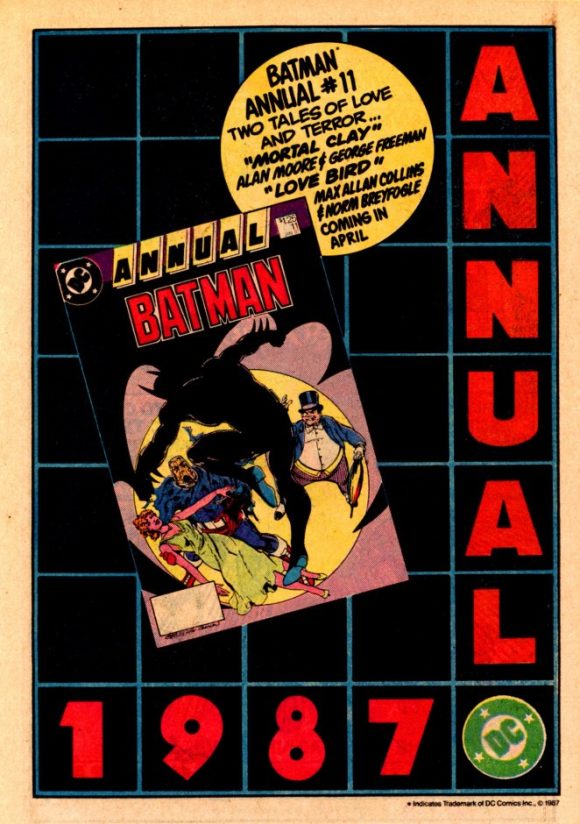
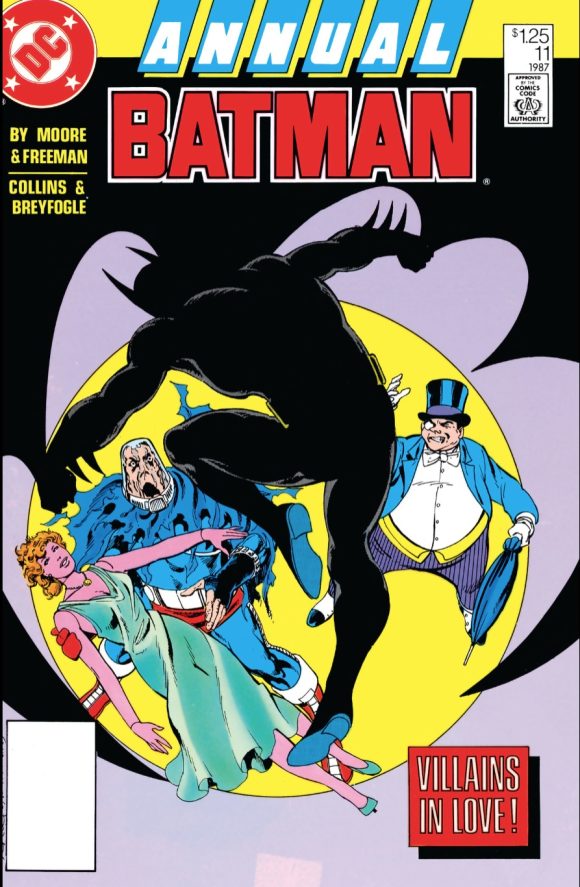
I had first seen a house ad weeks earlier promoting the issue, and it got me so excited: It featured my second-favorite Batman villain, the Penguin, on a wonderful Ed Hannigan/John Byrne cover, along with Clayface III — a Batman baddie I was eager to read and learn more about, since at the time I knew nothing of the character. The Penguin story was indeed special, mostly for being Norm Breyfogle’s first published Batman tale, but the lead story, Mortal Clay, was a transformative experience for me. Never before had I felt for someone on the printed page as I did for Preston Payne, a.k.a. Clayface III.
In Mortal Clay, Clayface hides out in a Gotham City department store with a mannequin, Helena, whom he believes to be a real person — and whom he believes reciprocates his love. He lives what he thinks is an idyllic life with her until he becomes suspicious that she is being “unfaithful,” leading to the murder of one of the store’s security guards and a brutal confrontation with Batman that ends in a most unexpected outcome for Preston, Helena, and the Darknight Detective.
The emotional impact of Mortal Clay’s climax had such a profound effect on my 9-year-old self that when I got my hands on a copy of Batman: The Killing Joke a year later, I found that the book’s final pages—with Batman and the Joker—simply didn’t resonate with me the way the ending of Mortal Clay did.
Here are 13 REASONS this often overlooked Batman story could be Moore’s best outing with the Dark Knight:
—
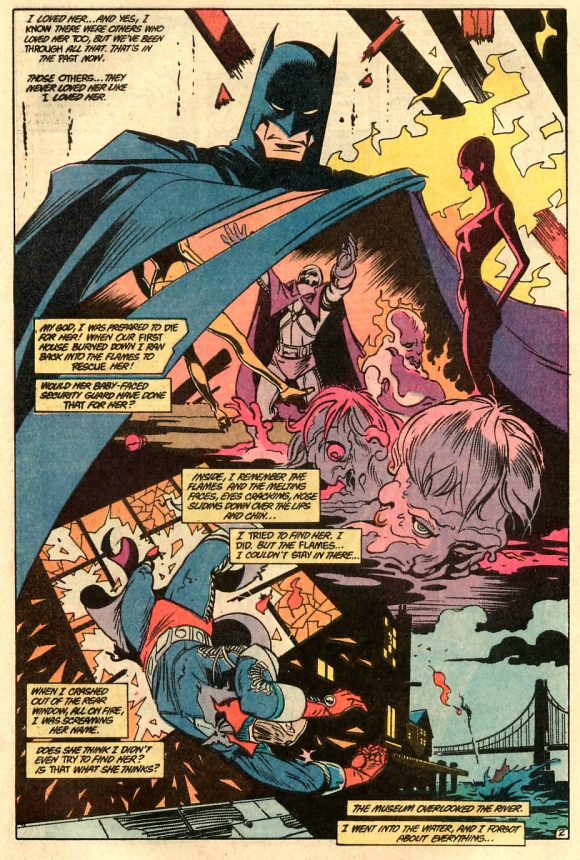
1. Moore — born Nov. 18, 1953 — answers how Preston survived his first encounter with Batman from 1978’s Detective Comics #479. Clayface III appeared again in 1986’s Batman #400, but it was never explained how he made it through the wax museum fire or how he was captured and committed to Arkham Asylum. Mortal Clay explains it satisfactorily on just its second page while setting the story’s action into motion. Check out this well-crafted splash page, by the story’s art team of George Freeman and colorist Lovern Kindzierski:
—
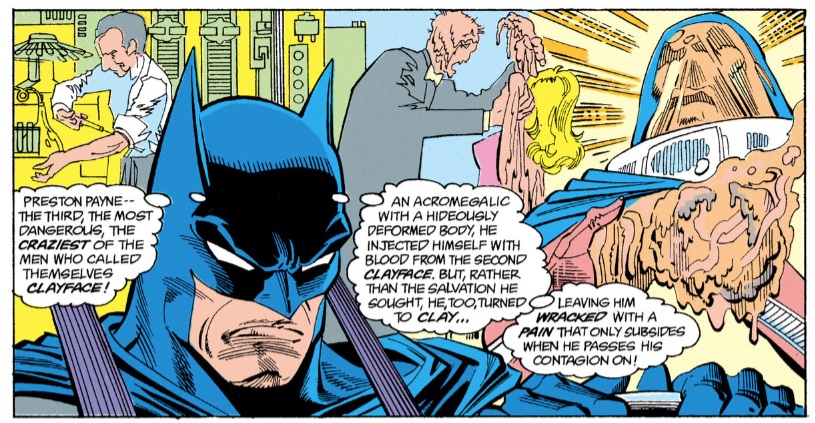
2. Clayface III is a great character. Preston Payne was created by Len Wein and Marshall Rogers. He has a wonderfully constructed back story, and his visual design still holds up today. With an exoskeleton that amplifies his strength and a burning touch that transforms his victims into clay, he remains a formidable opponent for the Dark Knight. (Originally, Clayface I was shadowy killer Basil Karlo, who dates to Batman’s earliest Golden Age days, and Clayface II was shape-shifting Matt Hagen, who was created in the Silver Age.)
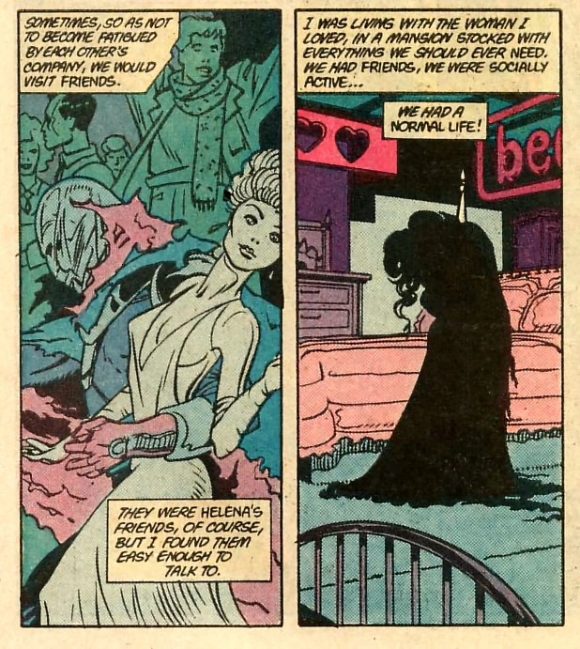
Mortal Clay shows that Clayface is a tragic, complex character, and it also displays just how delusional he truly is — perhaps even more so than any other Batman foe. He genuinely believes that a mannequin he calls Helena is alive and in love with him. He even imagines that the other department store mannequins are living creatures who socialize with them, and that he and Helena are having a perfectly normal life together!
—
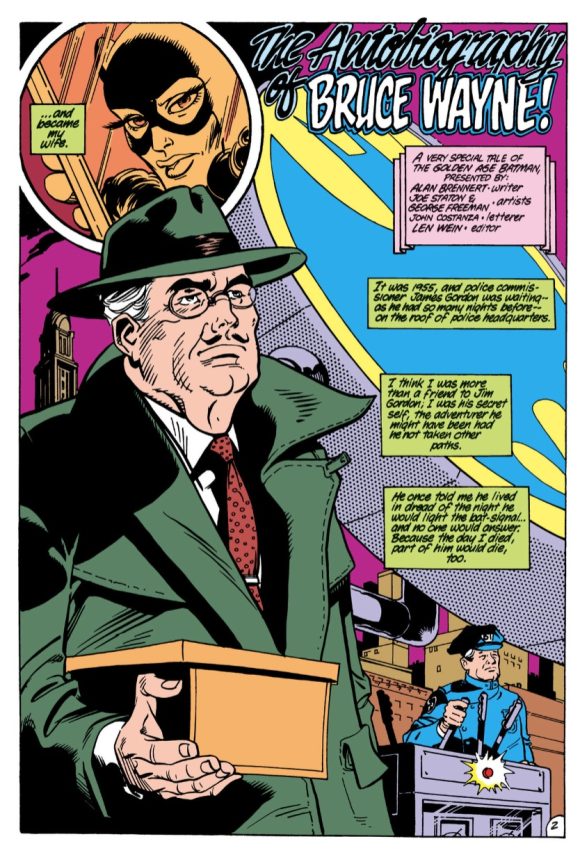
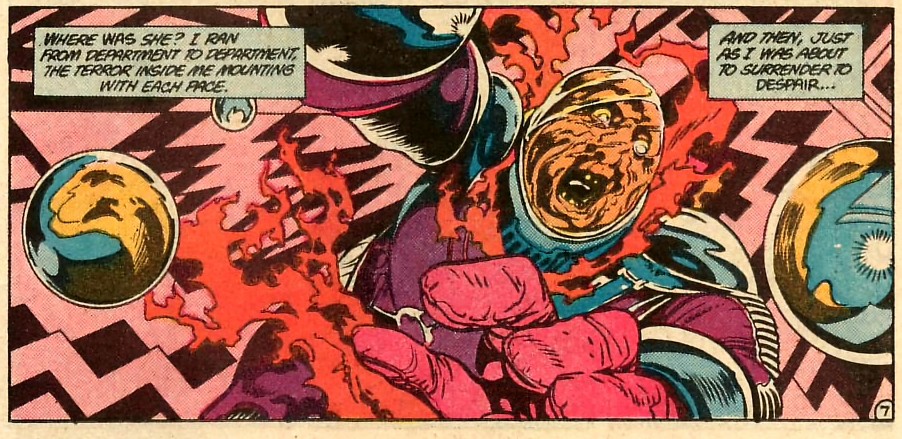
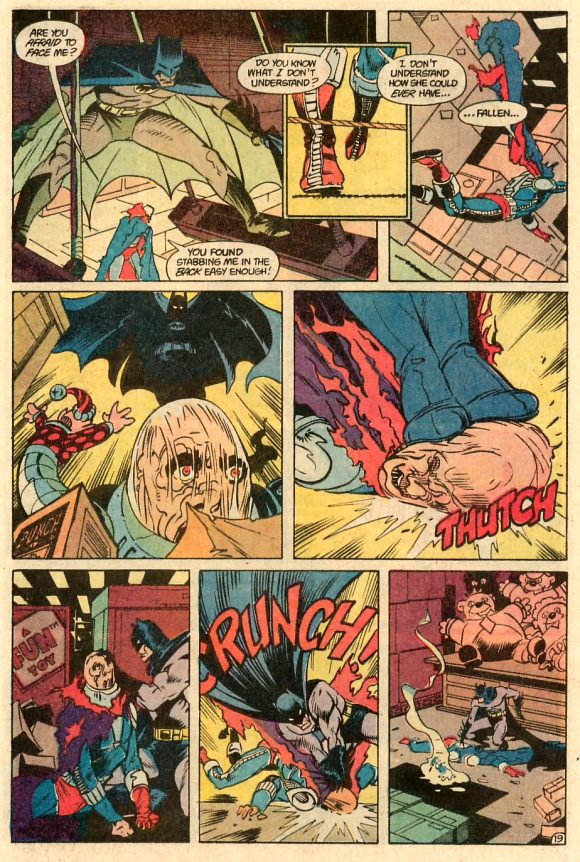
3. The art by George Freeman. Freeman makes Clayface look truly grotesque and gives the story a sense of doom right from the start. If his art style looks familiar to Batman fans, it’s because he was the inker on the often-reprinted The Autobiography of Bruce Wayne from 1983’s The Brave and the Bold #197. His smooth linework over Joe Staton’s pencils in that tale gave it a somber quality — one that’s even more apparent in Mortal Clay. Freeman’s frequent use of close-ups on Preston’s deformed visage evokes a horror movie atmosphere. He’s also an excellent visual storyteller; you could still know what’s happening on Pages 13 through 22 even if the dialogue were omitted.
—
4. Lovern Kindzierski’s coloring. The coloring job by Lovern Kindzierski was actually his tryout piece for DC — and what a way to debut! Whether it’s the yellow TV glow bathing the figures and objects on the first and final pages, or his expert use of blues, purples, and reds throughout, Kindzierski enhances the nightmarish atmosphere of the story without ever distracting from or overpowering Freeman’s pencils and inks.
—
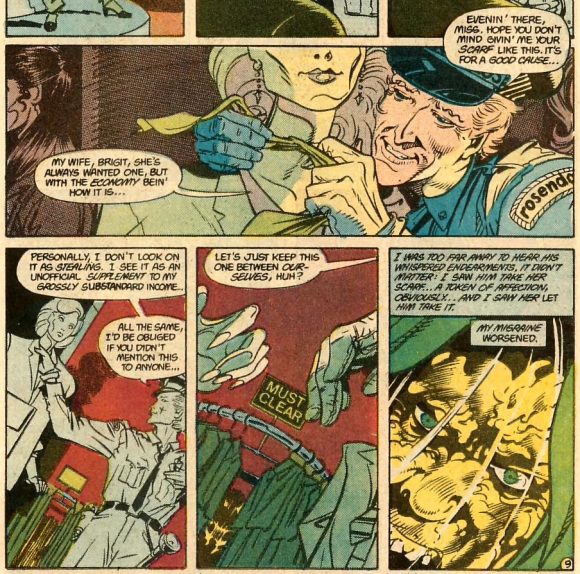
5. Words and pictures working with each other. Moore’s captions depicting Preston’s interpretation of reality often contrast with what is actually happening in the story, enhancing it with a sense of off-putting suspense. It almost reads like an expanded Future Shocks tale that Moore could have written for 2000 AD.
—
6. It came out the same year Mannequin hit theaters. Another story about a man having an affair with a department store mannequin released the same year?! What are the odds? Did Moore know about this at the time? Probably not—but it’s fun to think about.
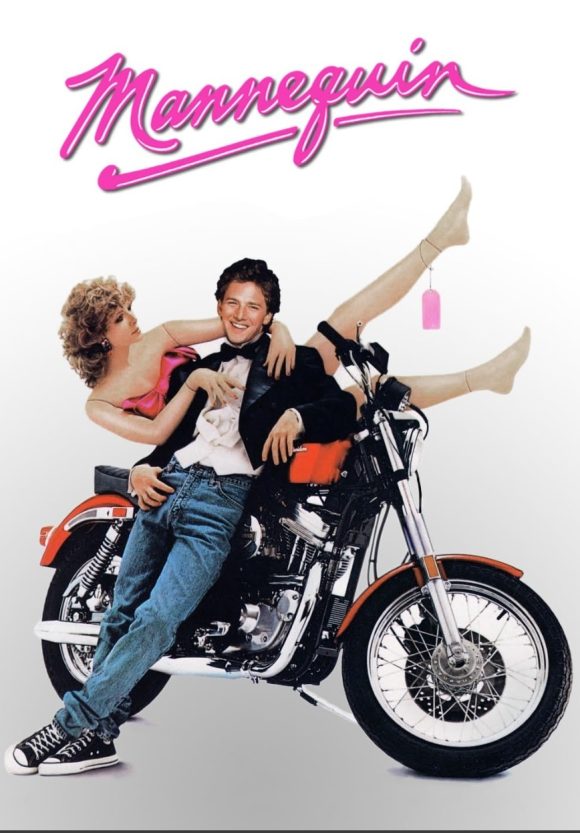
Now I have Starship’s “Nothing’s Gonna Stop Us Now” stuck in my head. And now you do too!
—
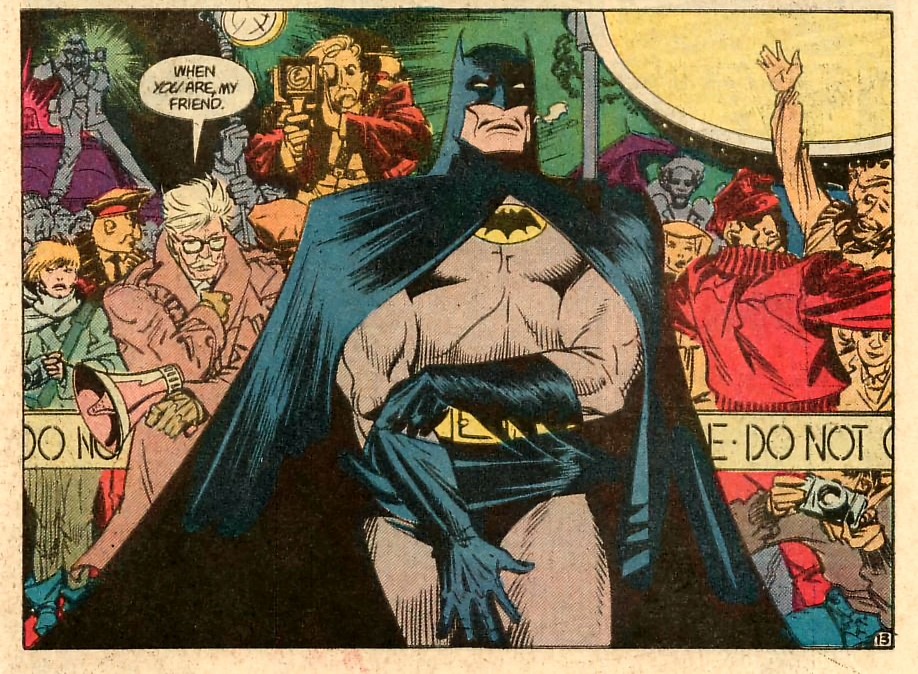
7. Batman doesn’t appear until late in the story. The Dark Knight himself doesn’t officially enter the narrative until more than halfway through! Yet Moore still manages to keep the reader hooked until his arrival.
—
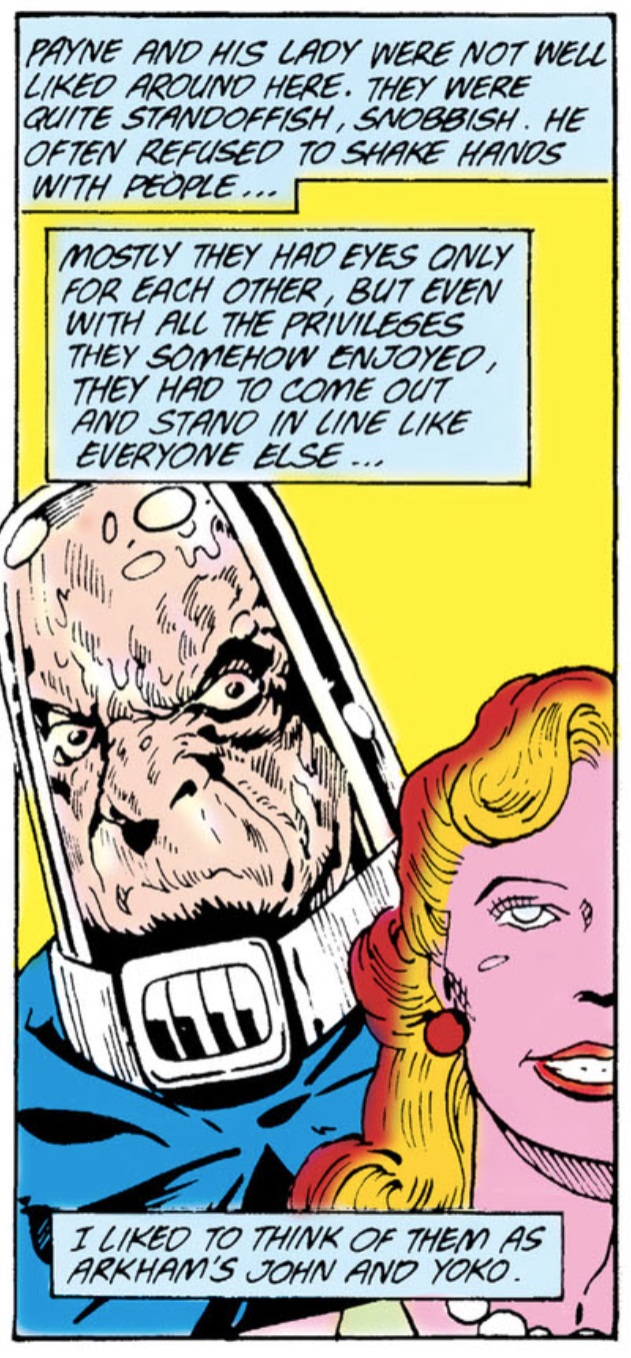
8. You don’t need to know Clayface III’s back story for the tale to work. I didn’t learn Preston Payne’s sad back story until 1989—two years after I first read Mortal Clay. If you do know it, it only enhances the story, but Moore does an excellent job of making the character accessible even without knowledge of his secret origin. Still curious about his beginnings? This panel from 1989’s Detective Comics #604 by Alan Grant and Norm Breyfogle sums it up nicely:
—
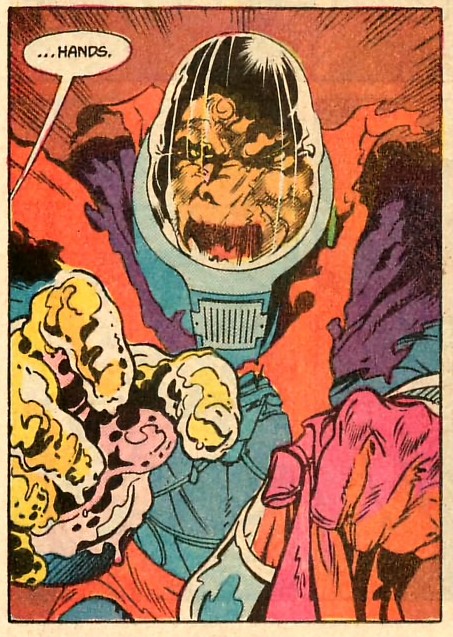
9. The horror elements of the story. A delusional man in a relationship with a mannequin, who wears a strength-enhancing costume, possesses a burning clay touch, and only comes out at night. Not to mention, we get to see Clayface’s burning touch liquefy a poor security guard — on-panel. Scary stuff!
—
10. A great fight scene! When Batman finally arrives, we are treated to at least five pages of one of the most brutal physical altercations you’ll ever see in a mainstream comic book. It’s longer and more intense than the scuffle Moore and Bolland portrayed between the Joker and Batman in The Killing Joke. Mortal Clay also uses its fight setting more creatively, with Batman and Preston taking full advantage of the department store location.
—
11. “Let me help.” When Preston suffers an emotional breakdown at the end of the story, Batman has the perfect chance to finally subdue his foe physically. If it were any other writer at the time, he probably would have. Instead, Moore has Batman reach out to Preston with unexpected compassion and three words that spoke volumes to the 9-year-old me when I first read it: “Let me help.”
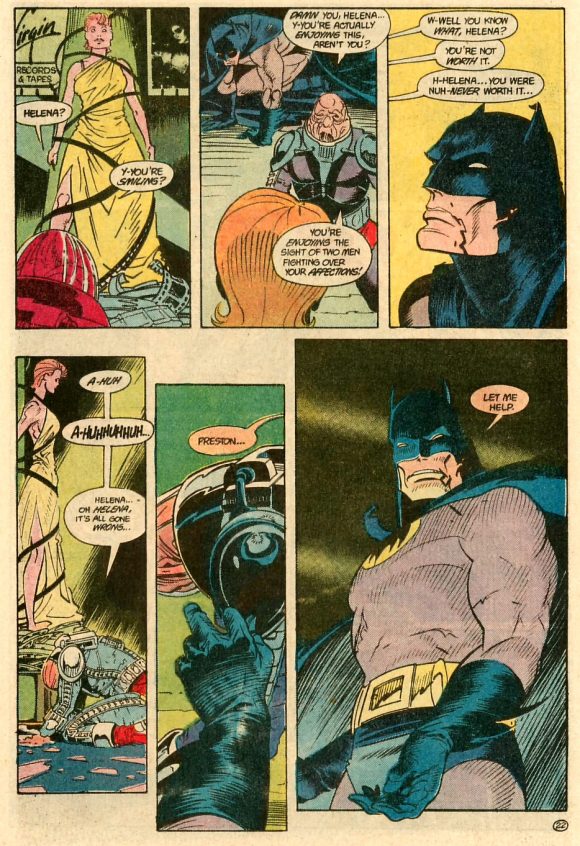
It was so different for a superhero story at the time. You can feel the sadness when Preston breaks down into sobs and the warmth from Batman when he chooses to be kind rather than respond with his fists. Moore employed a similar approach a year later, with Batman and the Joker trying to have a meaningful conversation about their rivalry in the pages of The Killing Joke. It was not as effective there; Mortal Clay not only came out first, it did it better. Preston is not fully in control of his actions and just wants to be loved. The Joker commits some heinous acts in his Moore-penned tale and ultimately is a far less sympathetic character.
—
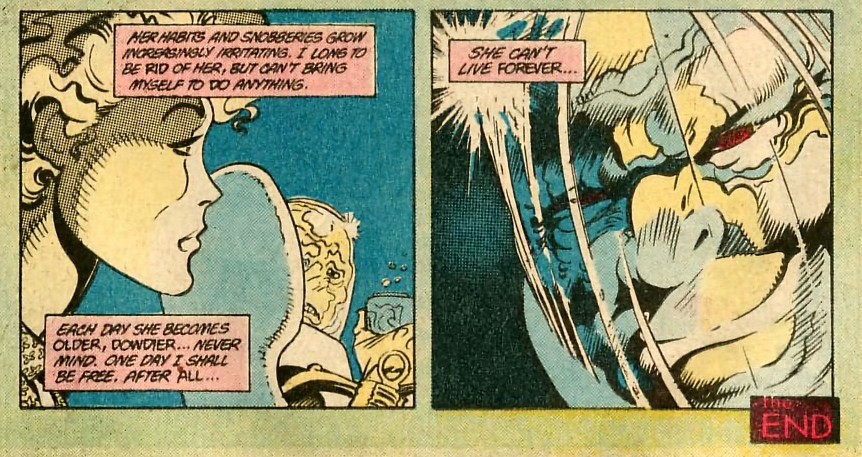
12. It ends with a wink. Batman arranges for Helena to live with Preston at Arkham Asylum, in quarters designed to resemble a traditional domestic setting, complete with a television and furniture. On the final page, Preston admits that the love he and Helena shared is dead and that he longs to be free of her. The last panel of the story shows him smiling and winking at the reader while ironically declaring that, “She can’t live forever.”
—
13. Clayface III’s arrangement at Arkham stuck. It was referenced in other DC books, such as Swamp Thing #66 (1987) and Secret Origins #23 (1988), and lasted until Detective Comics #604. In fact, Moore himself hinted at this set-up in Swamp Thing #52 in 1986, about a year before Mortal Clay saw print. Batman arranging for Clayface and Helena to live in a domestic setting at Arkham was too good an idea not to carry over for the next couple of years.
—
If I see a younger fan at my local comics shop combing through the Batman back issues, I pull out a copy of Batman Annual #11 and strongly recommend it as one of the greatest stories of the Dark Knight ever published.
Mortal Clay changed the way I viewed fictional characters. It showed 9-year-old me that you can feel for those you read about, even when they’re not real, even when they’re not the hero.
—
MORE
— 13 JOKER Stories That Are Better Than THE KILLING JOKE. Click here.
— The LEN WEIN Interviews: The Coming of Clayface! Click here.
—
JASON CZERNICH was born smack dab in the middle of the Bronze Age of Comics. Early memories of Power Records and other Batman merchandise, as well as watching reruns of the 1966 Batman series on TV38 in Boston, imprinted on him heavily. Today, he lives and works as a clinical social worker in central Massachusetts with his wife, child, cat, and beloved French Bulldog.

November 18, 2025
George Freeman is an unappreciated talent. Loved his stuff on Captain Canuck and others. I always wished he’d done more.
November 18, 2025
“Let me help” is the Batman I grew up up with, from Adam West and the Wayne Foundation to Denny O’Neil’s urban protector.
November 18, 2025
What became of George Freeman? I was only aware of a handful of comics that he did for U.S. publishers in the 1980s, but I loved them all. Very underrated cartoonist.