
The precursor to World’s Finest…
By PETER BOSCH
For fans of DC’s superheroes at the time, February 1941 was turning out to be a great month: On the 7th, All-Star Comics #4 came out — featuring the Justice Society’s first real adventure — and then three days later, on February 10, 1941 (85 years ago), there was…
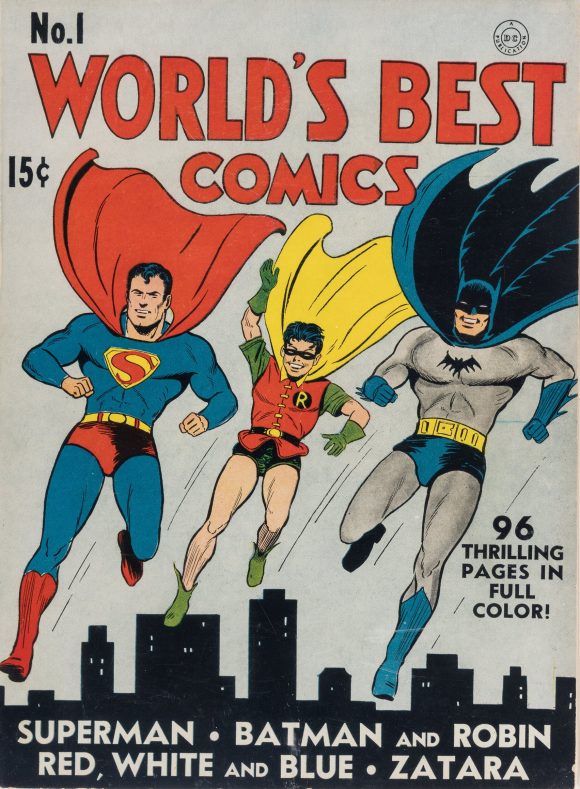
World’s Best Comics #1 (1941). Cover art by Fred Ray.
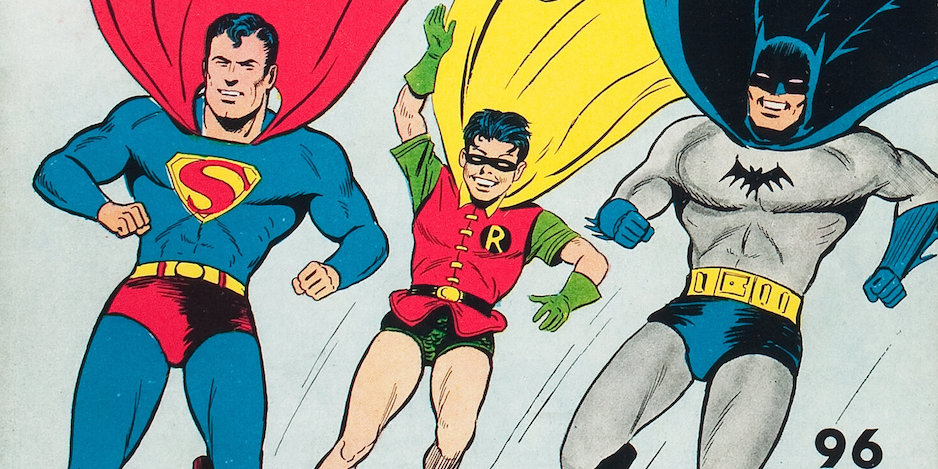
World’s Best Comics #1, a 100-page issue (including covers) was another gathering of heroes in individual tales — this time with Superman, Batman, and Robin added to the mix. (Not since New York World’s Fair 1940 had this happened. Regrettably, the Man of Steel and the Dynamic Duo would not appear together inside World’s Best Comics or World’s Finest Comics (the new name of the series starting with the second issue) until #71 (July-Aug. 1954).
The contents of World’s Best Comics #1 are a smorgasbord of heroes and a showcase for the some of the best comic-book talent of era, including Gardner Fox, Harry Lampert, Bob Kane, Bill Finger, and Henry Boltinoff. Here are 13 highlights:
—
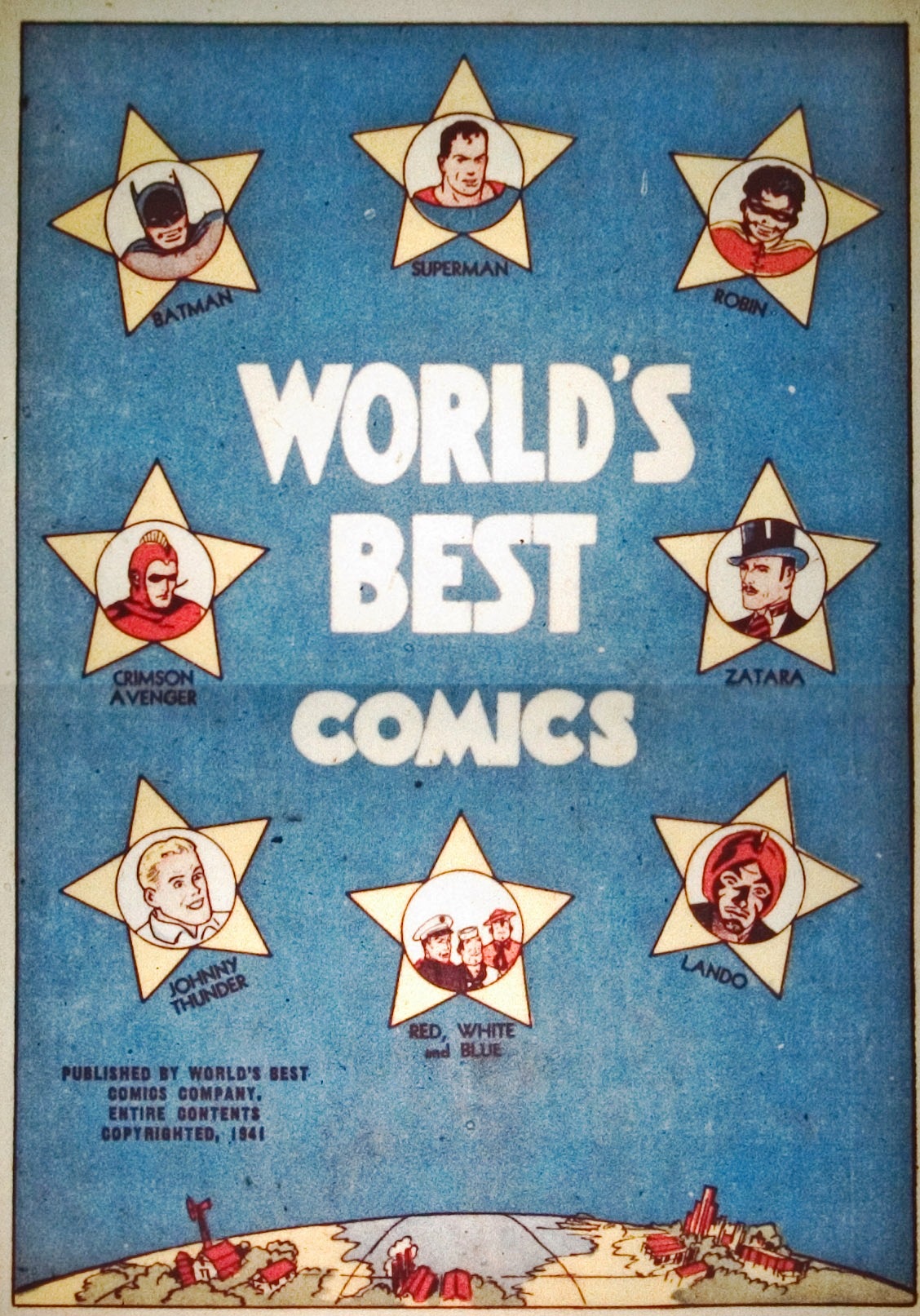
1. The issue’s introductory page features many of the characters found within, drawn by the artists associated with them.
—
2. Superman. The Metropolis Marvel led off the issue with a 13-page tale of a mad scientist (weren’t they all?) who has learned how to control rain and uses that to blackmail a private business owner by causing floods at his projects. Superman steps in to battle the madman, including stopping a smashed dam’s flood waters in a manner very similar to the many-decades-later Superman: The Movie.
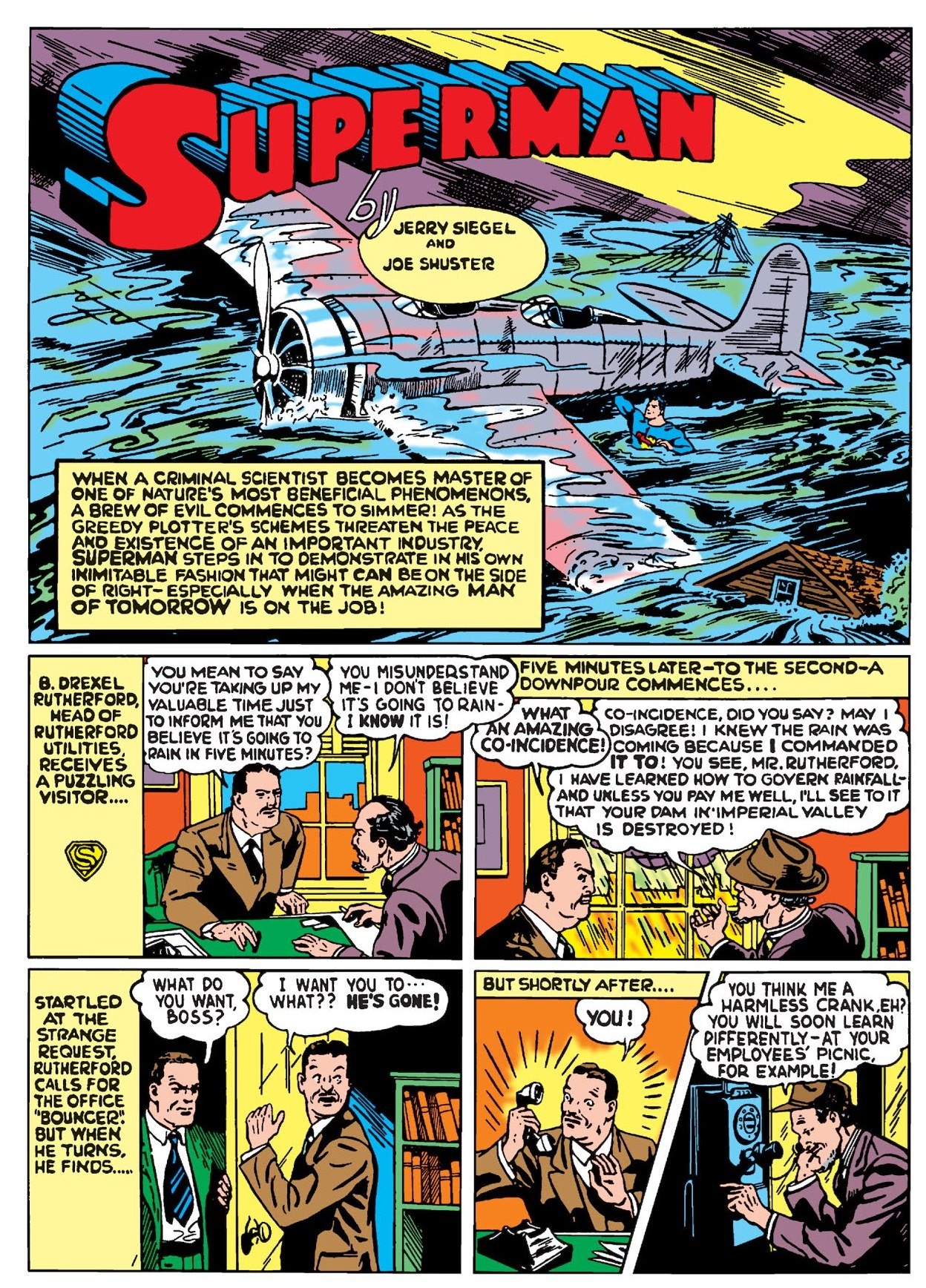
While the splash page acknowledged Superman creators writer Jerry Siegel and artist Joe Shuster, the art was likely by either Paul Cassidy or Wayne Boring (with Don Komisarow inking Boring’s pencils).
—
3. Red, White and Blue. The next heroes up are military buddies U.S. Marine Sgt. Red Dugan, the Army’s Whitey Smith, and the Navy’s Blooey J. Blue, together a special unit of G2. Red, White and Blue, co-created by Jerry Siegel and William Smith, first appeared in All-American Comics #1 (Apr. 1939) and could be found in that title until issue #71 (Mar. 1946), as well as in World’s Finest Comics #2 (Summer 1941) to #7 (Fall 1942). The story in World’s Best Comics #1 has them testing an incredible new tank. Afterwards, the trio is out on the town, where Blooey overstuffs himself with two Welsh rarebits. Before you can say “Dreams of the Rarebit Fiend,” Blooey fantasizes he single-handedly recaptures the tank after nefarious types steal it, as well as rescues and earns the love of Red’s beautiful girlfriend.
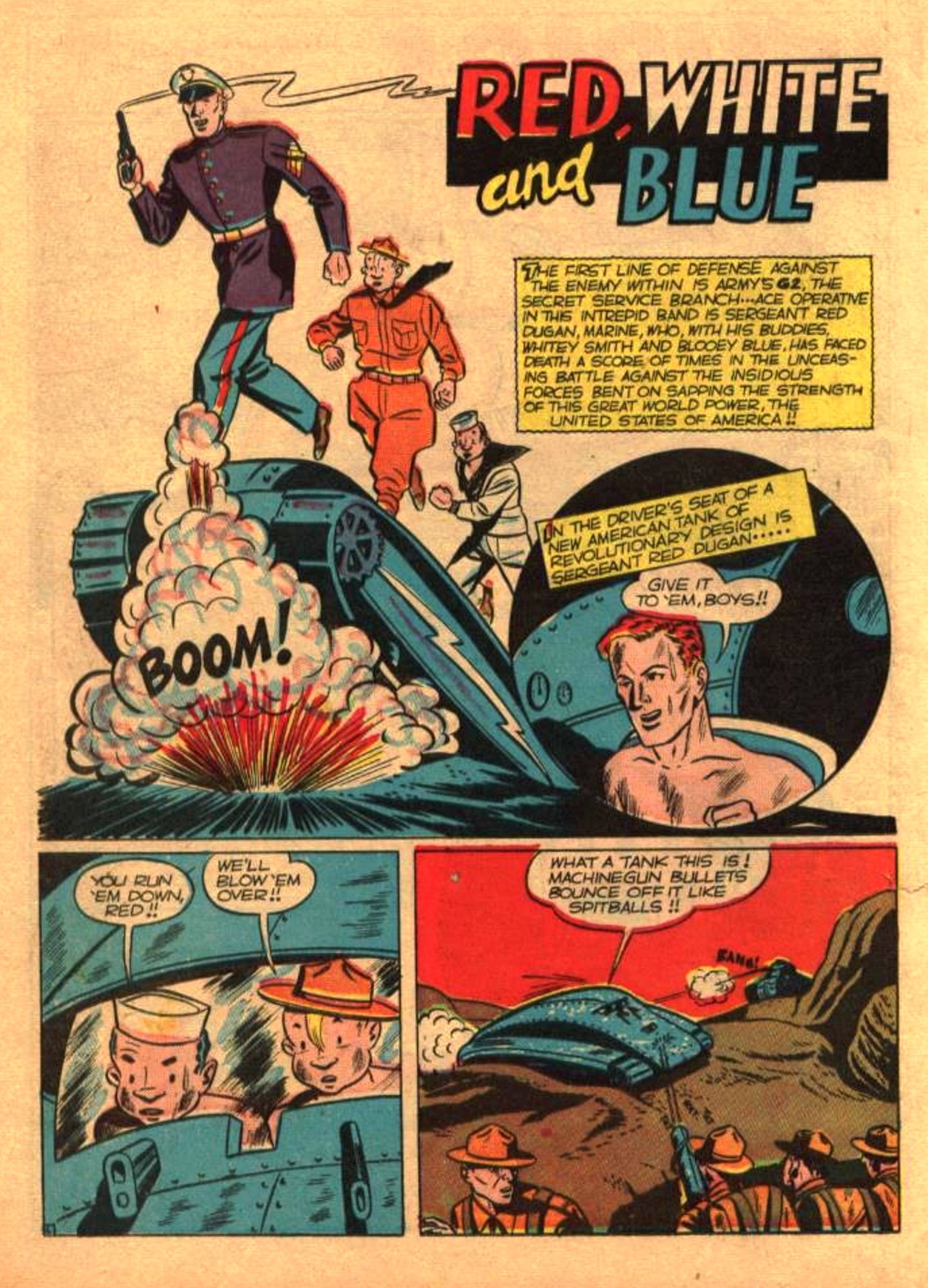
Art for Red, White and Blue by Harry Lampert. Script possibly by Siegel.
—
4. The Crimson Avenger. When he first appeared in Detective Comics #20 (Oct. 1938), the Crimson Avenger (created by Jim Chambers) was a knock-off of radio’s Green Hornet (and, like the radio program, Crimson in his secret identity of Lee Travis was a newspaper publisher and had an Asian chauffeur). By the time of World’s Best Comics #1, Travis had switched to a superhero costume (which was first seen in Detective Comics #44, Oct. 1940). In the WBC tale, he stops an assassination attempt on the governor.
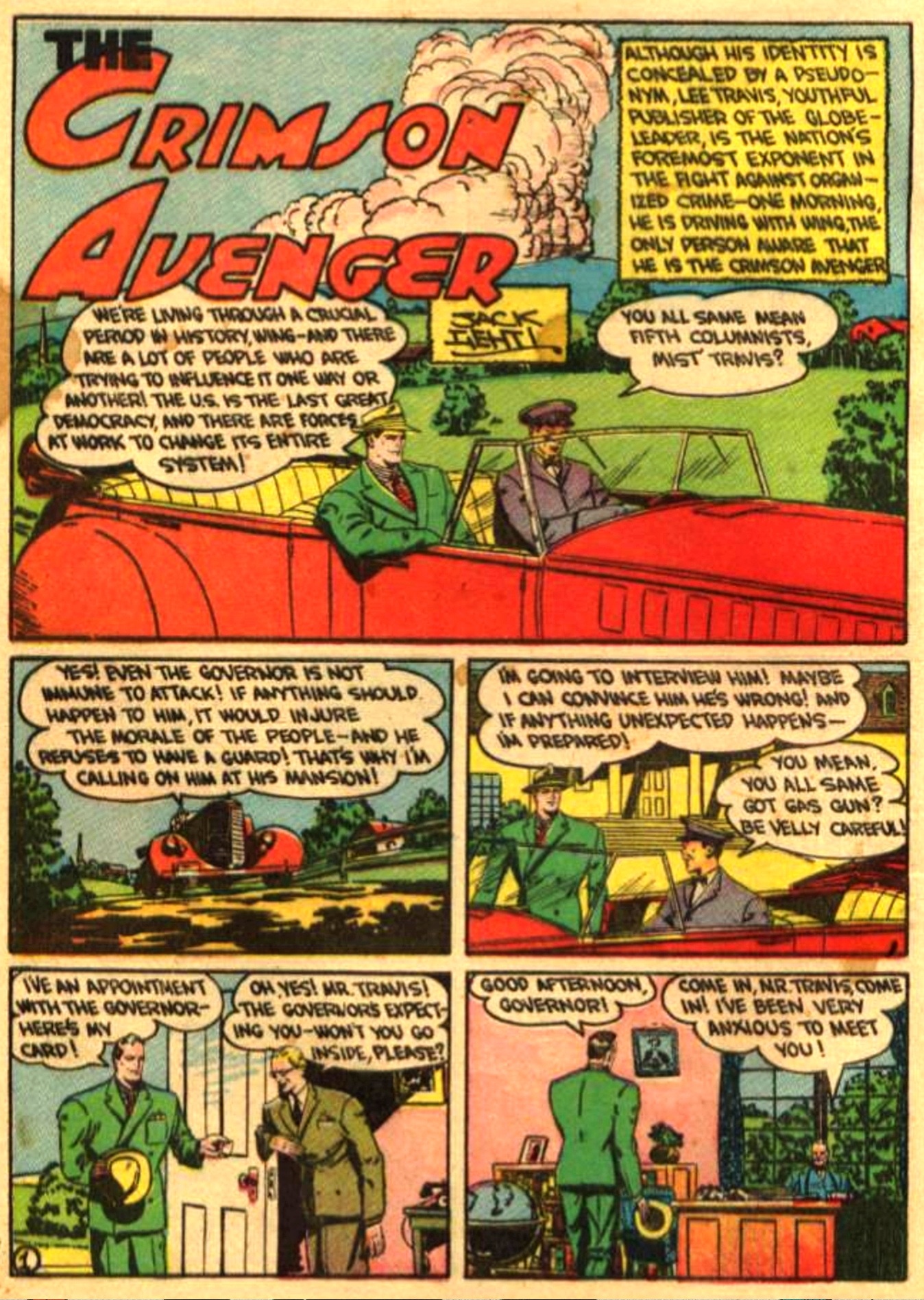
The Crimson Avenger, written and pencilled by Jack Lehti. Inked by Charles Paris.
—
5. Johnny Thunder. Johnny Thunder’s tale, like almost all of his from that period, leaned heavily on humorous situations within serious circumstances. In this tale, Johnny has gotten himself a job driving a truck for a company that’s battling a no-holds-barred competitor. Of course, Johnny accidentally utters “Say you!” a few times, which has his Thunderbolt genie rushing to help him. (“Say you” sounded exactly like the ancient magical summon of “Cei-U”). John Wentworth and Stan Aschmeier (“Asch”) co-created the strip, appearing for the first time in Flash Comics #1 (Jan. 1940) under the title “Johnny Thunderbolt.”
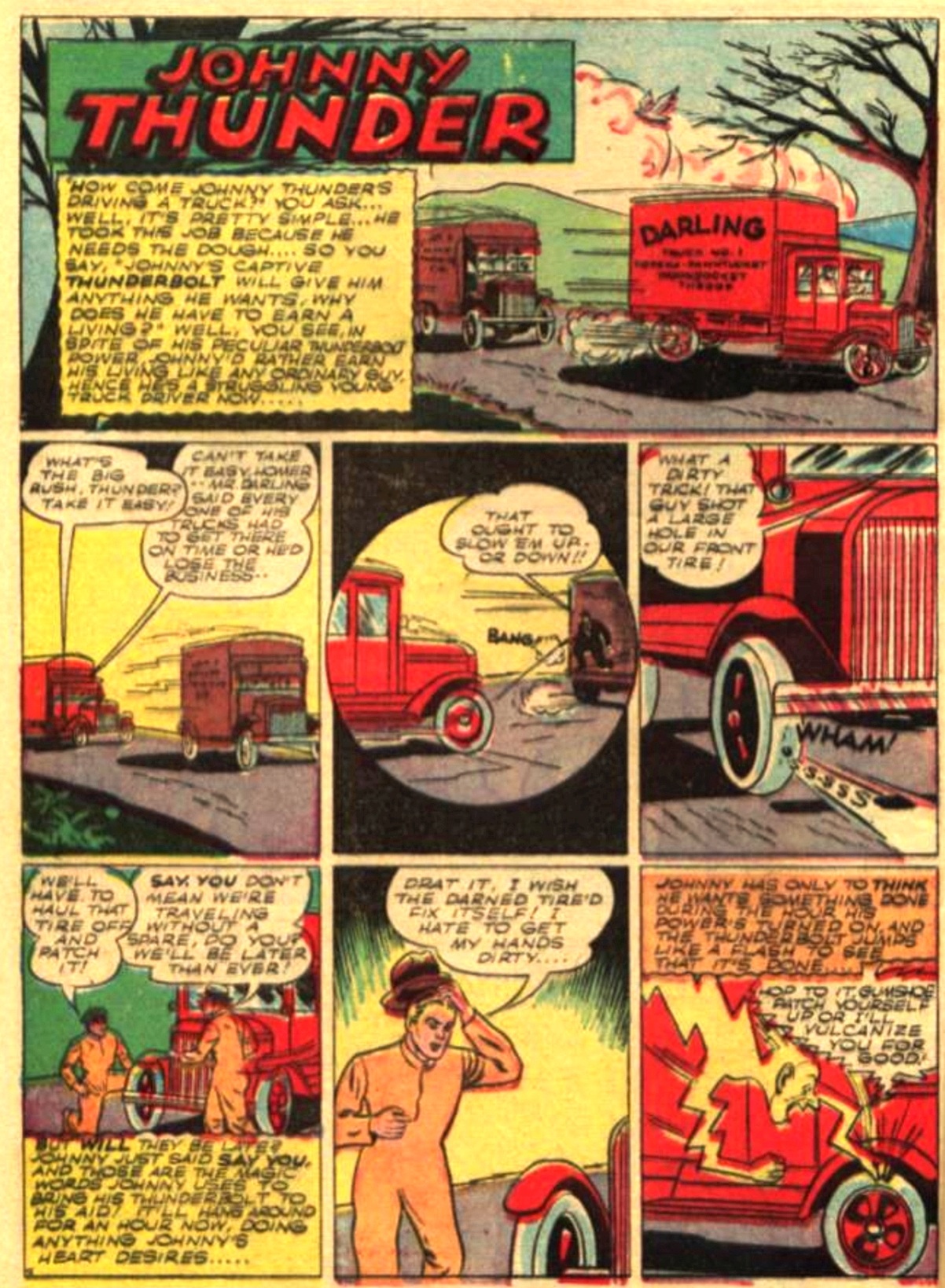
Johnny Thunder, written by John Wentworth, art by Stan Asch.
—
6. Young Doc Davis. The star of the strip only gets to show off his medical skill in the opening pages of the story when he patches up a Chinese man involved in a Tong War. While doing so, he discovers stolen boxes of narcotics and, with nary a single thought of calling in the police, he decides to single-handedly defeat the Tong robbery of a train. Created by Henry Boltinoff, “Young Doc Davis” only appeared in the earliest issues of the title, ending with World’s Finest Comics #4 (Winter 1941).
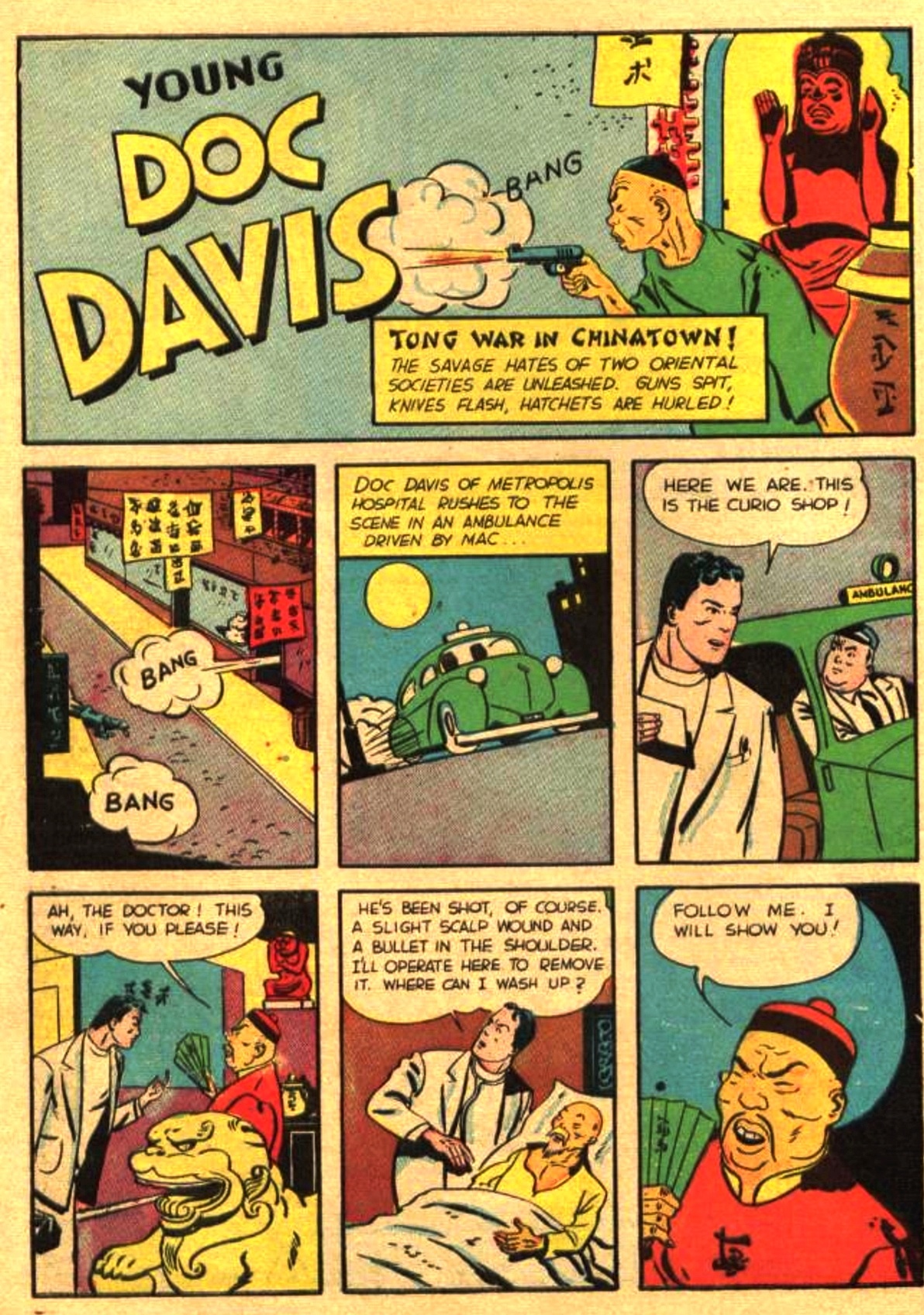
Young Doc Davis, script and art by Henry Boltinoff.
—
7. Zatara. Speaking of trains, Zatara (“the Master Magician”) begins this issue’s adventure with him foiling the robbery of a gold shipment. He’s rewarded with a ticket to a baseball game — where he finds the gang again, trying to rig its outcome. He shuts them out and exposes their gang leader. (Fans of Zatara, created by Fred Guardineer, and of magic spells that are spoken backwards, can find his very first adventure in Action Comics #1, June 1938, an issue that contained the debut of another new character.)
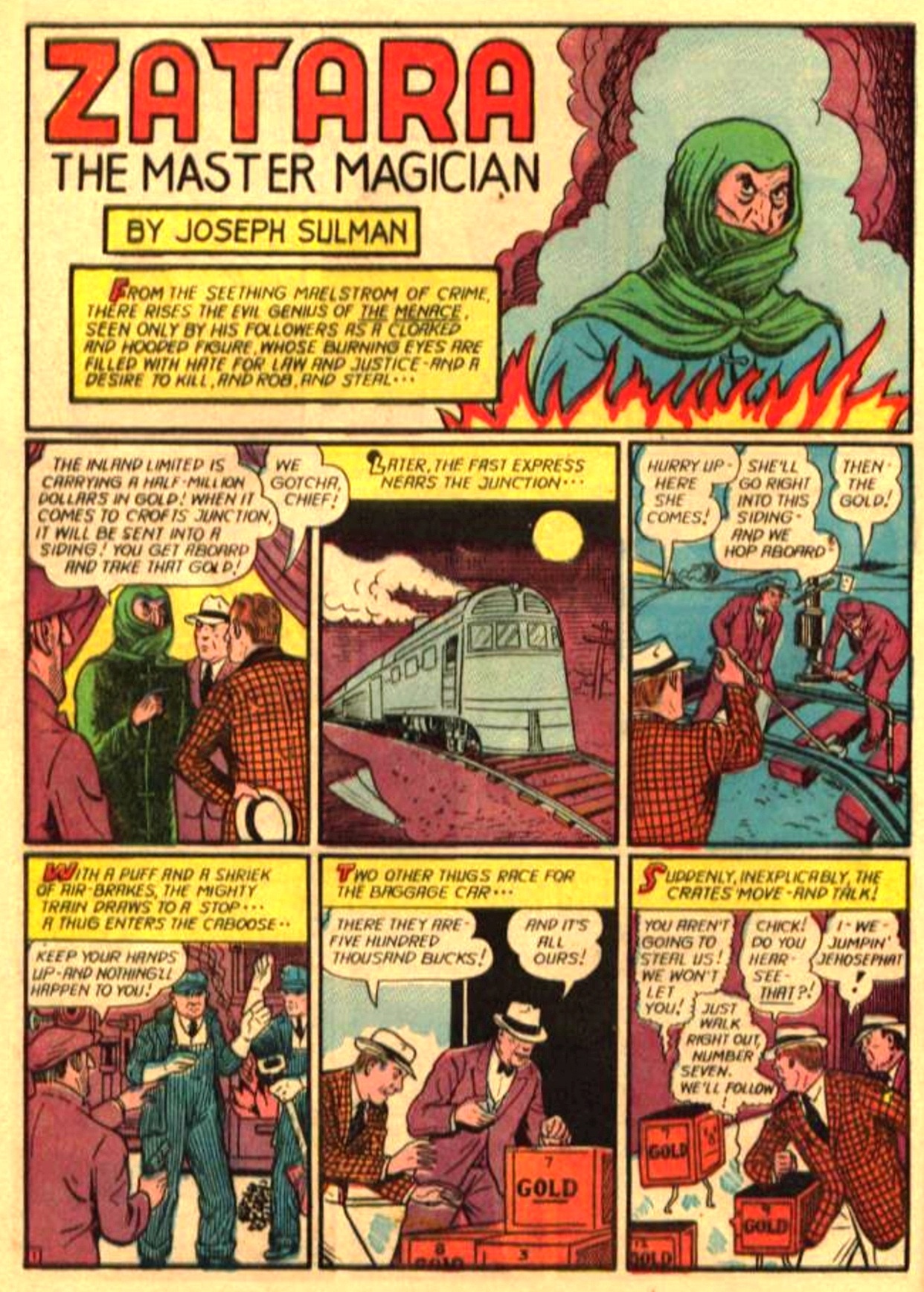
Zatara, script by Gardner Fox, art by Joe Sulman.
—
8. The King. In a lighthearted adventure, socialite and master of disguise King Standish takes on the assignment of stopping a planned home robbery by an attractive female thief named the Witch. “The King” was co-created by John Wentworth and William Smith and first appeared in Flash Comics #3 (Mar. 1940). The Witch would return more than once, as a romantic possibility for Standish while stopping her crimes.
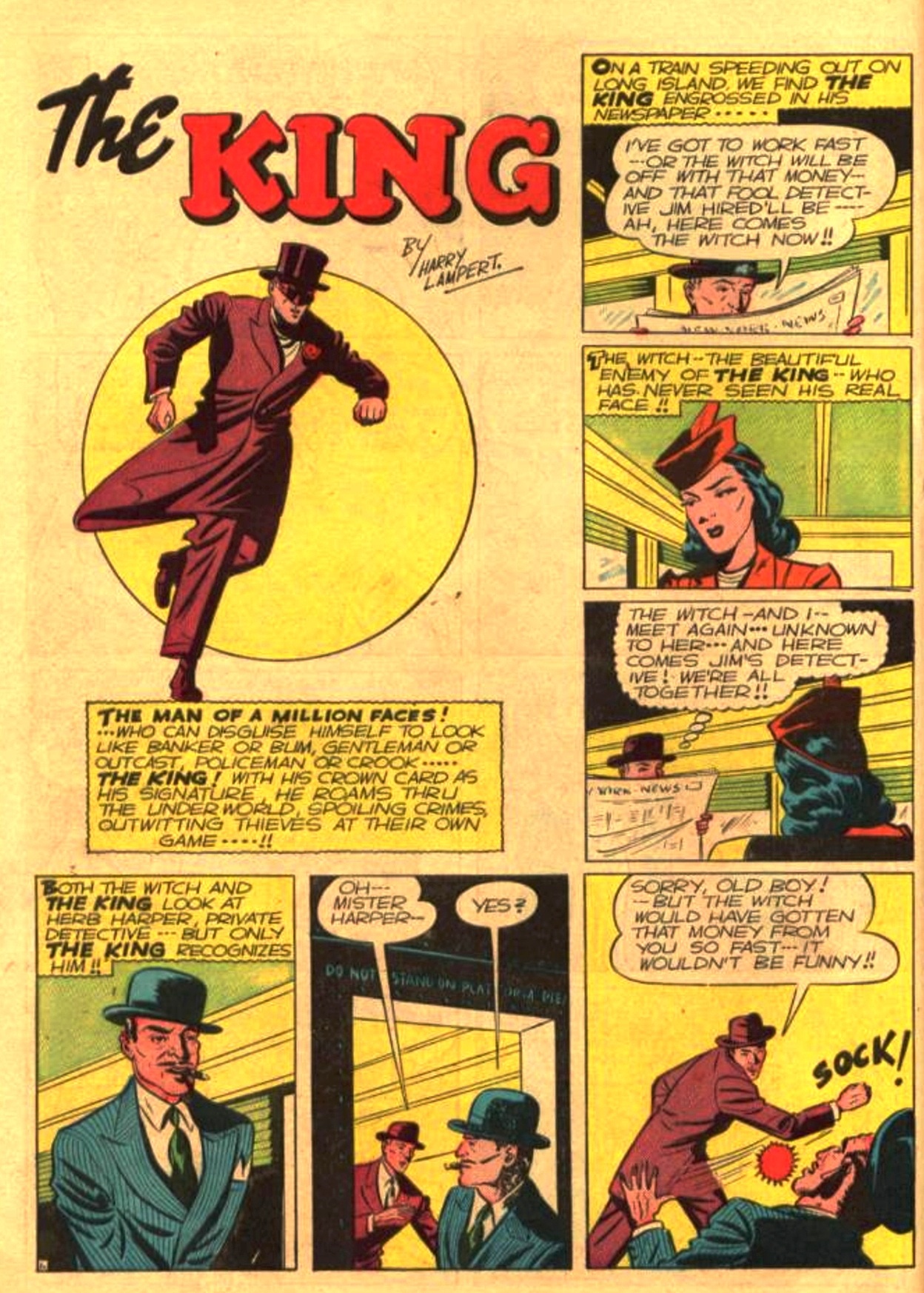
The King, script by Gardner Fox and art by Harry Lampert.
—
9. Punch Parker. A detective, Parker’s appearance in the DC universe lasted only two issues (World’s Best Comics #1 and World’s Finest #2). His debut here has him recovering stolen radium.
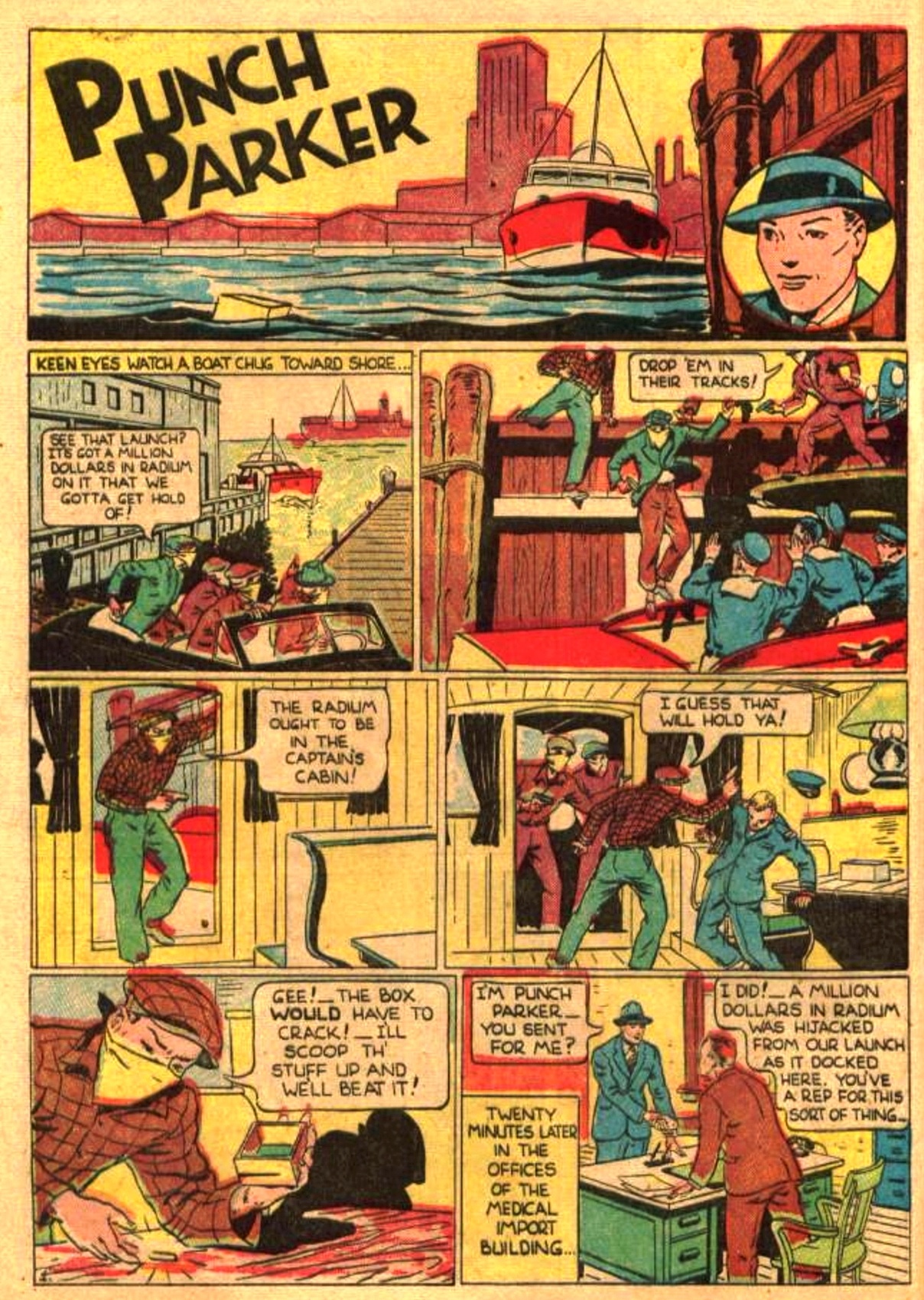
Punch Parker. Unconfirmed credits.
—
10. Lando. DC had a number of magic-men heroes during the Golden Age, but Lando is one that is completely forgotten today. Created by Howard Purcell, he was a stage magician who was also the real thing, helping others and punishing miscreants. During the few issues he appeared in (ending in World’s Finest #7, Fall 1942), no origin was given for the character.
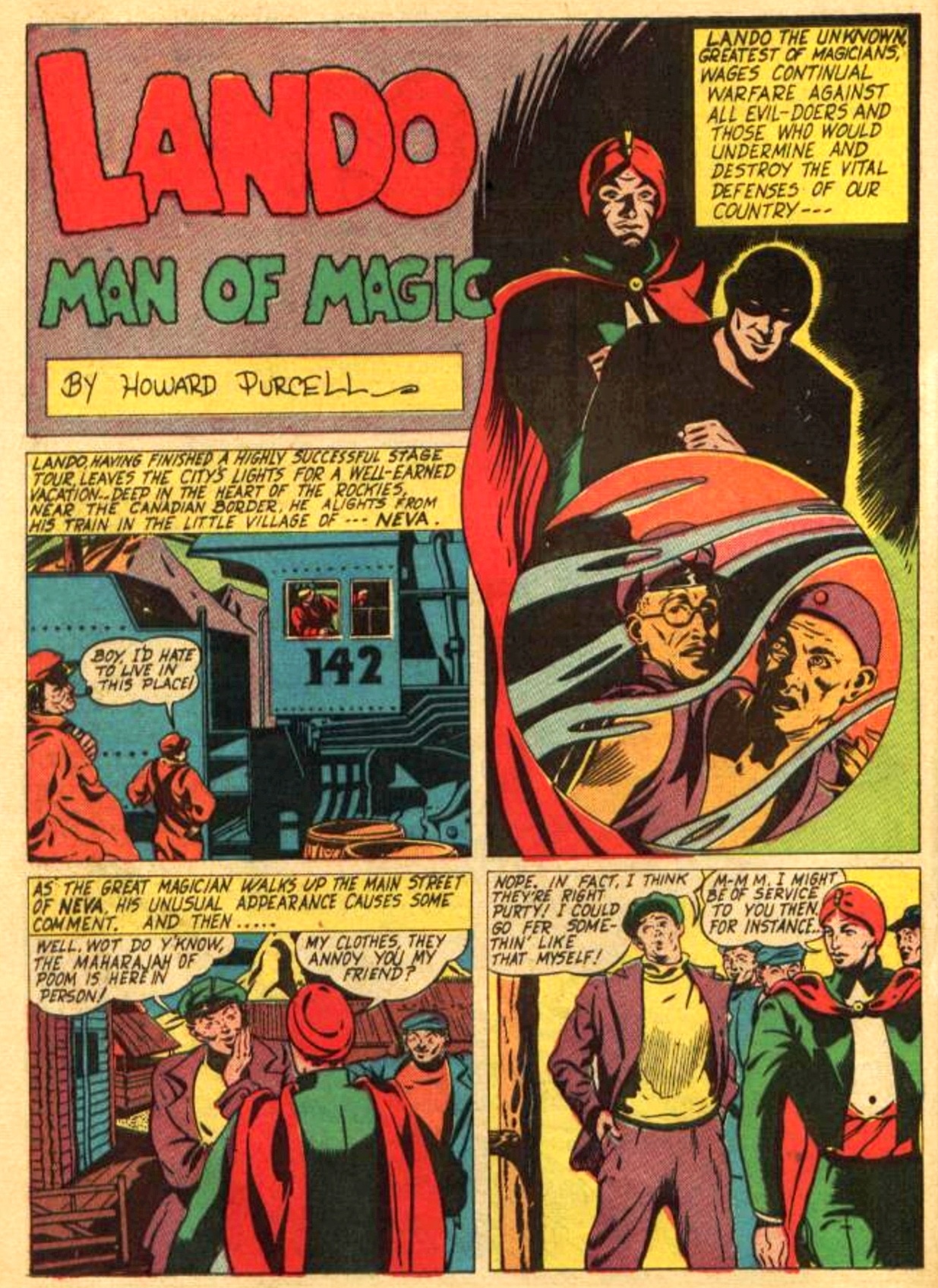
Lando, Man of Magic. Art by Howard Purcell. Unconfirmed writer (but likely Purcell).
—
11. Batman. With World’s Best Comics #1, Batman established a third ongoing title for his adventures, following Detective Comics and Batman. His 13-page story here (the only one in the issue equal to Superman’s) has him investigating and defeating a mysterious murderer disguised as a witch (no connection to the Witch in “The King” adventures).
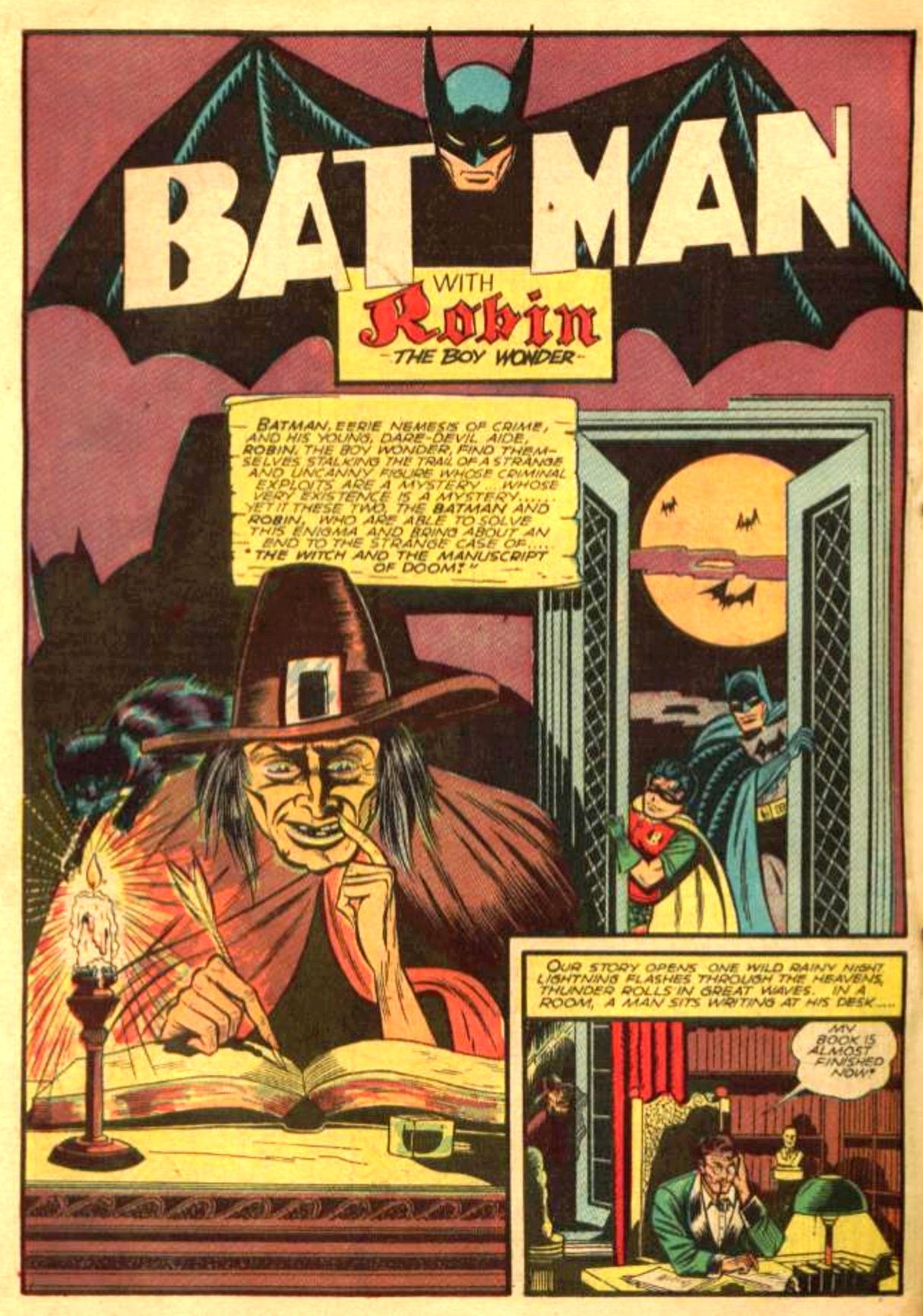
Bill Finger, script. Bob Kane, art (with backgrounds by George Roussos).
—
12. To balance out the issue, several humor strips were added…
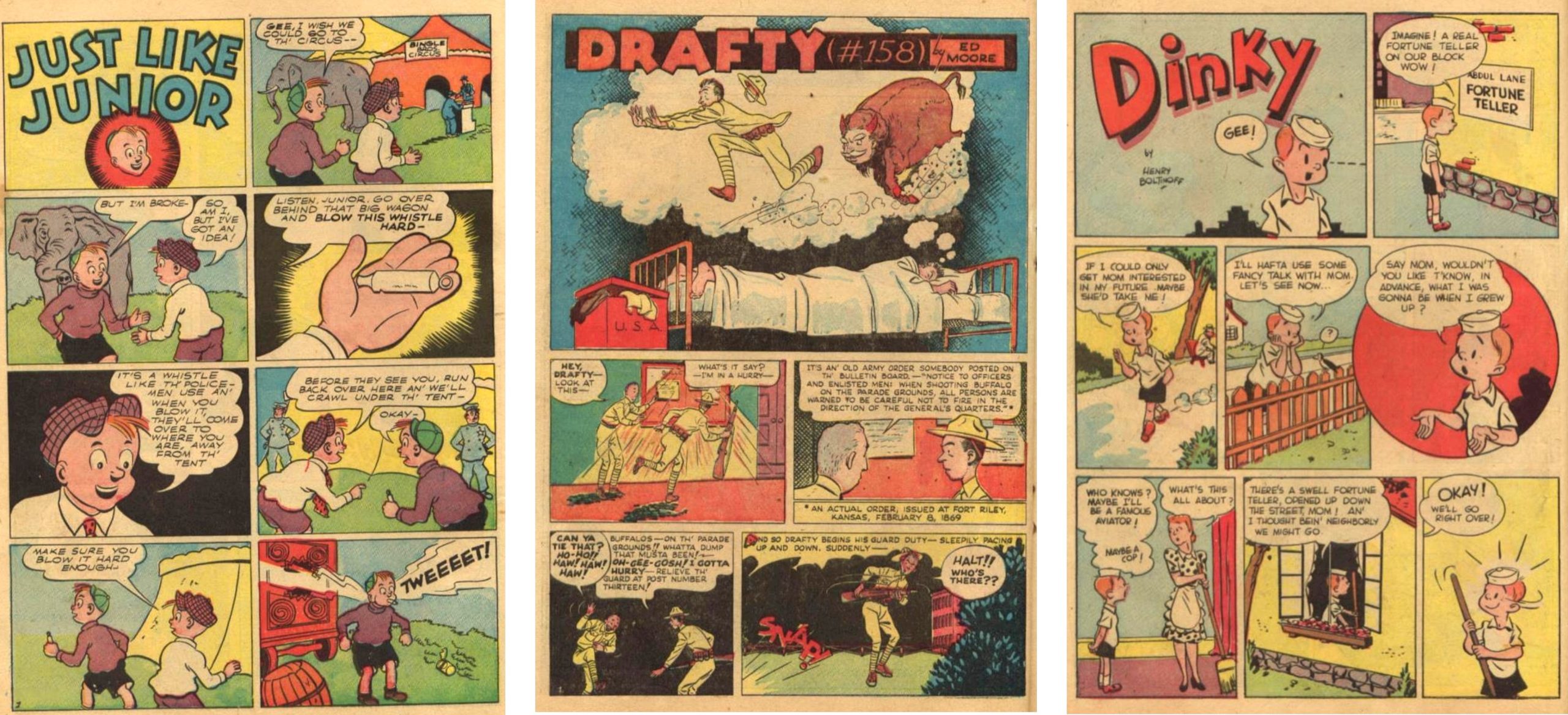
Just Like Junior, with art by Asch, unknown writer. Drafty, with art by Ed Moore; unconfirmed writer. Dinky, written and drawn by Henry Boltinoff.
—
13. …as were a few filler pieces
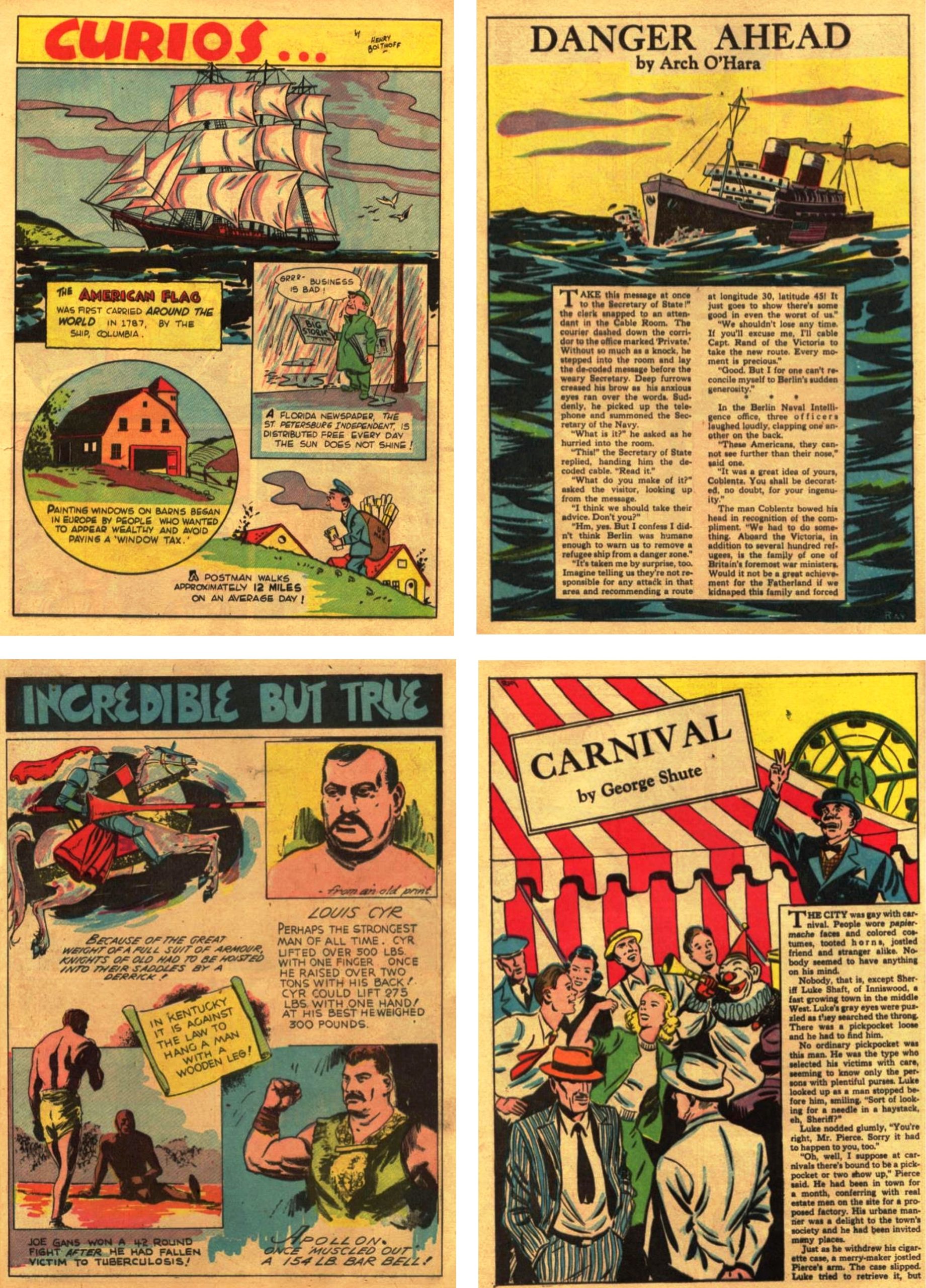
“Curios,” with writing and art by Boltinoff; “Danger Ahead,” script by Arch O’Hara and illustrations by Fred Ray; “Incredible But True,” unknown credits; and “Carnival,” with writing by George Shute (unknown artist of the illos).
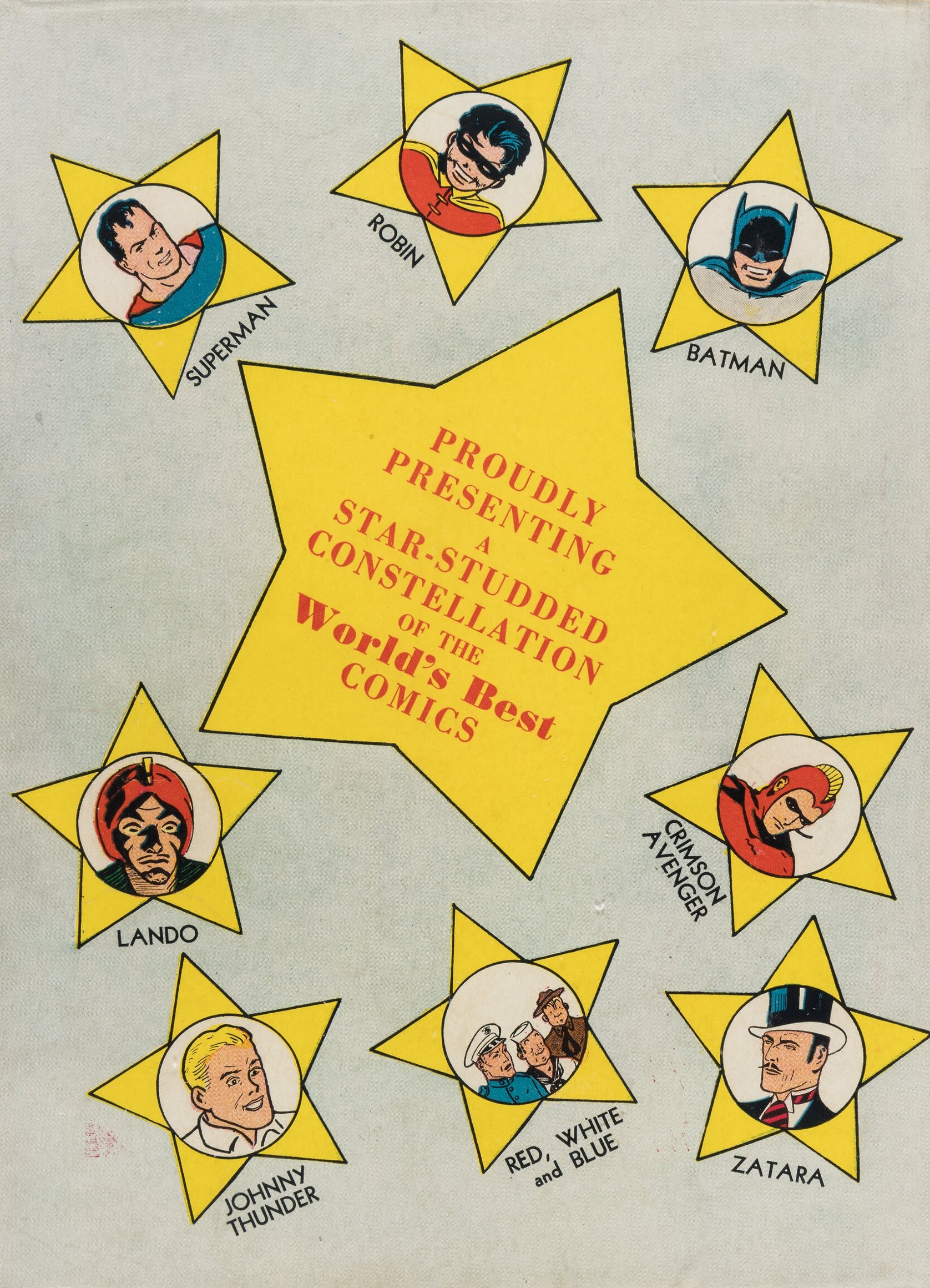
Back cover for World’s Best Comics #1.
As mentioned earlier, Superman, Batman, and Robin didn’t appear together in the same story for the first 70 issues. However, they did share every cover and many of them were great fun. So, as a finale to this 85th anniversary salute to World’s Best #1, here are some of those light-hearted covers. Enjoy!
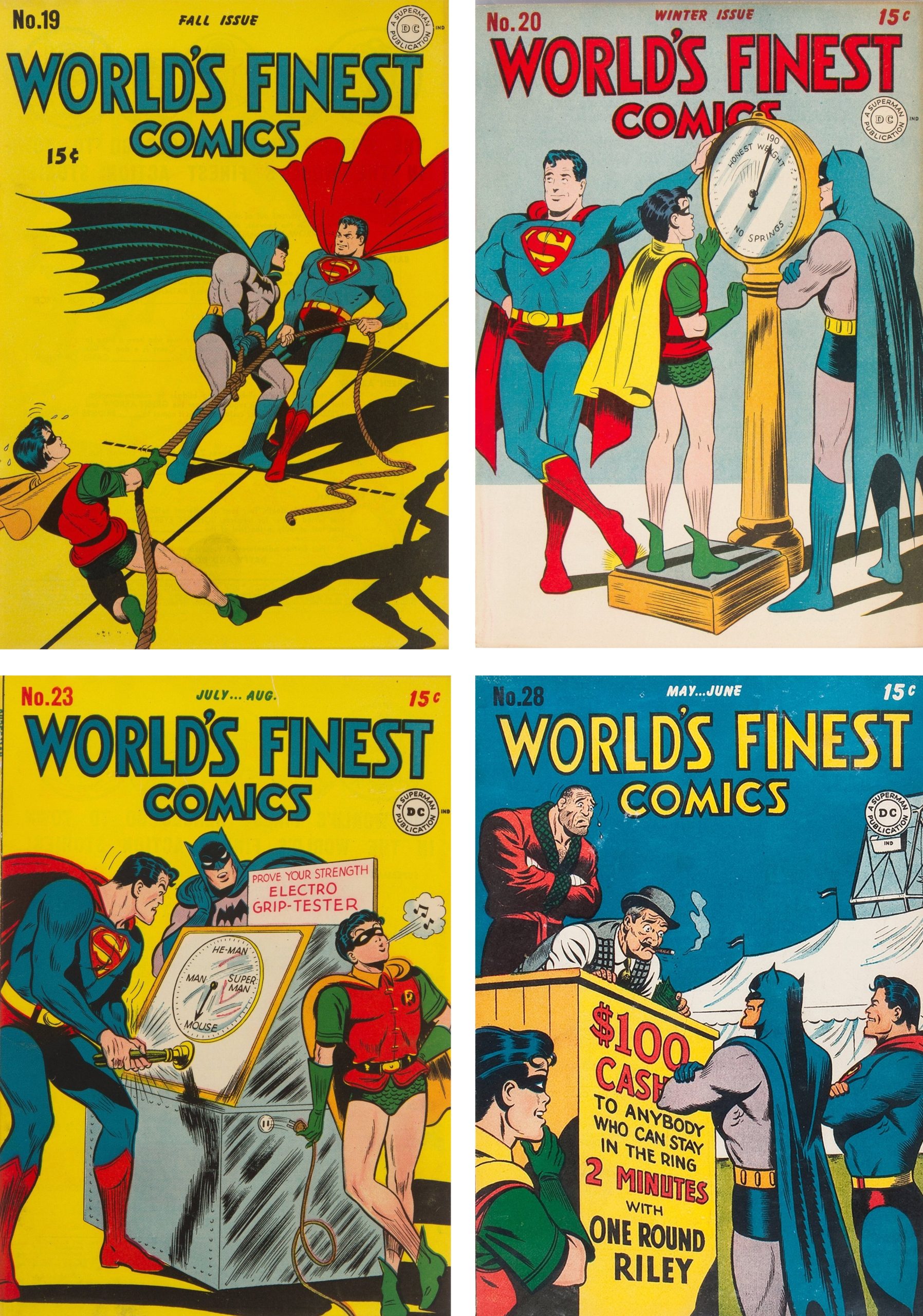
Top left: World’s Finest #19 (Fall 1945), with cover art by Dick Sprang (except Superman was drawn by Jack Burnley); plus #20 (Winter 1945), #23 (July-Aug. 1946), and #28 (May-June 1947), all three with pencils by Burnley and inks by Charles Paris.
—
MORE
— THE JUSTICE SOCIETY TURNS 85: 13 Fascinating Facts About ALL-STAR COMICS #3. Click here.
— 1941’s ALL-STAR COMICS #4: A Celebration of the JUSTICE SOCIETY’s First Real Adventure. Click here.
—
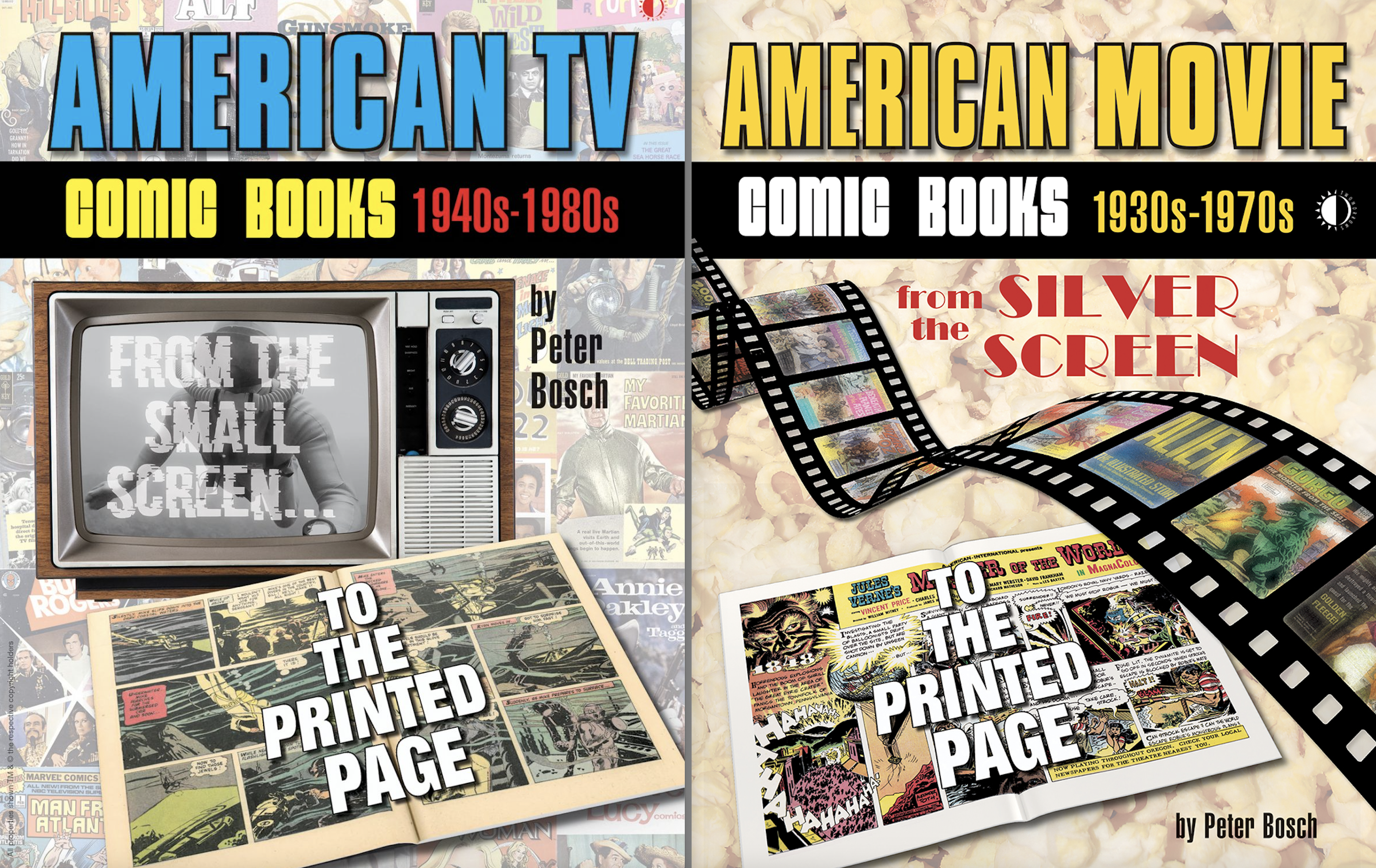
13th Dimension contributor-at-large PETER BOSCH’s first book, American TV Comic Books: 1940s-1980s – From the Small Screen to the Printed Page, was published by TwoMorrows. (You can buy it here.) A sequel, American Movie Comic Books: 1930s-1970s — From the Silver Screen to the Printed Page, is out now. (Buy it here.) Peter has written articles and conducted celebrity interviews for various magazines and newspapers. He lives in Hollywood.

February 10, 2026
Thanks so much! I read the “King” story when World’s Finest (I think) reprinted it in the Seventies but this is all I’ve seen of “Red, White and Blue.” I’d love to see both series put out in a collector’s edition. The same for Johnny Thunder. (Say, you think they’d do that?)
February 10, 2026
I see what you did there.
February 11, 2026
🙂
February 10, 2026
Jeff, yes, it was reprinted in World’s Finest #210.
February 11, 2026
I thought so.
February 10, 2026
I’ve noticed that most of these golden age heroes who had costume changes never mention the change in the comics of this period. For example, Sandman went from a dress suit and gas mask to a purple and gold superhero costume and no mention is ever made of the change. The same is true for Dr. Fate changing to a half helmet, Hawkman changing to a cloth mask and The Atom completely changing to a new costume. But in Detective Comics #44, the Crimson Avenger acknowledges his new costume. It’s no lengthy explanation but he does instruct Wing to prepare his “new” costume. Thought it was interesting.
February 10, 2026
This is one issue I would love to see get the facsimile treatment. I don’t know how much popular demand there is for it, but it would certainly be interesting to see this cornerstone of comics history.